

Not yet published: imported
What the Heck is Helix Knitting?
Do you remember when you were a kid and you would spin around and around and around, then suddenly stop.
Do you remember when you were a kid and you would spin around and around and around, then suddenly stop.
The abrupt change of state makes your brain go a little crazy.
It wants to keep the status quo, so your head spins, even though your body is standing still.
And if you try to walk in a straight line, well often you can’t.
At least not without a hack to keep yourself on target…
Actually this is how professional dancers are able to pirouette without getting dizzy.
They stare at a fixed point on the wall while they spin.
So…
What does any of this have to do with knitting?
The problem with traditional stripes in the round
When you knit in the round, you aren’t knitting rows like you would when knitting flat.
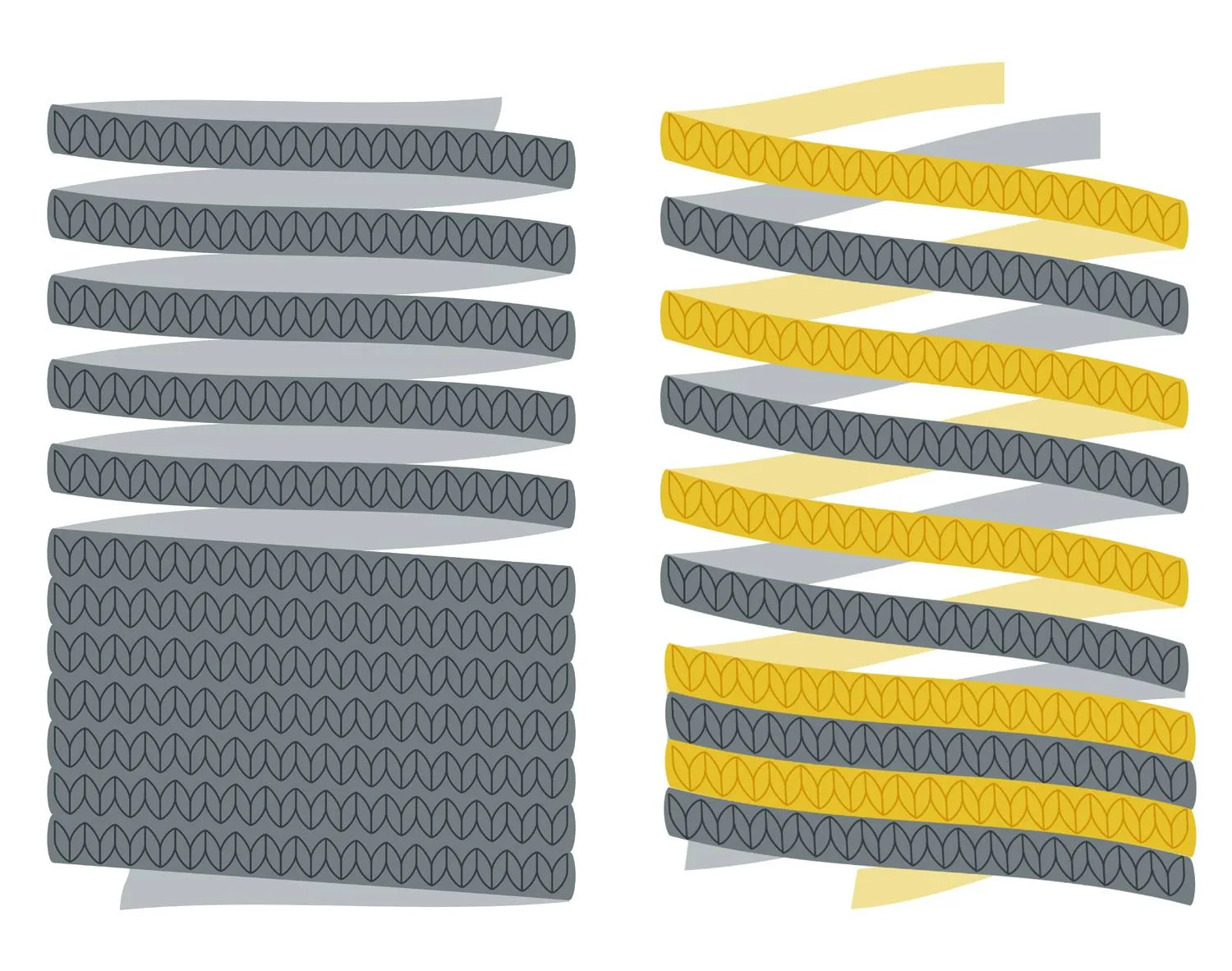
Instead you are actually making one continuous row that spirals on top of itself.
Most of the time this doesn’t matter because you are knitting with only one color.
But if you want to knit stripes in the round one thing becomes apparent very quickly.
The jog. 😱
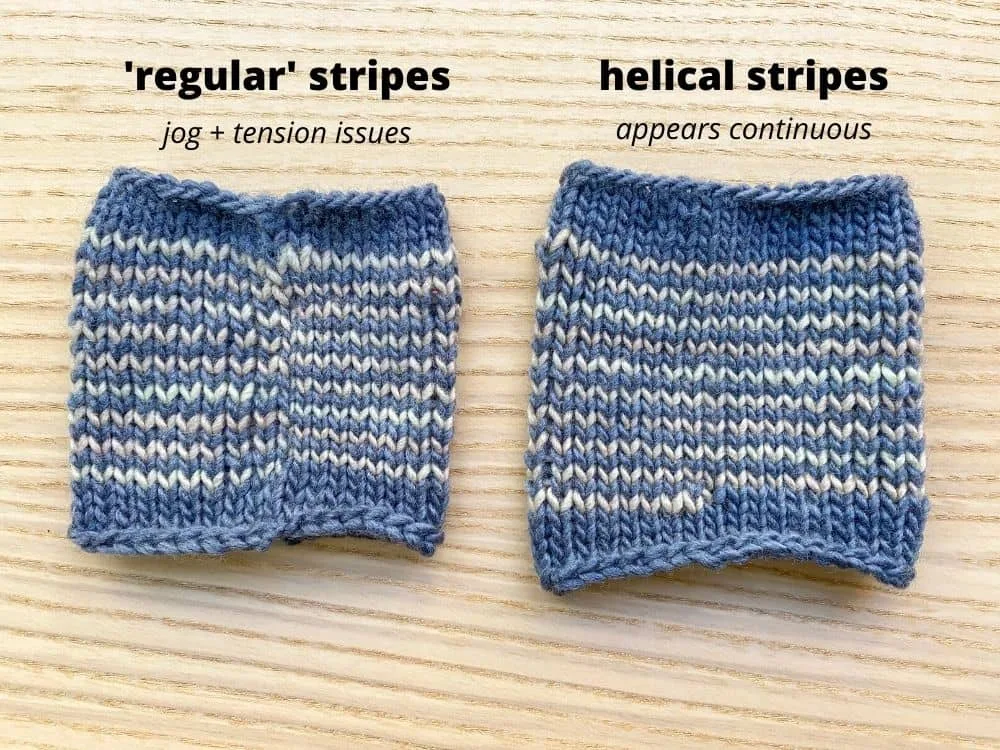
Every time you switch from one color to the other, the color “jumps” or jogs where the color changes.
This is because the round does not end NEXT to the last stitch, but rather ON TOP of it.
Now there are a few tricks to get around this phenomenon, but one of the best I’ve come across is helical stripes.
So what exactly is Helical Knitting?
There’s a concept in the martial art Judo of using your opponents energy against them.
It’s the same strategy I use with dealing with my kids when they’re having a melt down.
I don’t fight them.
I redirect that energy in a way that gets the result I want.
The same is true for knitting stripes in the round.
We can’t change how the knitted fabric is constructed, so we need to use it’s quirks to our advantage.
Since knitting in the round creates one long spiraling row, we’re going to hack the system.
Instead of knitting ONE spiral, we’re going to knit TWO (or more).
These spirals will travel together, creating one row stripes that never have a jog, and eliminate any tension issues from switching yarns.
You can see how the second spiral forms near the bottom of the swatch on the right in the diagram above.
How do you do helix knitting?
There are a few different ways of implementing this technique, but they all operate on the same principle.
We’re going to talk about two ways today, using two colors and using three (or more) colors.
Helical stripes using two colors
This is the easiest method to get started with
Helical stripes using more than two colors
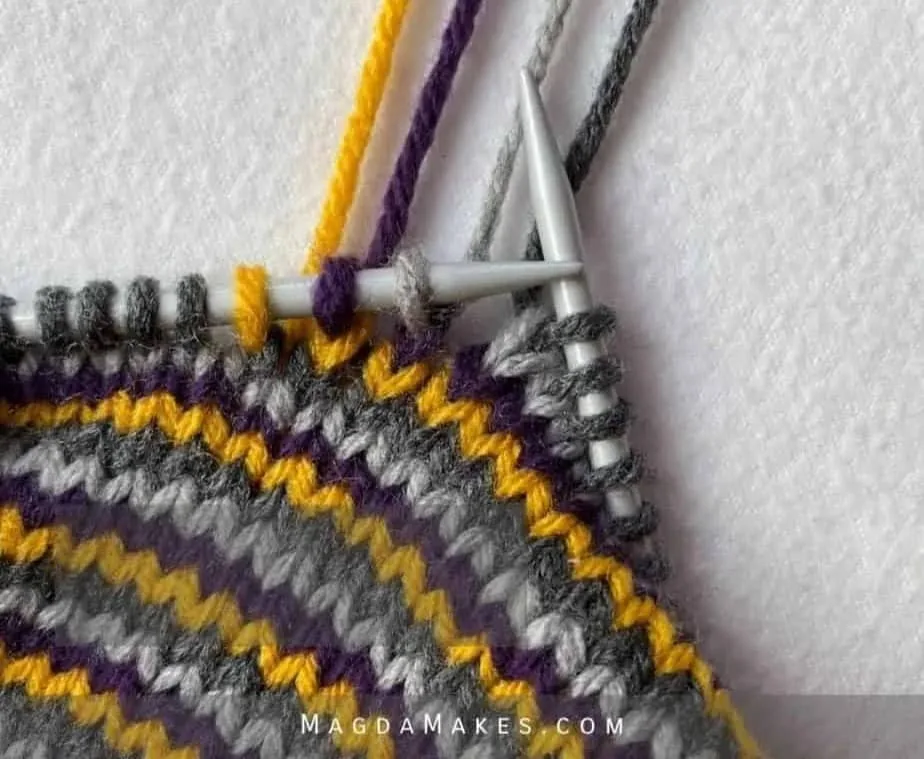
In this method you actually have 4 spirals being worked at once, and you’re working all 4 colors during each round.
You can scale this up to as many colors as you want to knit with.
What else is helix knitting good for?
This technique can also be used to create smooth transitions for other stitch patterns when knit in the round.
Garter stitch creates a “seam” when knit in the round, due to the jog that’s created switching back and forth between knit and purl rounds.
Using helix knitting this seam can be eliminated, and the same is true for lots of other texture stitches.
This is a topic explored more in depth in the book “Something New to Learn about Helical Knitting” by Jen Anrall-Culliford.
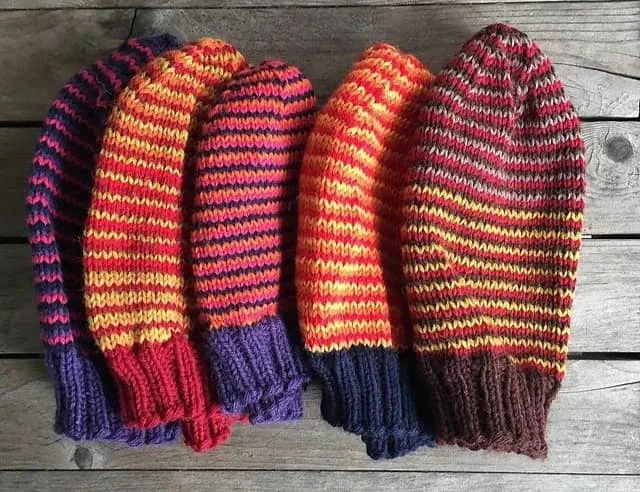
Beyond that, this is a great technique for using up scraps of yarn to knit socks, hats, mittens and tubular scarves.
Conclusion
So there you have it.
I had never heard of helix knitting until a little more than a year ago, and I’m eager to explore it more.
But what do you think?
Have you ever tried this knitting technique before?
What was your experience?
We’d love to hear your feedback. 😊