Not yet published: imported
Patterns ·
To Seam or NOT to Seam? That is the Question
Every generation has its cultural arguments.
Every generation has its cultural arguments.
Who is the greatest rock band: the Beatles or the Stones?
Which is your favorite castaway: Ginger or Mary Ann?
And unless you lived under a rock, we spent most of the 2010’s hearing about Team Edward or Team Jacob.
Then there’s my Grandma who had a room full of Coca-Cola paraphernalia, but ONLY drank Pepsi.
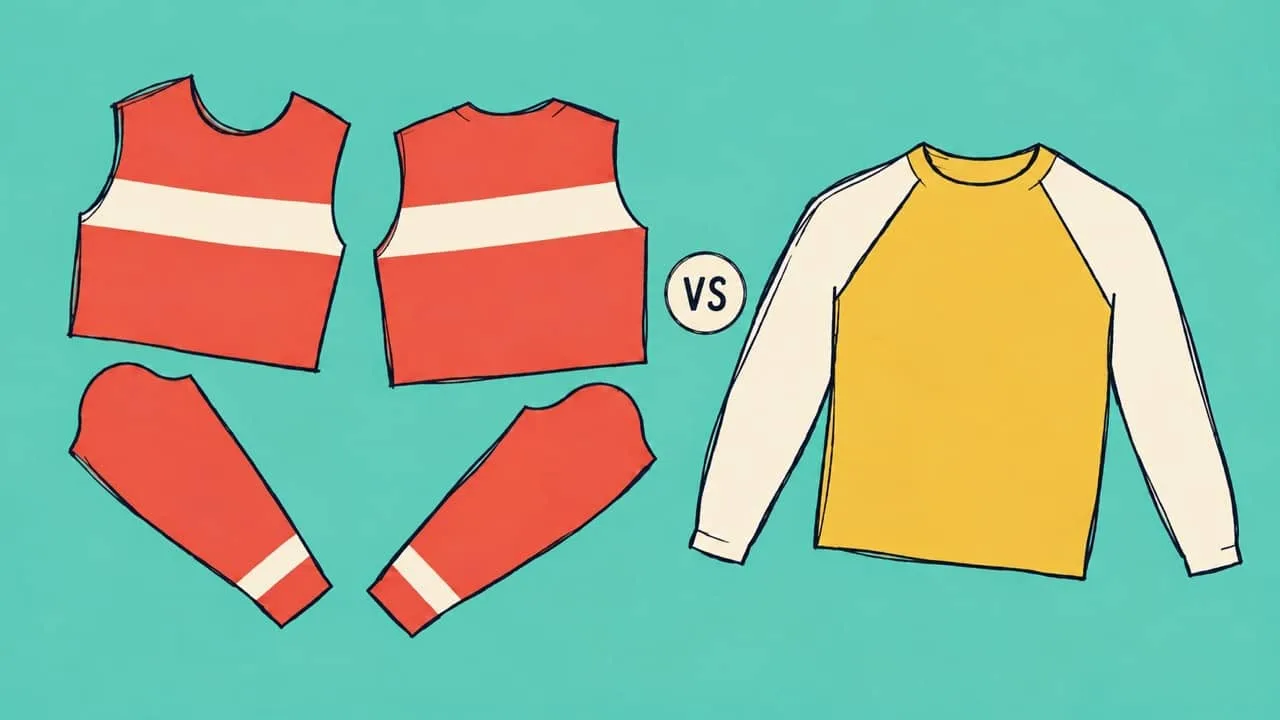
Knitting has many of its own versions, but one I get often in my sweater classes is this;
Which is the better way to make a sweater?
Seamless or seamed?
Last year I got four designers together for a panel called “From Queue to Closet: Planning Projects That Actually Get Worn”
While I expected a quiet consensus, that’s not exactly what I got. 😅
So today we’re going to take a look at their positions on the topic.
Because by the end of that discussion, the four of them had come up with a way to decide it in about ten seconds.
In defense of seaming
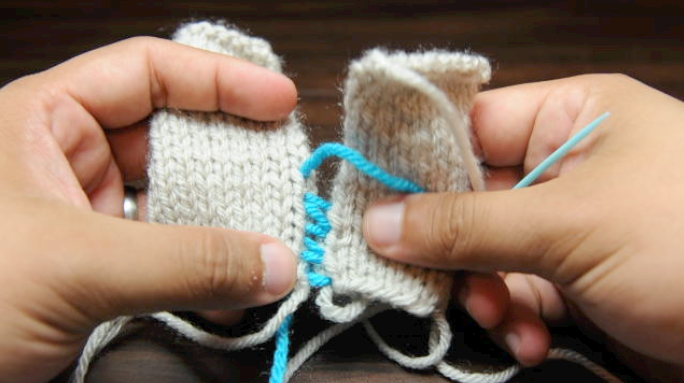
Lynette Elliott has been teaching fiber crafts for about 30 years, and she has made plenty of top-down seamless sweaters.
Her verdict on them was two words.
They flop.
There’s a reason we have shoulder seams and armhole seams and side seams in clothing.
Structure.
Seams act like the poles in a tent. They give it shape and help it maintain it.
So why do people avoid it like Pigpen avoids soap?
Paul Haesemeyer designs menswear in Brooklyn, and he thinks the resistance to seaming mostly comes from nobody ever teaching it properly. (I would agree)
Once knitters learn to do it, he says, they stop avoiding it.
Darby Photos has been writing her own patterns for 20 years, and she offered an argument I had never considered.
Seams let you cheat.
She wrote a pattern where the sleeve is knit at a slightly looser gauge than the body, then eased into the seam to make a curve.
Try doing that in the round.
The case for seamless
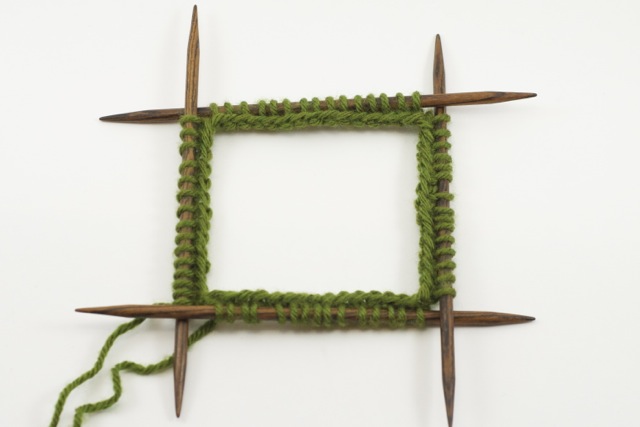
There’s one BIG reason people go seamless.
It’s easier.
Knitting everything in one piece means fewer spots to mess things up.
Jackie Badger teaches a class in Bristol called Sweater School, and this is her whole case.
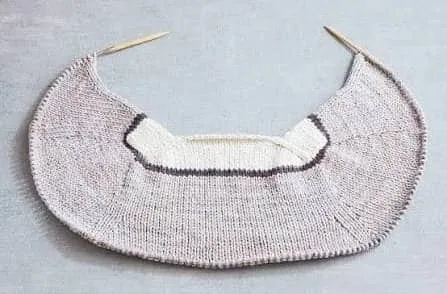
You slide the stitches onto a piece of scrap yarn and try it on
Is the yoke deep enough? Not enough room in the armhole?
You can tell while you’re in the middle of the process, instead of hoping it works out at the end.
She also pointed out that colorwork and lace are easier to read in the round, because you can watch how the shape develops.
Jackie was not shy about her position:
“I will defend seamless. It is a hill I will die on.”
Followed by the line that ended the argument:
“If I wanted to hand sew for a hobby, I’d do a hand sewing project.”
So which one is right
Neither, of course.
Here’s how to decide in about 10 seconds:
Seaming holds its shape over time. If you’re tired of floppy sweaters, try seaming.
Seamless lets you try it on as you go, and there’s less to finish. If your sweaters come out the wrong size, or never get finished at all, start here.
That’s it.
Everything after that is your own preference.
For what it’s worth, I’ll defend seaming as the grand finale of a project to anyone who will listen.
But if you’re knitting your first sweater, seamless is easier to learn on.
A sweater that mostly fits and gets worn beats a potentially perfect one you never finish.
Luckily you don’t have to pick a side for life.
Pick one for your NEXT sweater project and go from there.

But Wait There’s More!
The seams argument takes up only six minutes of a 48-minute panel discussion, and the rest of it is just as good.
Here are some other topics the four of them talked through:
- Why some handknits become the thing you reach for, and others sit in a drawer.
- How to tell whether a trendy pattern is worth your time.
- Which measurements to take before you cast on (and one the pattern never asks for).
- Which yarns wear well and which ones let you down (hint: it’s not always what you expect)
- How to choose colors you’ll actually wear and which rules to ignore
Plus one final piece of advice where Darby said something I have not stopped thinking about since.
The whole panel is in the Insider archive, along with a bunch of other great bonus content.
Insider is only $1 per week, and your support helps us continue to put on great panel like the one this exchange came from.
👉🏼 Join Insider and watch the FULL panel
But what do you think?
Coke or Pepsi? J/K
Are you team seams, team seamless, or team whatever the pattern says?