

Not yet published: imported
Yarn ·
The History and Legacy of Bohus Stickning
As we gear up for our Colorwork Knitting Weekend, I thought we should take a look at some uncommon types of colorwork knitting.
As we gear up for our Colorwork Knitting Weekend, I thought we should take a look at some uncommon types of colorwork knitting.
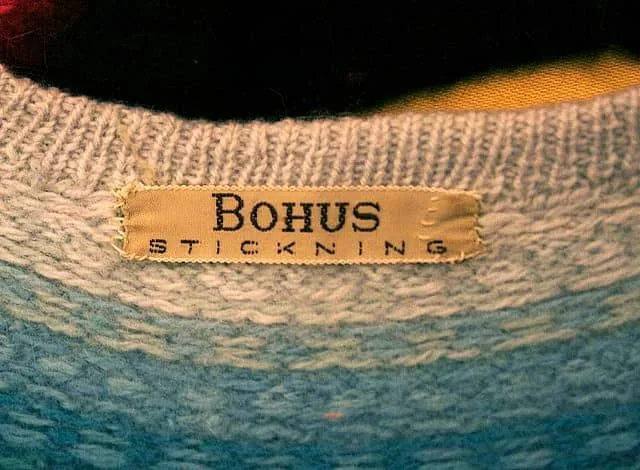
Bohus Stickning is a unique Swedish knitting style that emerged in the 1930s, celebrated for its intricate color patterns and non-traditional artistic designs.
Originating in the Bohuslän region, this technique evolved from a response to economic hardship into a symbol of craftsmanship and creativity.
From Great Depression to International Fame
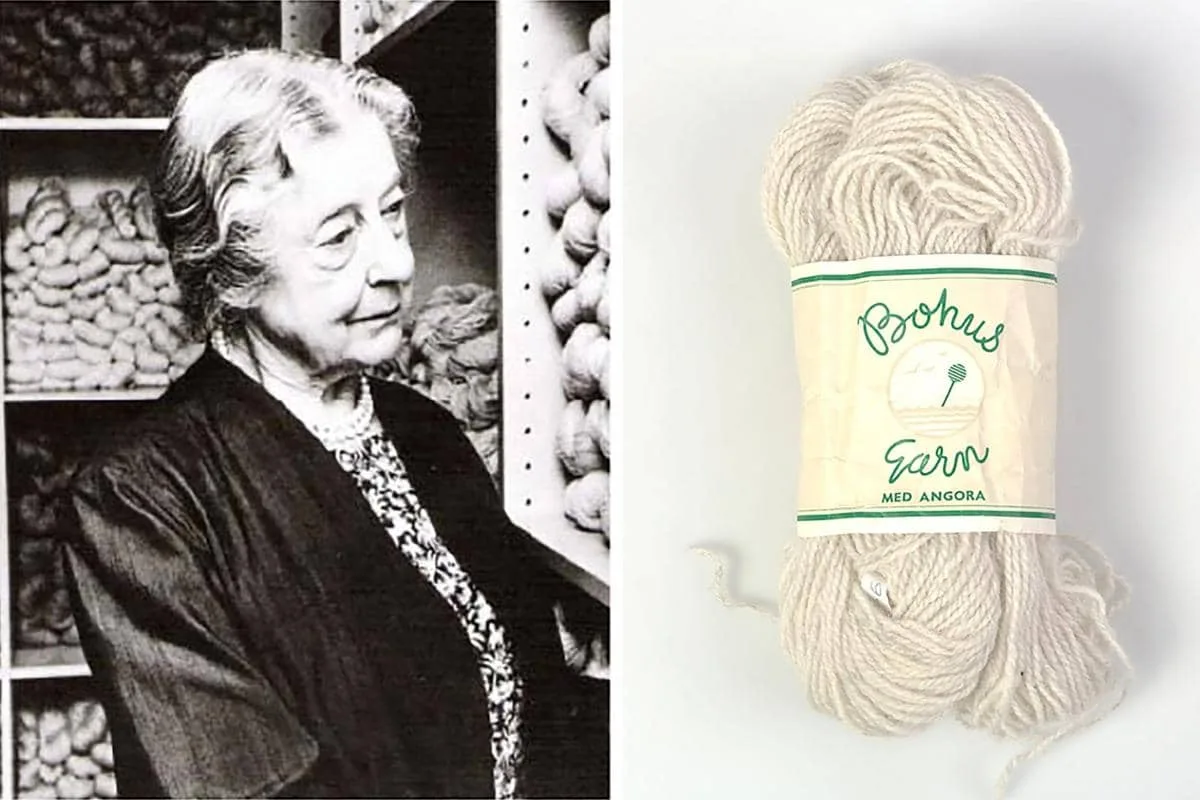
Bohus Stickning began during the Great Depression, a time when the Bohuslän region of Sweden faced significant unemployment and social challenges.
In response, a group of women led by the wife of the Governor, Emma Jacobsson, sought to revitalize traditional crafts as a means of income.
They developed a distinctive knitting style that combined artistry with functionality, producing high-quality garments from local wool and angora yarn blends.
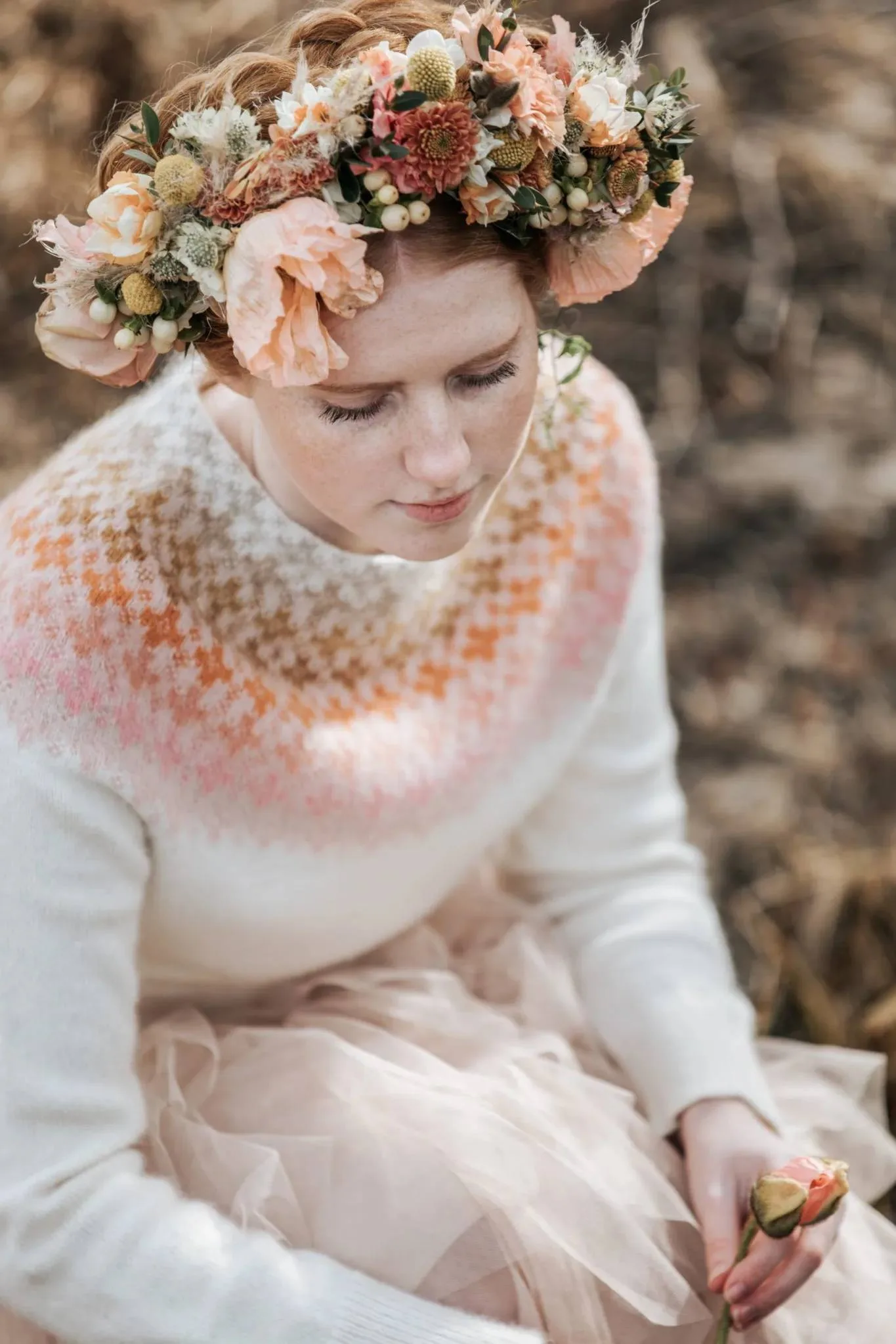
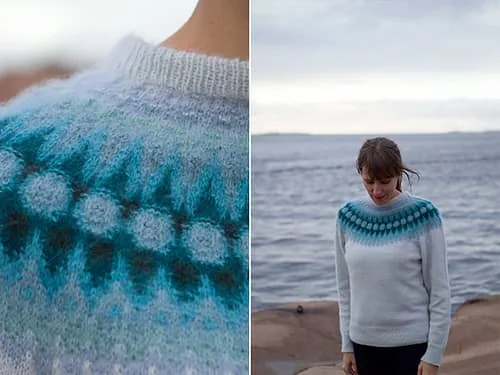
The knitting style is characterized by the “stranded” colorwork method, where two or more yarns are carried across the back of the work. They pushed traditional techniques by adding purls along with knit stitches. This allowed artisans to create stunning, painterly effects through color blending.
Initially, the Bohus Stickning group produced garments that were sold locally, eventually gaining international traction in the fashion world by the 1940s.
Knitting with Nature
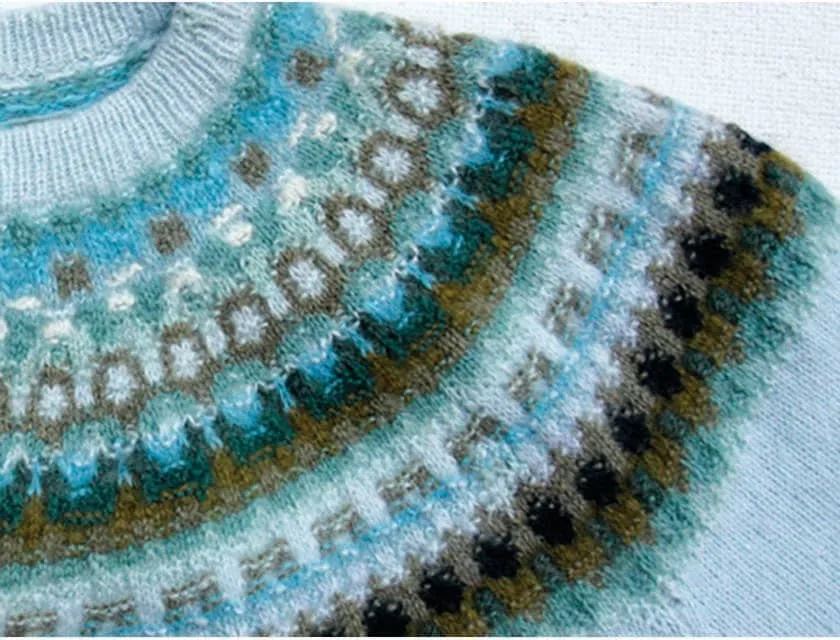
Bohus Stickning is known for its artistic inspirations, drawing from the local landscape and Swedish folklore.
The use of a color palettes that reflects the natural beauty of Bohuslän is particularly striking.
Shades of blue, green, and earth tones come together to create garments that resemble art rather than ordinary clothing.
This attention to detail not only showcases the skill of the knitters but also helps to elevate knitting from a utilitarian craft to a respected art form.
Revival and Modern Relevance
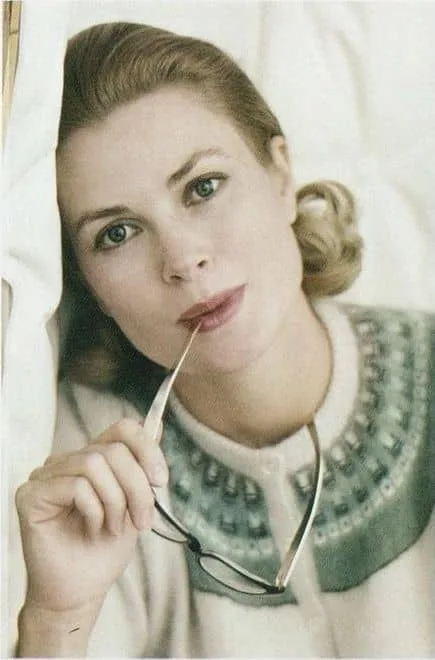
Despite its initial success, interest in Bohus Stickning waned in the latter half of the 20th century as industrial production took over.
However, the 1990’s saw a revival of handmade textiles and sustainable fashion, reigniting interest in Bohus Stickning.
Wendy Keele’s 1995 book, Poems of Color: Knitting in the Bohus Tradition, was one of the first to reproduce patterns from the collective. She documented the history of the workshop along with swatches, color cards, and stories of the ladies who knit there.
Today, Bohus Stickning serves as a testament to the resilience of traditional crafts in our rapidly changing world.
Its legacy lives on through museum exhibitions, and those who are keeping these designs on knitters needles even today.
Conclusion
Bohus Stickning is more than just a knitting technique; it’s a cultural phenomenon that embodies resilience, creativity, and community.
But what do you think?
Have you heard of this type of colorwork before?
Have you knit one of these patterns?