

Not yet published: imported
History ·
The 10 Levels of Knitting Mastery (Part 3 of 3)
A few weeks ago I began a series that put forth my idea on updating knitting skill levels.
A few weeks ago I began a series that put forth my idea on updating knitting skill levels.
I call my system Knit Rank, and it offers a systematic approach to leveling up your knitting skills.
This is a topic that has seen A LOT of discussion over the years, and as knitting is a broad art form, there are MANY opinions.
So before I present our final 3 levels, let’s chat a bit about whether we should have skill levels at all.
The problem with knitting skill levels
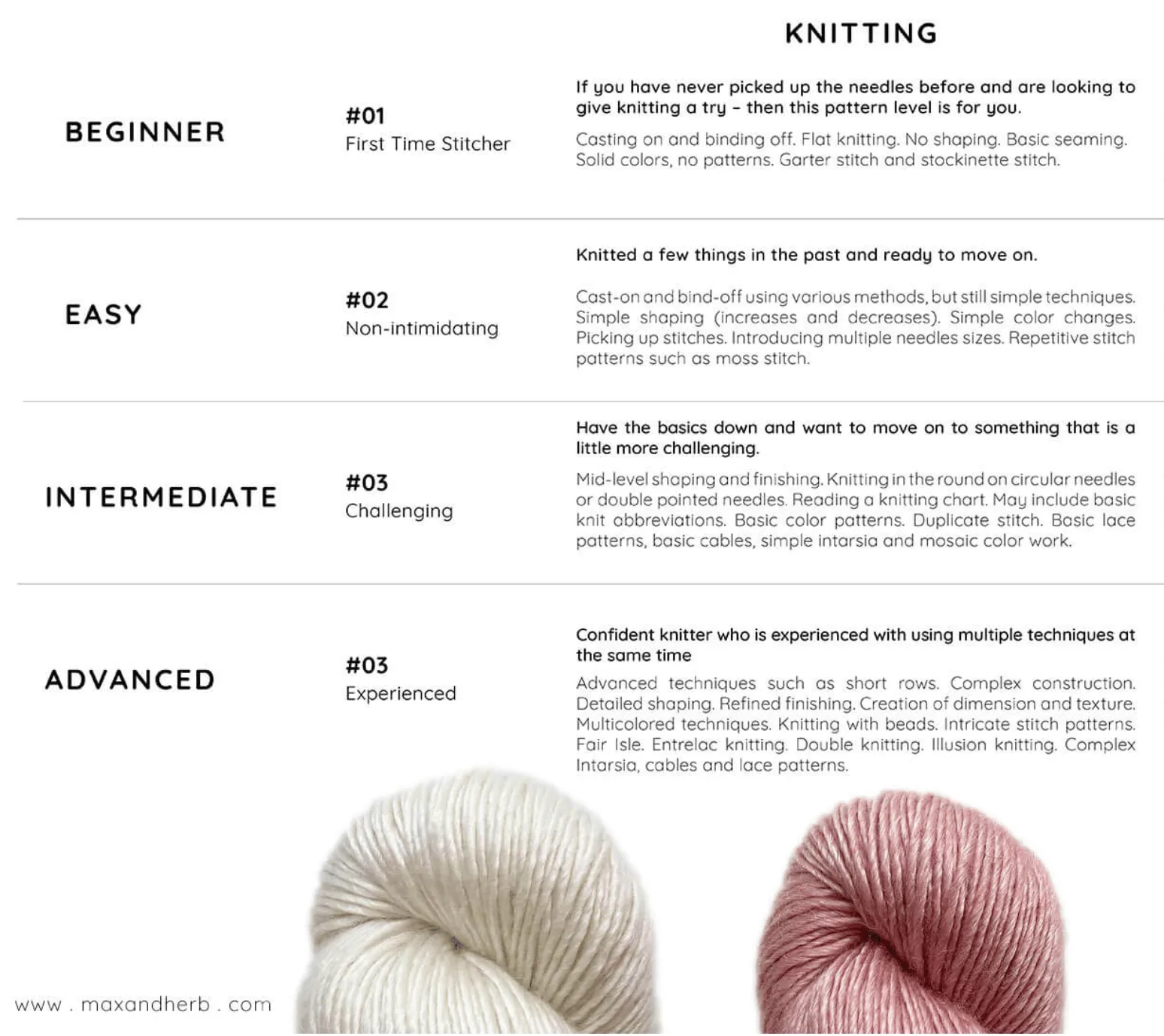
There are some who argue that knitting skills are not hierarchical, meaning they don’t follow a progressive path.
And there is some truth to that.
For example, you can learn the knit stitch, and then how to yarn over, and a couple decreases, and then you can knit lace. It’s feasible to do that within a day or two of learning to knit.
Nothing stops a person from jumping straight into cables, or fair isle colorwork, or knitting a sweater as their first project.
It’s possible to learn all of those skills at one time and have no issue being successful.
In fact I would argue once you understand the basic mechanics of making a knit and purl stitch you can knit practically anything.
At that point it’s only a matter of having VERY clear instructions to guide you along the way.
So if there are no knitting “pre-requisites” what is the point of creating “levels” in the first place?
Knitting Knowledge vs Project Difficulty
As I was researching this topic, someone came up with a good analogy for how “sign posts” are useful.
When skiing there a different classifications for slopes of increasing difficulty.
However, there is nothing stopping someone from going down a triple black diamond run on their first day.
It’s definitely not recommend, but if you’re brave enough you can do it.
The black diamond sign helps the skier to know what they’re getting into, and whether or not that’s something they want to attempt.
An experienced skier will have less difficulty navigating a challenging run, partially because they’ve developed plenty of useful skills, and partially because they’ve skied a lot of mountains.
That experience equates to a deeper understanding of how the sport works and makes it easier to improvise in the moment.
The same applies to knitting.
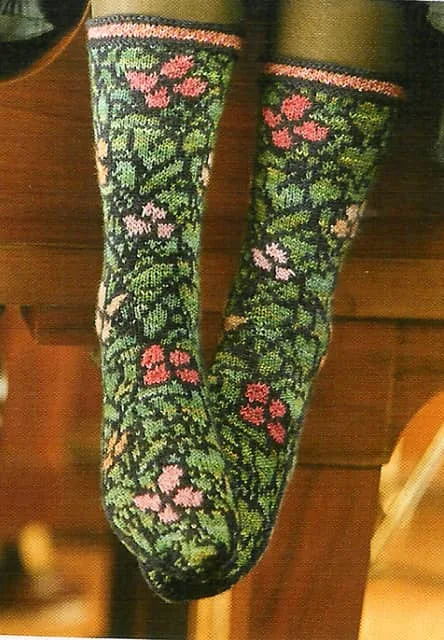
A beginner can attempt a pair of Jungle Socks, but they will struggle if they’ve never knit intarsia, stranded colorwork, or socks before.
At the same time, an experienced knitter can successfully knit a poorly written beginner pattern because they have an understanding of how the knitting should work.
The Knit Rank system is an attempt to create useful sign posts around project difficulty AND help knitters build deeper knitting knowledge along the way.
Is there a knitting hierarchy?
I believe there are some skills within knitting that build upon each other.
You have to learn how to cast on first. Then you will learn how to hold your yarn. Next you’ll learn the knit stitch, how to turn a row, and then maybe the purl stitch.
You need to know how to knit and purl to do ribbing, and you need to know what a yarn over is to do lace.
Do you have to know how to knit in the round to knit a sweater?
Nope!
But it saves you a lot of seaming if you do.
Can you knit socks without knitting a hat?
Of course!
But the socks might be easier if you’ve knit a hat before.
And you can knit hundreds of socks without ever knitting cables or lace or colorwork. You can also knit socks using one of a dozen construction methods, 20+ heel shaping methods, and 18 different toes styles.
The purpose of the Knit Rank system is not to map how deep you can go on a specific topic.
It’s not even meant to say what the “right” way is.
The goal is to show a path one can take to master a multitude of knitting skills with the least friction possible.
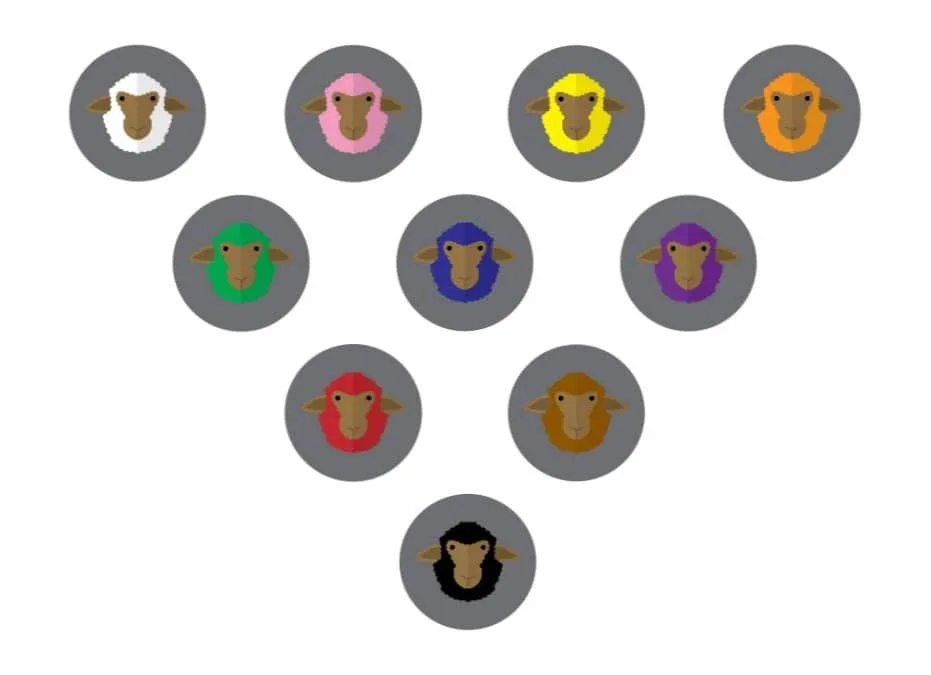
Knit Rank Master: Levels 8-10
I’ve split the different levels up into 3 phases, based on traditional medieval guild designations; Apprentice, Craftsman, and Master. Some guilds had a 4th term, Journeyman, but that’s less commonly known so we’re not using it.
Last time we looked at the Craftsman levels; Orange, Green, Blue, and Purple.
This week we’re going to explore the Master ranks; Red, Brown, and Black.
Level 8 • Red Fleece
Skills focus: Circular yoke sweater construction, increasing within color work, finishing techniques like steeking and button bands.
Virtue: Helpfulness
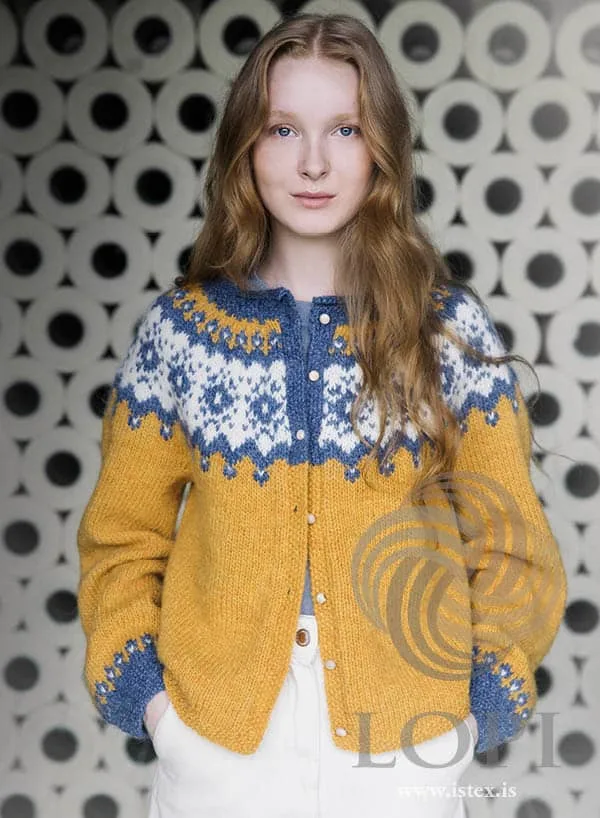
Mastery Project: Icelandic style circular yoke sweater
The skills in this level are all about finishing. On top of learning a new garment construction, we’re focusing on making our knits look professional with strong attention to detail.
We’ll expand on our colorwork experience and explore a truly fearless technique in steeking.
Our virtue for this level is helpfulness. If you haven’t started already, this is a great time to think about passing on your knowledge. You can do this either formally through teaching classes, starting a blog, or YouTube channel, or informally at knit nights or just helping a friend.
Level 9 • Brown Fleece
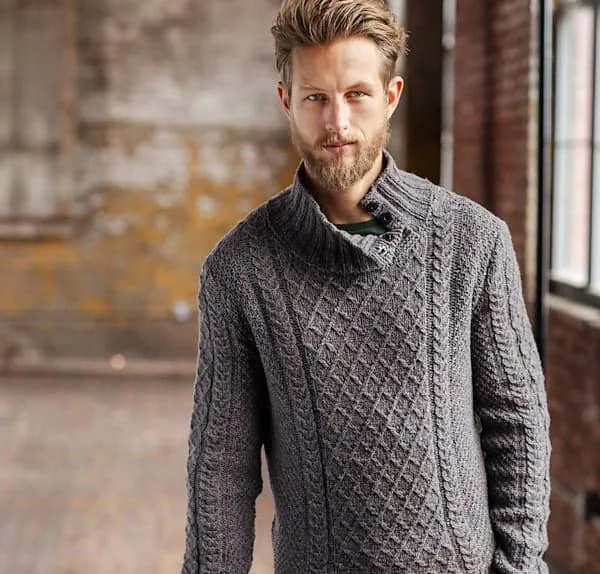
Skills focus: All-over cables, set-in sleeve sweater construction, fitting garments, sewing together garment pieces.
Virtue: Joyfulness
Mastery Project: Cabled aran set-in sleeve sweater
Here our skill focus is all about structured sweater construction. Not only are we making sure all our sweater pieces fit together, but we’re also covering them in advanced cable patterns.
Our virtue is joyfulness because although working through complicated cable charts or instructions can be tedious, it is the process that we love. We knit for the joy of every stitch made with our own two hands.
Level 10 • Black Fleece
Skills focus: Combining colorwork techniques, working with more than 5 colors at a time, shaping with all-over colorwork.
Virtue: Humility
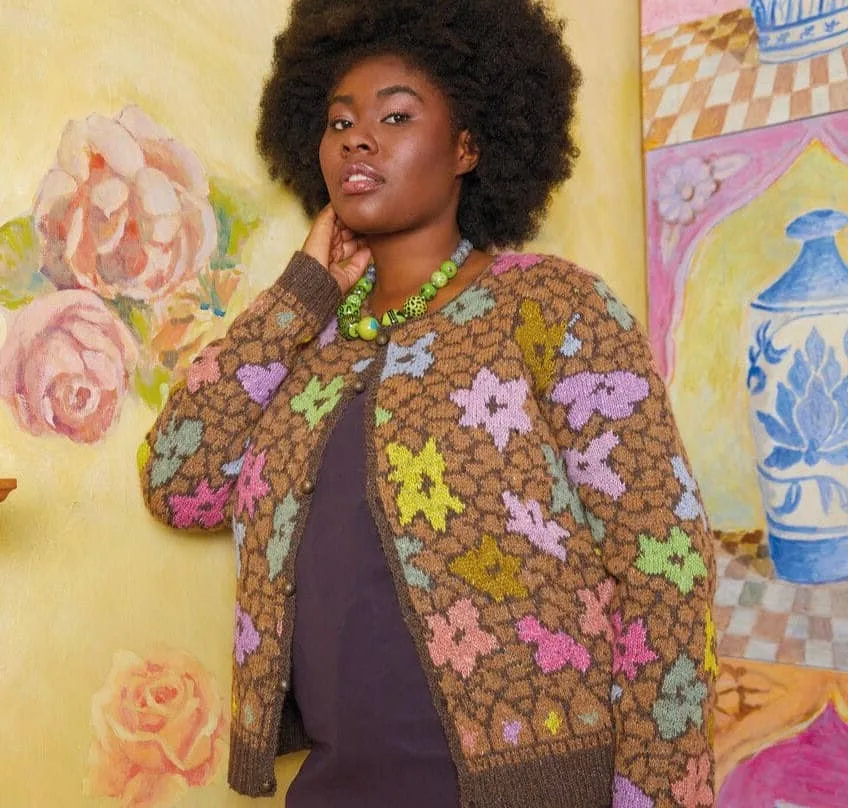
Mastery Project: All over intarsia colorwork cardigan
At this level everything is about the details. Managing a multitude of colors while keeping track of shaping your garment takes high levels of skill. Using stranded colorwork and intarsia within the same project demonstrates flexibility in your technique. And making sure everything fits properly in the end shows true mastery.
Our virtue is humility. By this point you should be confident that you can knit anything. You’ve probably already designed some of your own items. But remember that even a master has plenty left to learn.
But what about…
You’ll notice that all of our final projects are garments.
The reason for that is I think it takes a lot more skill to integrate shaping and finishing along with color or texture than is does to make a lace wedding shawl.
That doesn’t mean knitting a fine lace shawl isn’t challenging, but it isn’t as practical as making advanced level garments.
The point is not to cover every type of project in every combination of knitting style. We didn’t touch on all colorwork styles, brioche, or 3D knitting. There’s plenty left to explore.
Becoming a master doesn’t mean knowing everything. It’s knowing that regardless of the project, you can knit pretty much anything.
There are projects I think are even more complicated and daunting than what I’ve outlined here. Which is why there might be more than 10 levels…
But what do you think?
Am I on the right track?
Did I miss something? Should the order be different?
Is this helpful in understanding your own skill level?
Here’s a couple of upcoming events you might want to check out!
Knit Happy Summit (Feb 15-18)
I’m doing a presentation about Fearless Knitting at this event, as one of 20+ knitting experts!
Headband KAL
Feb 11 - Mar 3
Space is limited
Join us as we explore new techniques through a quick headband project.
4 projects to choose from!