

Not yet published: imported
Is knitting cables really that hard?
You're thinking about whether you're going to have ice cream for dessert tonight along with your chocolate chip cookies.
Here’s a bit of a hot take.
ALL cable knitting patterns are simple.
There.
I said it.
Now I know what you’re thinking.
You’re thinking about whether you’re going to have ice cream for dessert tonight along with your chocolate chip cookies.
Or maybe you’ll have chocolate chip cookie dough ice cream instead…🤔
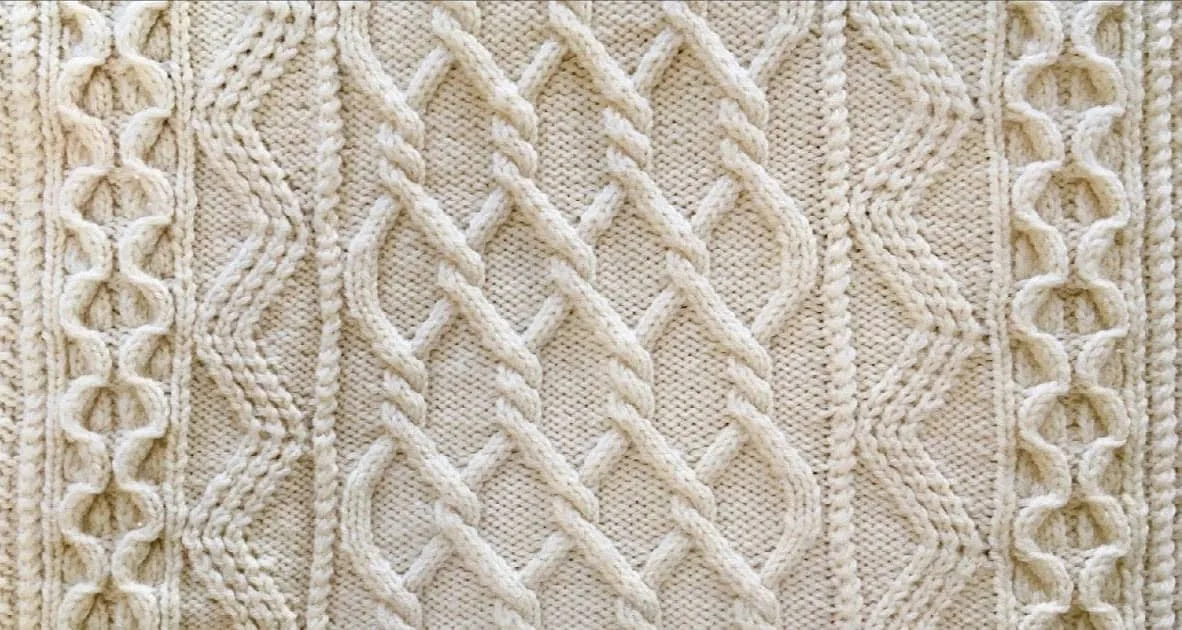
Ok, maybe you were thinking, “Johnny, don’t be ridiculous. That giant aran cable blanket is so complex, there’s NO WAY it can be simple.”
To that I say poppycock!
And I’ll prove it.
The Secret to Simple Cable Knitting
There is ONE concept you need to understand in order to knit ANY type of cable.
SWAPPED STITCHES
That’s it.
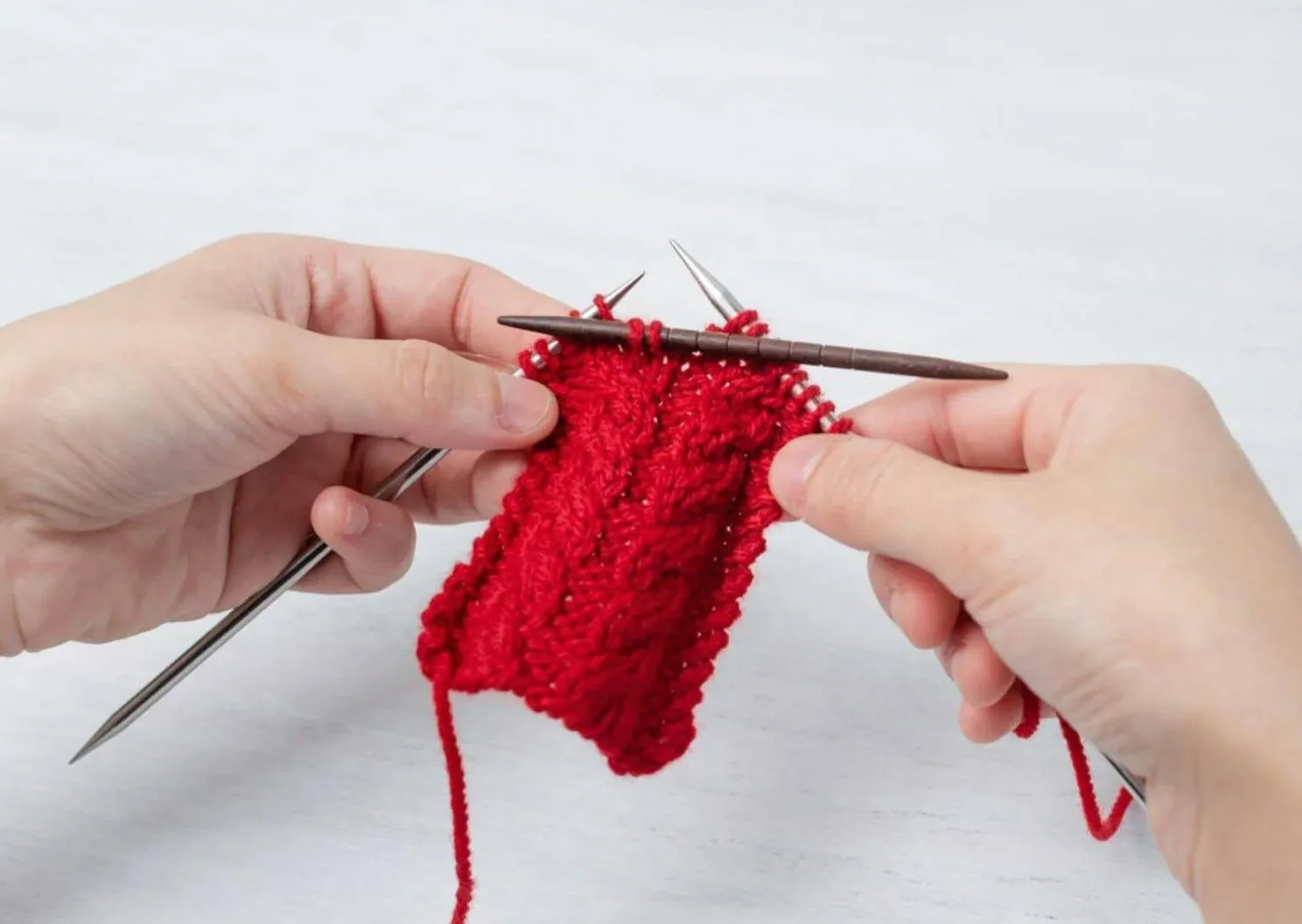
All cables are taking one set of stitches (sometimes more) and swapping them with another set of stitches.
We often do this with the aid of a cable needle, which allows you to hold some stitches to be knit later.
This can be a little annoying to manage, but once you get the hang of it it’s not actually difficult.
You’ll place your stitches to be swapped on the cable needle, hold those stitches in front of your work, or behind, work the next few stitches from your main needle, then the stitches off the cable needle.
Almost every single cable you will find follows this ONE same principle.
But there are SIX things that determine how a cable looks.
The SIX Elements of Cable Knitting
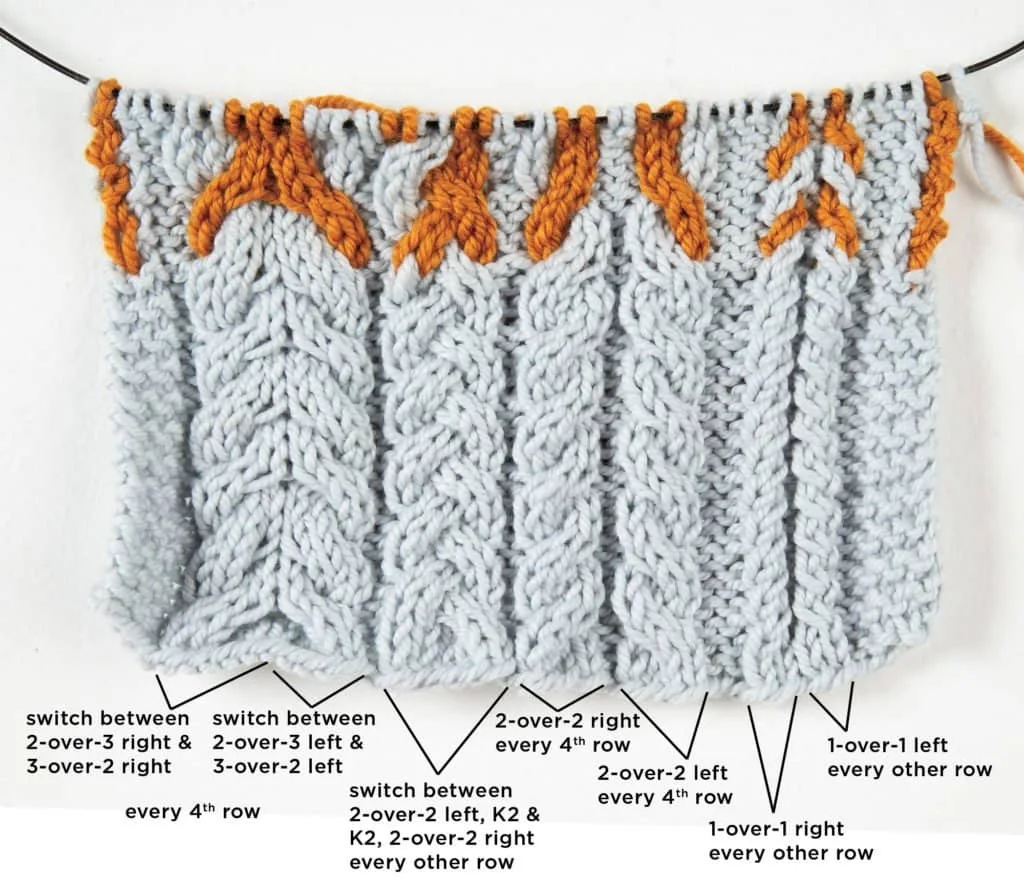
All cables have six components which determine how they will turn out. Once you understand these elements you can easily create your own cable creations.
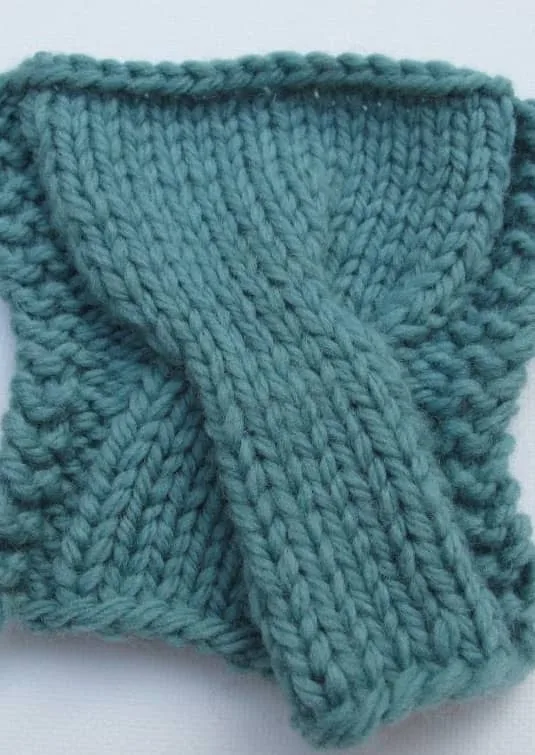
Front or Back (Left or Right)
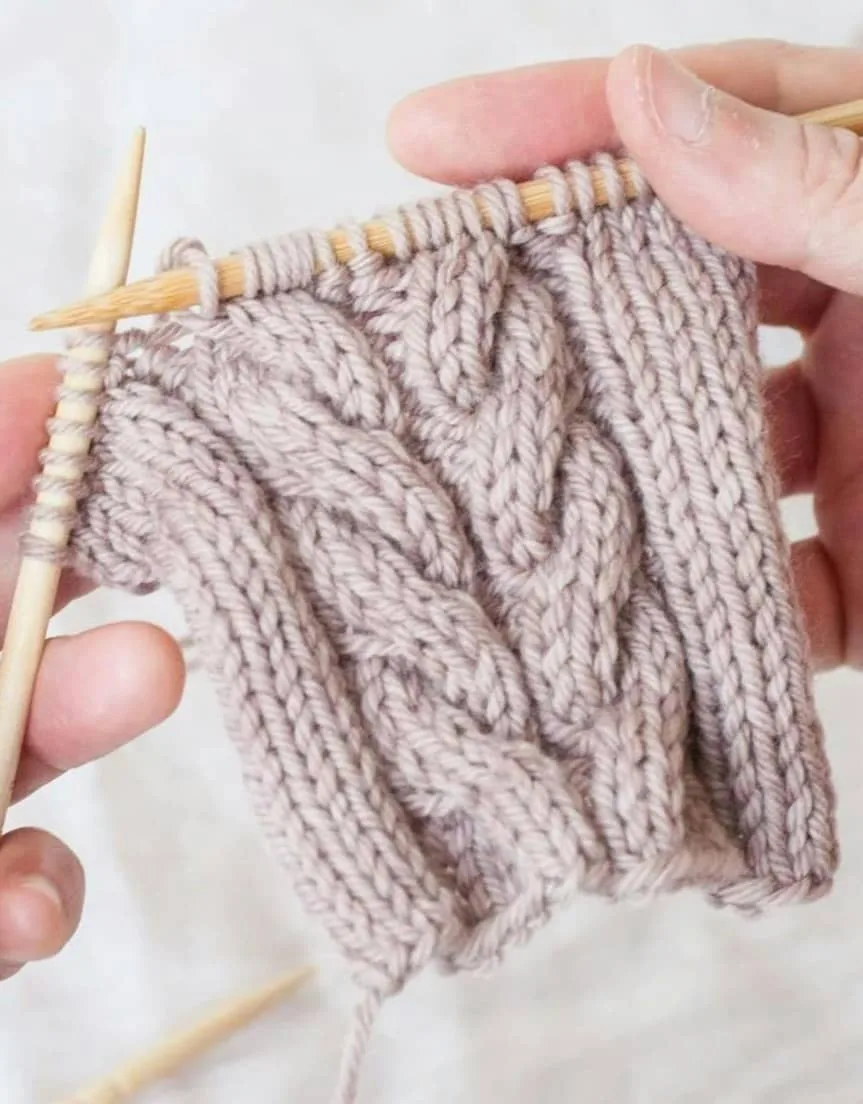
The most important element is which direction the cable will lean. By holding your waiting stitches in front of your work you create a left leaning cable. If you hold those stitches behind your work the cable will learn to the right.
Image via Quince & Co
Stitch Count
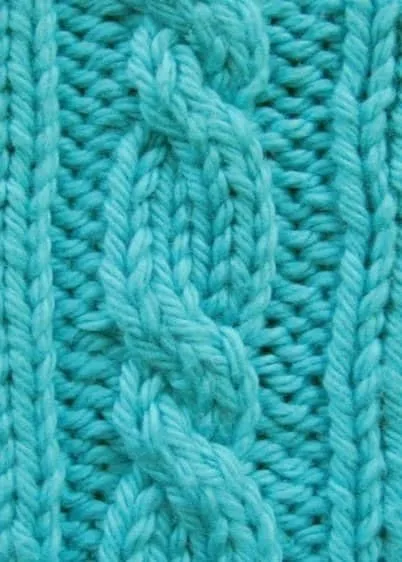
This determines the width of the cable. Swapping a total of 2 stitches will result in a thin cable. Swapping a total of 16 stitches will give us a really big cable.
Usually we swap a symmetrical set of stitches (ex. 3 sts swapped with 3 sts). However there are cables which swap an asymmetrical set of stitches (2 sts over 3 sts or 1 st over 3 sts).
Image via MDK
Repeat Interval
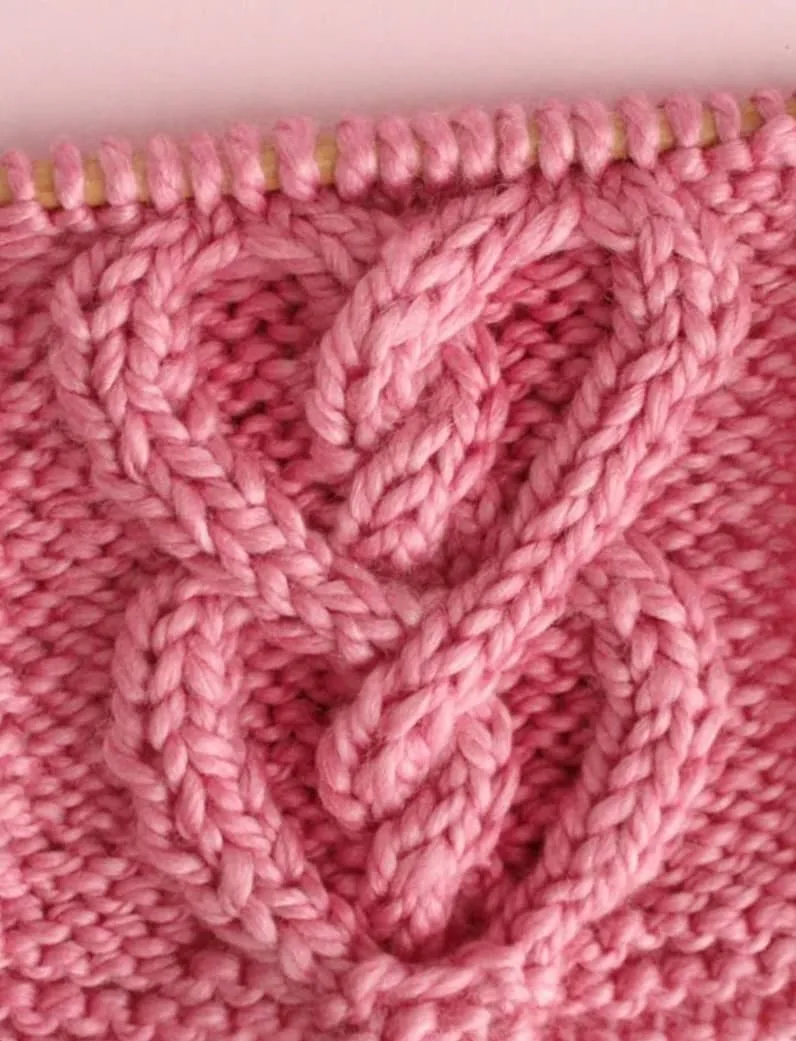
The frequency in which you repeat a cable stitch will determine how “tall” that cable is. Repeating after a few rows will create a tighter, braid like cable pattern.
Spacing those repeats out further gives the cable a rounder, oval like shape.
Image via How Did You Make This
Knits or Purls
Most cable stitches are all knits. However, you can knit OR purl these stitches to created different effects.
Doing this can isolate stitches to create unique shapes. These can be diagonals or give the illusion of curves.
You can also give cable columns texture with seed stitch.
Image via Studio Knit
Horizontal Spacing
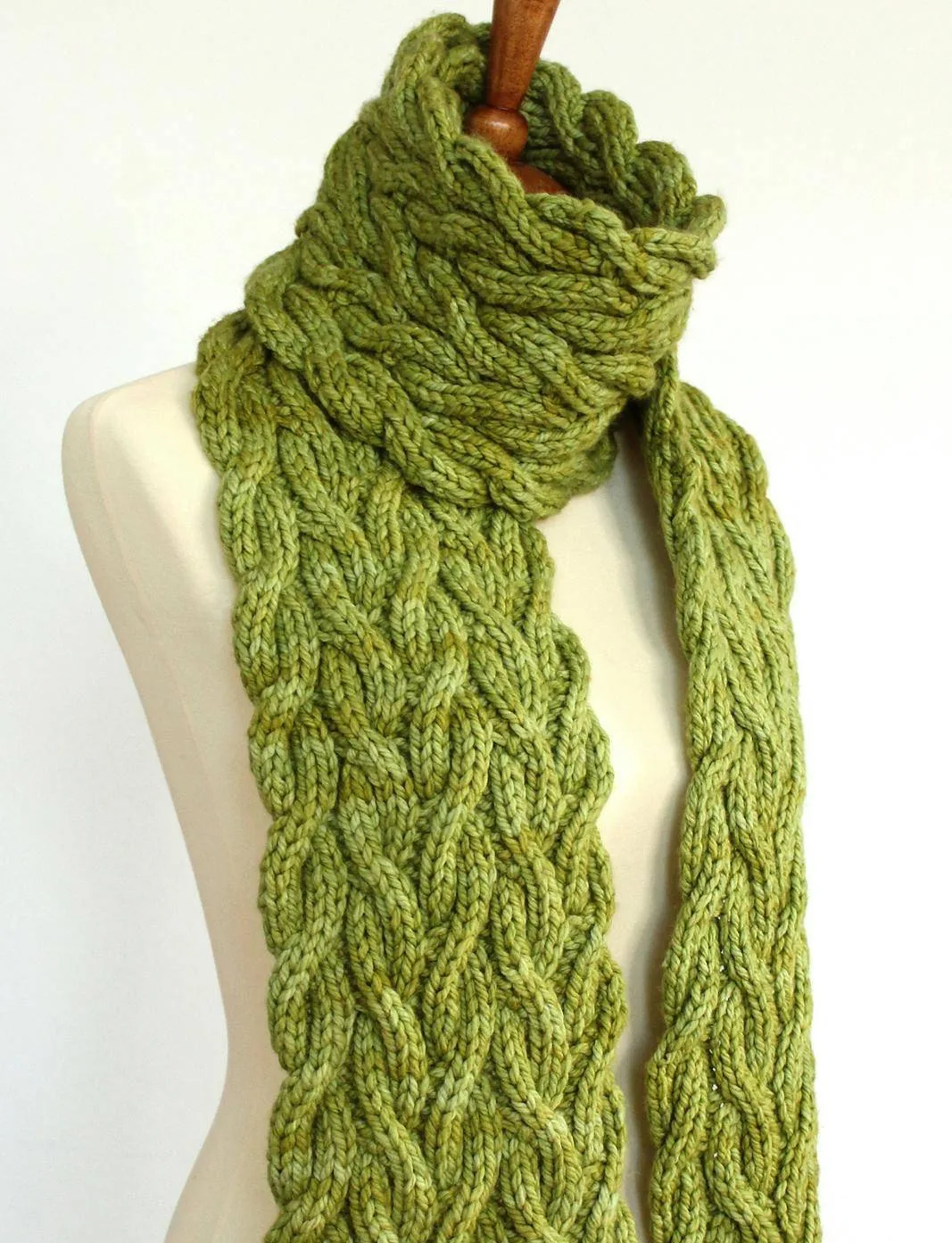
The amount of space between cable stitches drastically changes how your fabric looks. Placing them close together creates all over texture. Placing them directly next to each other can create symmetrical designs. And stacking left and right cables gives the appearance of more complicated stitch patterns.
Image: Meadow Vine Scarf by Kristen McDonnell
Background Stitches
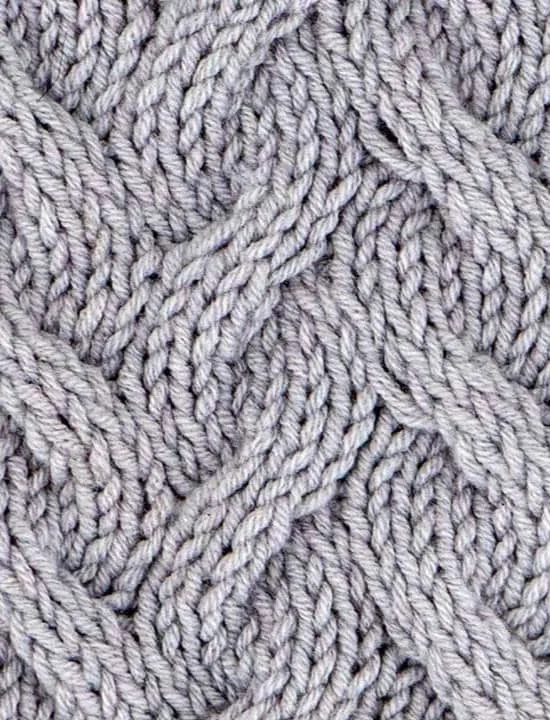
Many cable stitches are knit on a background of reverse stockinette. This makes the cable look like it’s popping off the fabric.
But knitting ALL the stitches makes for fabric that has lots of wavy texture.
Image via New Stitch A Day
These variables are what allow for the infinite variety of cable stitches.
It’s these combinations that make cables APPEAR complex.
But the core principle never changes…
You’re just swapping stitches.
The complexity is all a matter of how times you do that.
So how do we make understanding cables easier?
Cable Charts
Wait!
Come back.
Sit down and hear me out.
Plenty of people hate charts, and I get it.
I avoided them for a long time too.
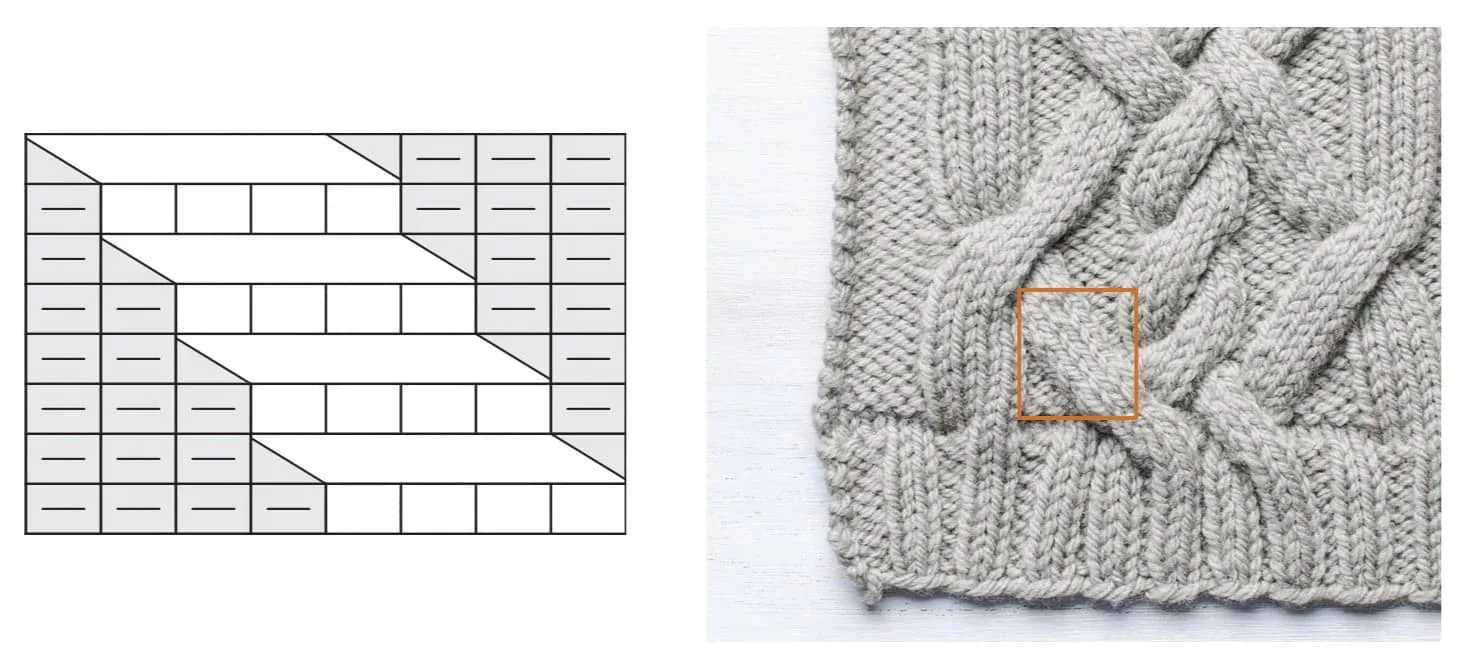
But I strongly believe charts are the easiest way to make complex knitting patterns approachable.
Having a visual representation of every stitch removes A LOT of confusion, and reduces the potential for making mistakes.
Tracking your rows is also pretty straightforward in a chart.
Conclusion
Cables, like most knitting, are much easier than they appear.
But what do you think?
Are you a cable curious or already confidently cabling?
Hit replay and share your experience.
We’d love to hear your story.