

Not yet published: imported
Fair Isle or Intarsia? Which is better?
In December of 2000, Stamford Hospital's surgeon-in-chief James Barone published a study in the British Medical Journal.
In December of 2000, Stamford Hospital’s surgeon-in-chief James Barone published a study in the British Medical Journal.
It’s goal was to put to rest the old adage that apples and oranges are impossible to compare.
Using a set of rigorous testing methodologies which covered everything from size to sweetness, he found some striking similarities.
Apples and Oranges have many common characteristics, including being grown in orchards from flowering trees, are edible fruits, the ability to be juiced, and a vulnerability to disease and insects.
They also have similar weight, shapes, and circumference.
In fact the only glaring difference was the involvement of Johnny Appleseed in spreading the fruit across America.
There’s a reason he’s not called Johnny Orangeseed…
Of course, this study was meant as a joke.
We all know that Apples and Oranges are nothing alike.
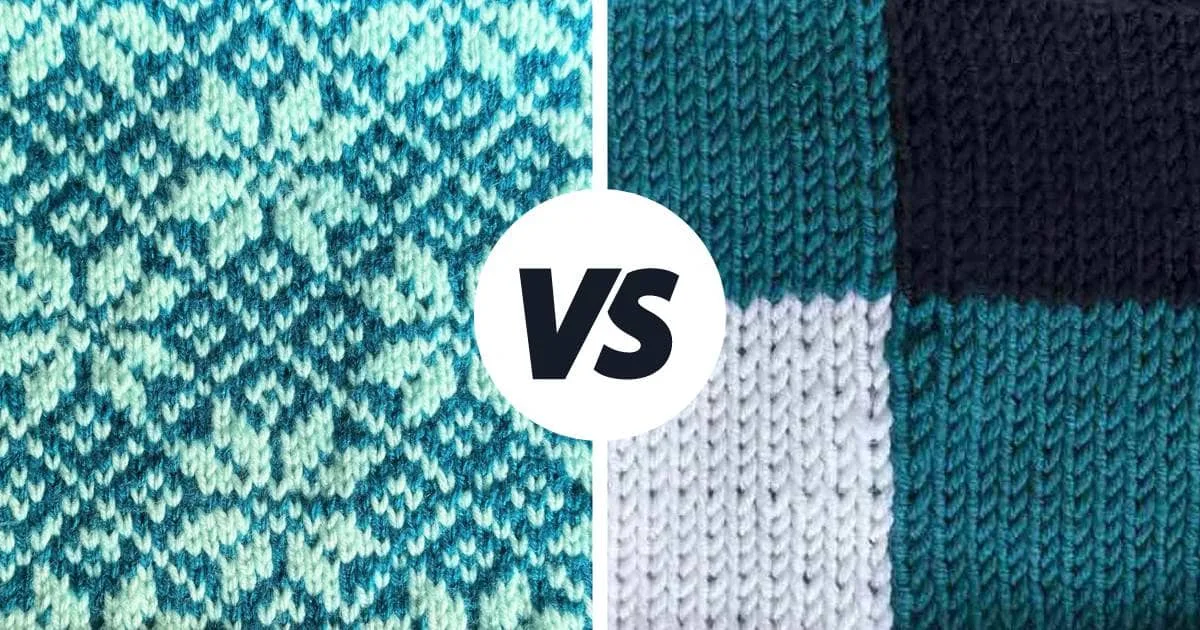
But there are often similar questions about Fair Isle and Intarsia.
While they are both colorwork knitting techniques, that is basically where the similarities end.
The difference between Fair Isle and Intarsia
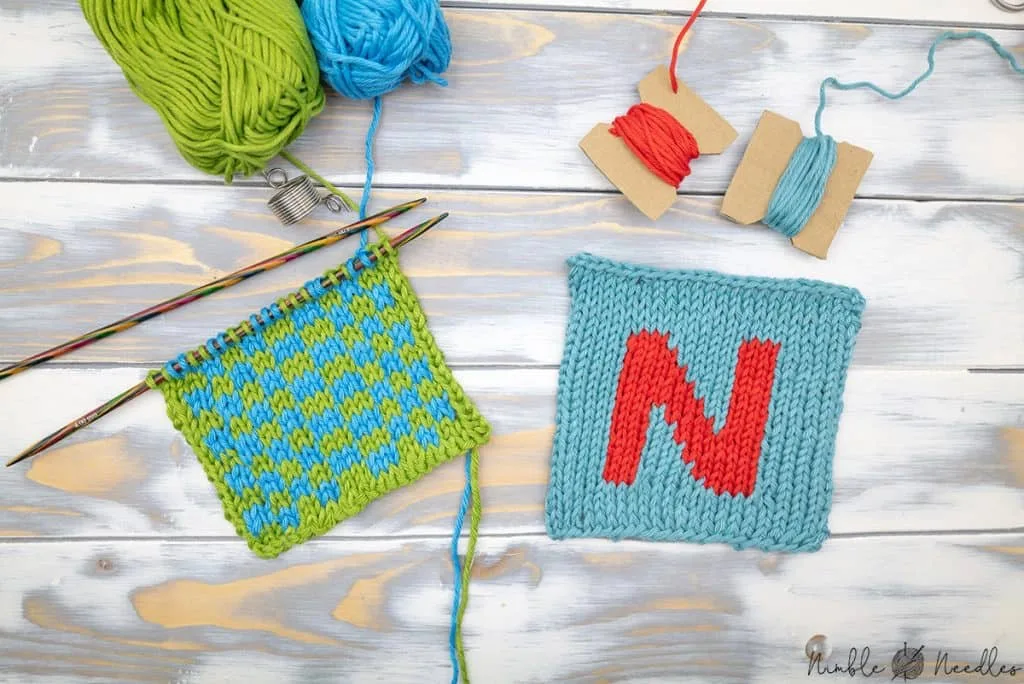
Fair Isle is actually a specific type of stranded colorwork, although the terms have become synonymous over the years.
It’s almost always knit in the round, with two colors alternating within the same row.
When one color is not being knit, it *floats* across the back of the stitch, creating a STRAND.
Intarsia, on the other hand, is characterized by switching completely from one color to another within the same row.
The yarn is not carried behind, so small *bobbins* of yarn colors are often used to make color switching easier.
This technique is used to insert blocks of color in the middle of knitted fabric, like monograms or even more detailed imagery.
Oh, and it’s usually knit flat.
Strengths and Weaknesses of Fair Isle
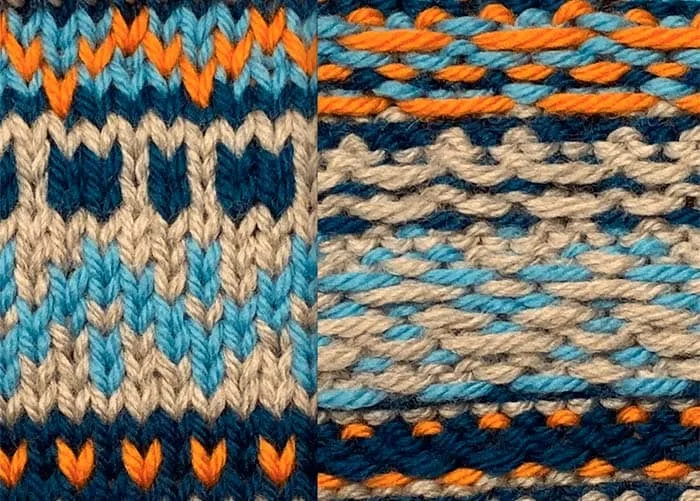
Fair Isle (and other similar stranded colorwork) shines when knit in the round.
Switching back and forth between colors within the same row is relatively easy when only making knit stitches.
This makes it very comfortable to knit once you master holding your yarns.
While traditionally only two colors are used at the same time, this limitation is subverted by switch to completely different colors in other rows.
Doing this gives the appearance of colorwork that is more complicated than it really is.
However, this also means it’s harder to create large graphical images within the fabric.
Fair isle usually ends up with stripes of colorwork with frequent color changes to minimize the length of the strand floats.
On top of that, the strands created by this technique create a thicker fabric, which is warmer and less flexible than intarsia.
Pros and Cons of Intarsia
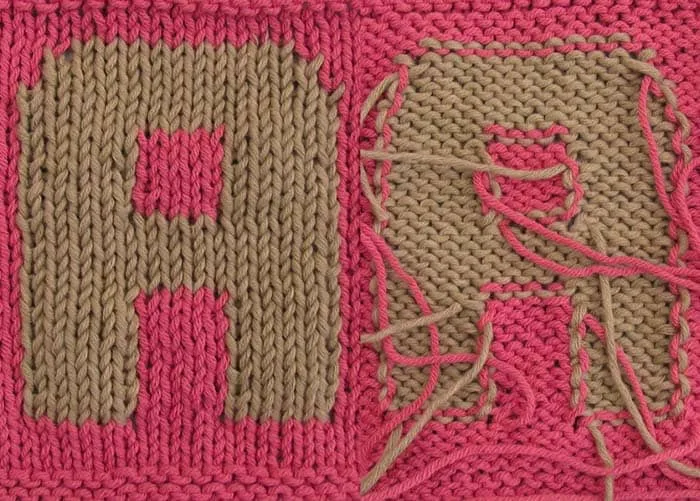
Instarsia is ideal for creating solid blocks of color within a piece of knitted fabric.
The term most likely came from wood inlay techniques, which placed different wood stocks within the same piece.
This allows knitters to make shapes, letters, and pictures in their knitting.
These designs can be placed freely anywhere on the fabric, using as many colors as desired.
However, this also requires that each color has it’s own bobbin of yarn, and sometimes even multiple for the same color.
This can be challenging to manage with ending up with a tangled mess.
In addition, the nature of intarsia means you’ll *almost* always have to knit flat, back and forth.
The color bobbins have to be swapped at the end of their section, so they have to be brought back across on the wrong side.
Can You Knit Fair Isle Flat?
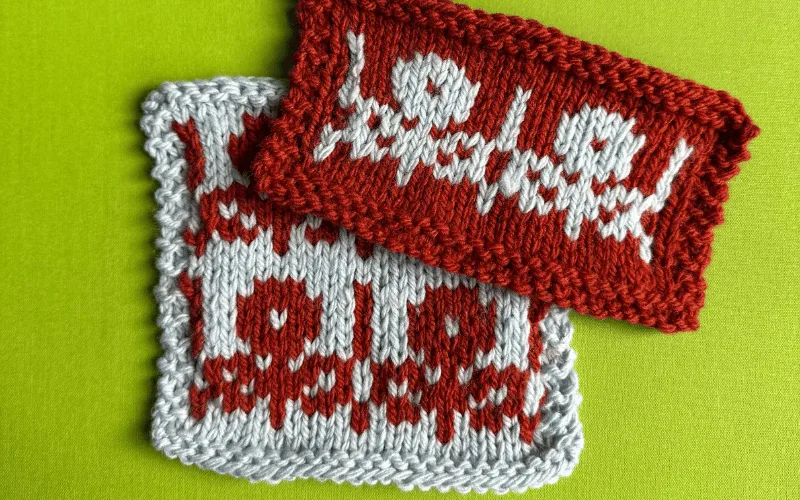
Actually…you can.
And it’s not very hard.
The primary difference is the need to purl on the wrong side rather than knitting ONLY on the right side.
While some designs might make it a challenge to bring the colors back and forth, in general it is easy to do.
In fact some folks find knitting stranded colorwork flat results in more even stitches and floats along the back.
Can You Knit Intarsia In The Round?
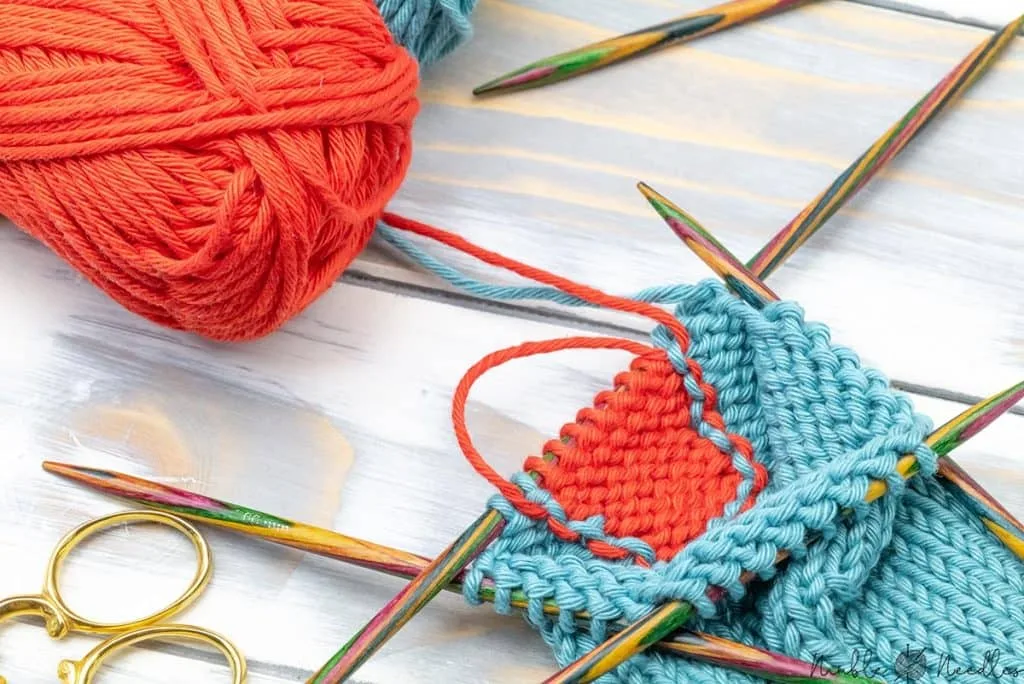
Sort of…?
There are people who have *hacked* their way to knitting intarsia in the round.
This is usually accomplished in one of three ways:
- Slipping stitches along the background during color changes.This basically works like floats in fair isle.
- Invisible *seaming* where you hide your turning point.
- Using something called a provisional join
Essentially, you have to fake knitting in the round with intarsia since you are still knitting flat.
You just do it back and forth until you can continue in the round as normal.
Conclusion
Fair isle and Intarsia are drastically different approaches to colorwork.
Each has their place and use, depending on your colorwork needs.
But what do you think?
Have you tried either of these colorwork methods?
If not, which are you more interested in trying?