

Not yet published: imported
History ·
Discovering the Daring Delight of Knitting Drop Stitches
We've covered a lot of different techniques during our exploration of stitches.
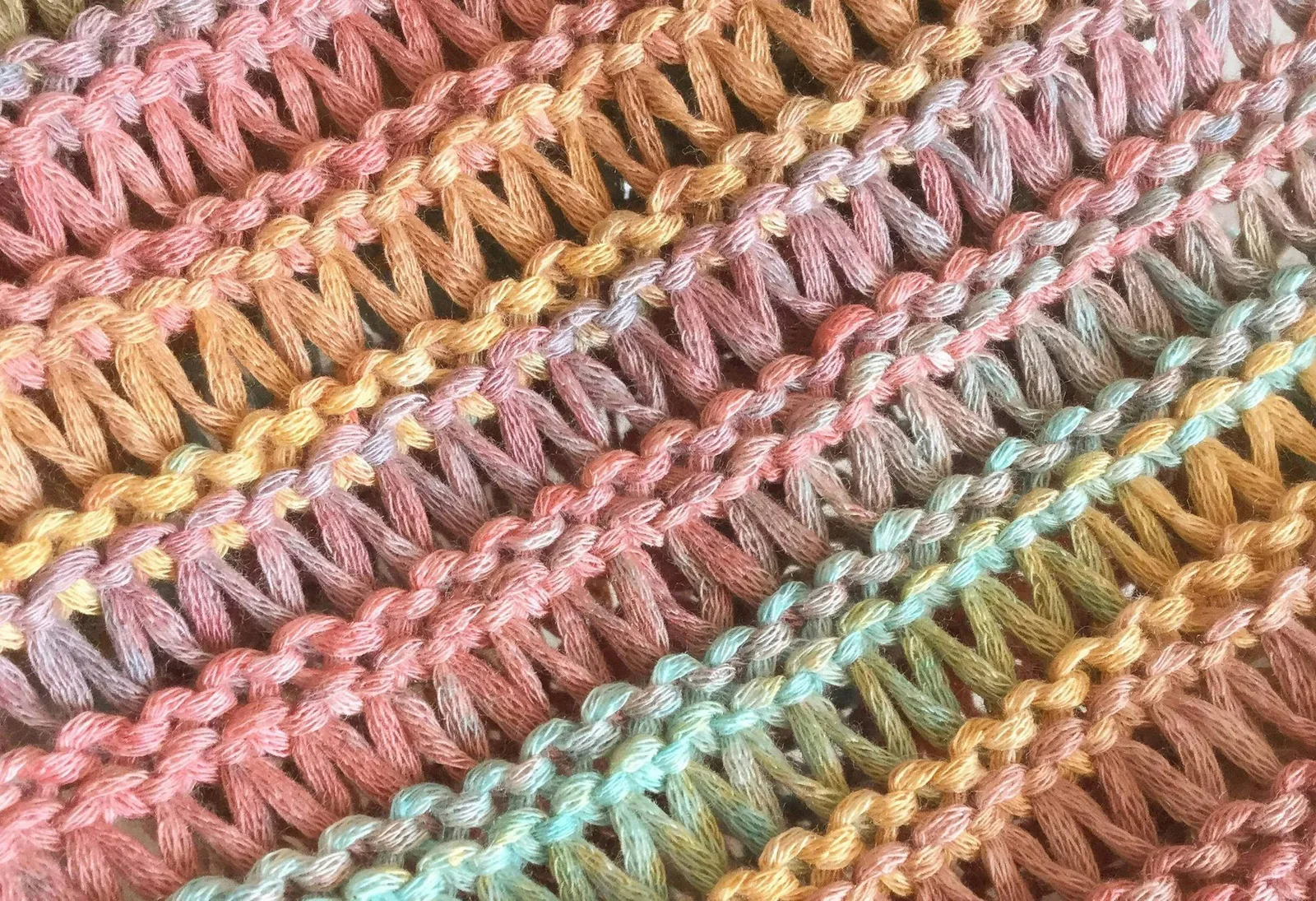
We’ve covered a lot of different techniques during our exploration of stitches. From yarn overs to cables to increases and decreases.
This week we’re looking at a stitch that takes yarn overs to another level.
It’s application is a little limited and while it’s a simple technique, it isn’t always easy to execute.
However, when done well, drop stitches created a truly unique type of fabric that has the advantages of lace without the attention to detail.
Let’s dive in!
What is a Drop Stitch?
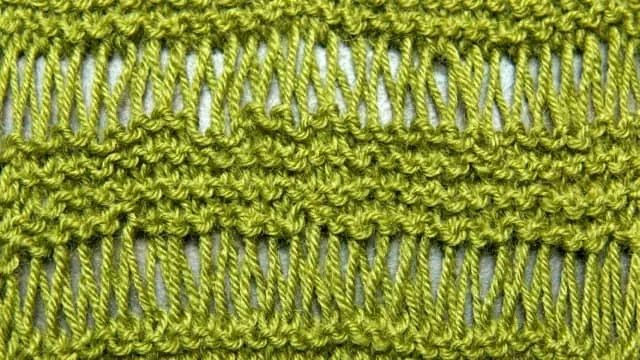
Drop stitches, or elongated stitches, are basically REALLY big loops created through yarn overs.
By wrapping the yarn around the needle multiple times you created additional slack within the stitch.
Before it is knit, you *drop* the extra loops off the needle, letting the stitch fully extend.
The effect is a row of tall “V” stitches that give your fabric a light, airy feel without having to knit lace.
While this technique can be used to great effect on it’s own, it’s also possible to manipulate the dropped stitches in different ways.
Here’s a few examples…
Making Waves with Drop Stitches
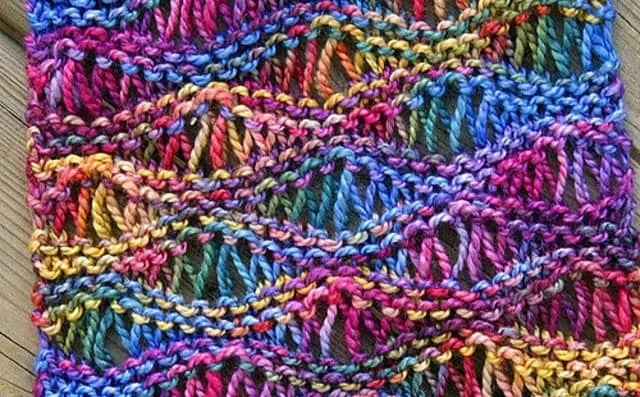
Drop stitches don’t all have to be the same height.
The height of a drop stitch is determined by how many times you wrap the yarn around the needle.
That means you can wrap it twice in some parts, and three or four times in another.
Combining different stitch heights can create wavy shapes in your fabric like the scarf shown above.
The Crown Stitch
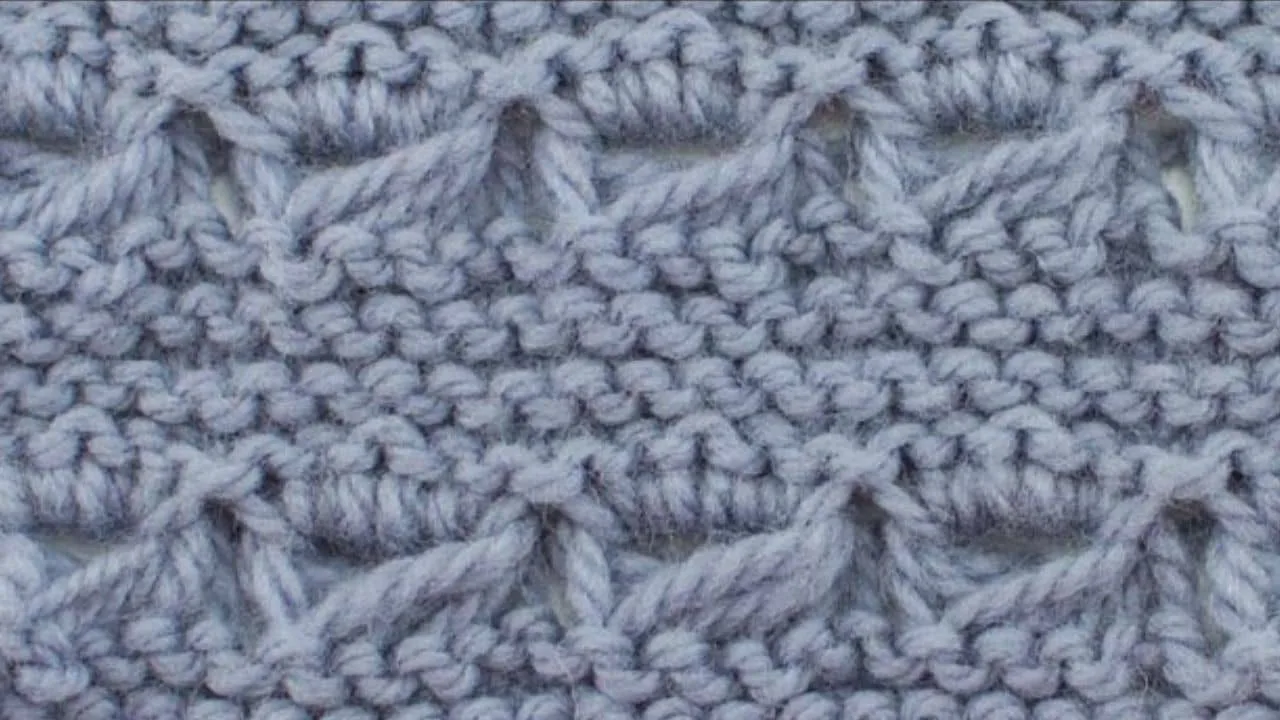
This stitch is similar to a knit version of crochet broomstitck lace.
The idea is to make large loops on a very big needle, then crochet into a group of loops. These loops are gathered together to create an interesting texture.
We can do the same kind of effect in knitting using drop stitches.
After creating a row of drop stitch loops, we’ll knit into a group of those stitches (equal to the number of stitches we’re replacing) to gather them together.
The result looks a bit like a crown, but regardless of how regal it is, the effect is pretty cool.
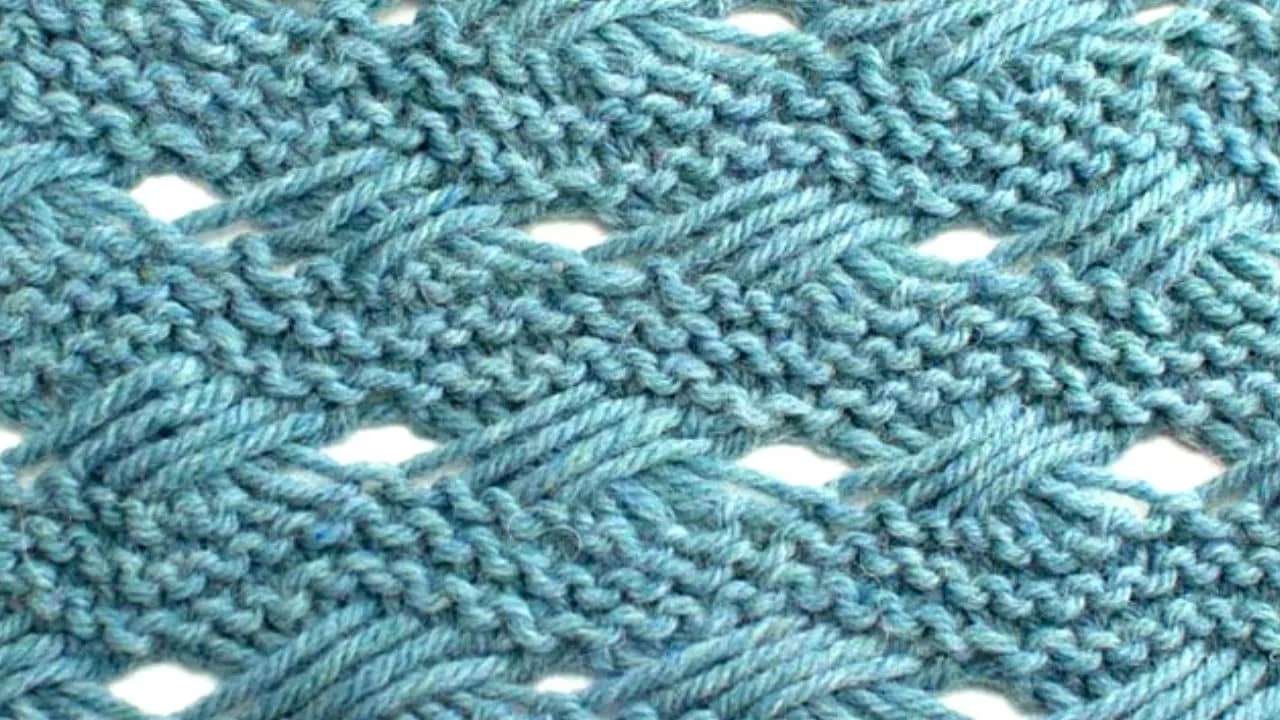
The Indian Cross Stitch
In all my years making knitting stitch tutorials, this is one of the most interesting knitting stitches I’ve ever come across.
As far as I can tell it’s also the only stitch to use this particular spin on the drop stitch.
This uses a technique called threading.
First we start by making a row of drop stitches.
Then we’re going to take an equal number of stitches and *thread* half of them through the loops of the other half.
The result is essentially a cable stitch, but instead of crossing stitches on top of each other, they go THROUGH each other.
It’s not as hard as it looks, but it’s totally worth the extra effort.
Conclusion
So there you have it!
Drop stitches aren’t the most versatile knitting technique, BUT they can create some incredibly unique fabrics.
But what do you think?
Have you used dropped stitches before?