

Not yet published: imported
4 Keys to Master Knitting From Charts
Knitting complex patterns can be a challenge, be it colorwork, cables, or lace.
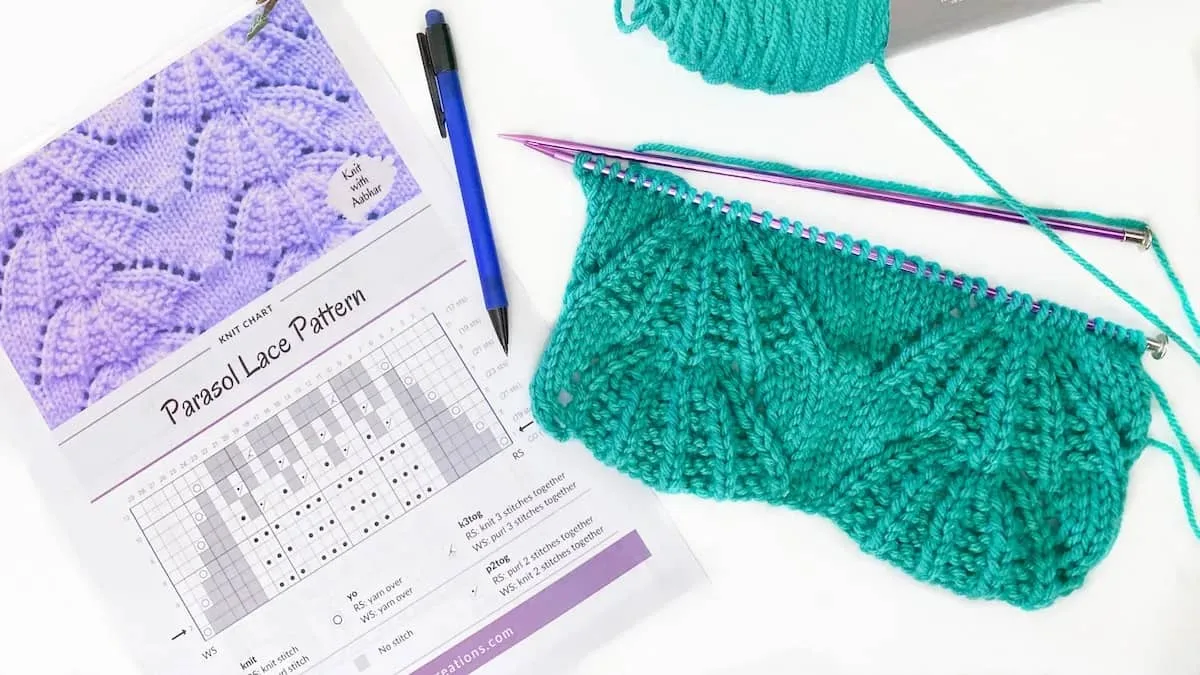
Knitting complex patterns can be a challenge, be it colorwork, cables, or lace.
One way to make managing things easier is through using charts.
Now, I know many people would prefer to get a root canal over learning to read charts.
But knitting from charts doesn’t have to be hard.
In fact learning to knit from a chart is certain to make you a more fearless knitter.
Personally, I find using charts MUCH more simple than reading written patterns.
If you’ve never tired using a charted pattern you may be wondering where to start.
So today I’m giving you 4 simple tips you can use TODAY to practice knitting from a chart.
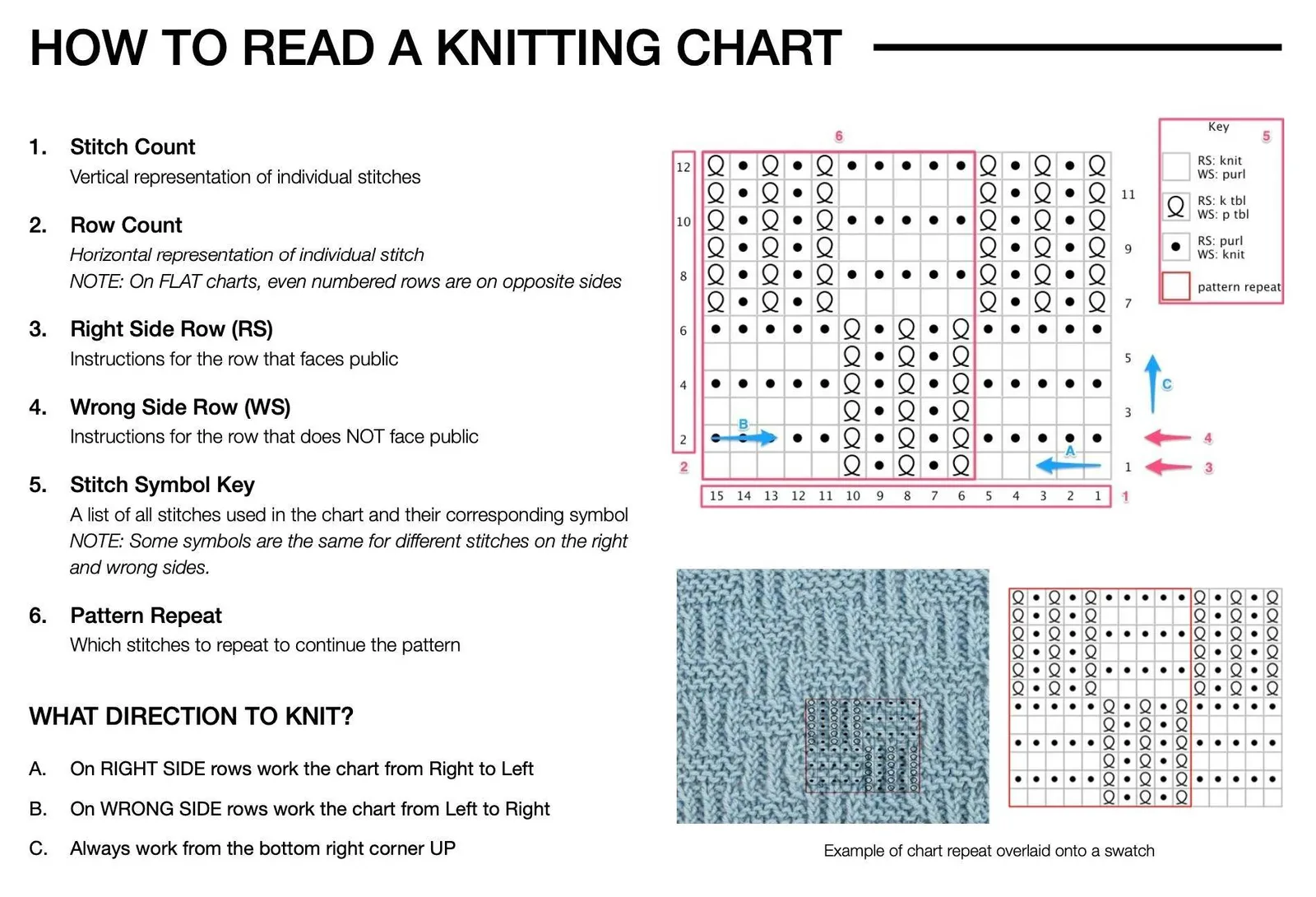
Key 1 - Understand the basics of reading a chart
Charts are a visual representation of your knitted fabric.
It’s kind of like a map of where everything needs to be when you’re done knitting.
Unfortunately there’s no hidden treasure, but it will guide you to your goal.
Just like a map, all charts have the same basic elements.
These are:
- Stitch Count
- Row Count
- Right side row
- Wrong side row
- Stitch Symbol Key
- Pattern repeat (if needed)
The graphic above explains each of these items in more detail.
A chart can be simple or complex. But, it will almost always include these elements.
Key 2 - Start with simple and symmetrical
You wouldn’t try teaching a kid to read using a quantum physics textbook. I’m not sure I would try reading one of those as an adult.
When you start reading you learn vocabulary and basic sentence structure.
The same goes for learning to read charts.
We want to set ourselves up for success.
That means baby steps.
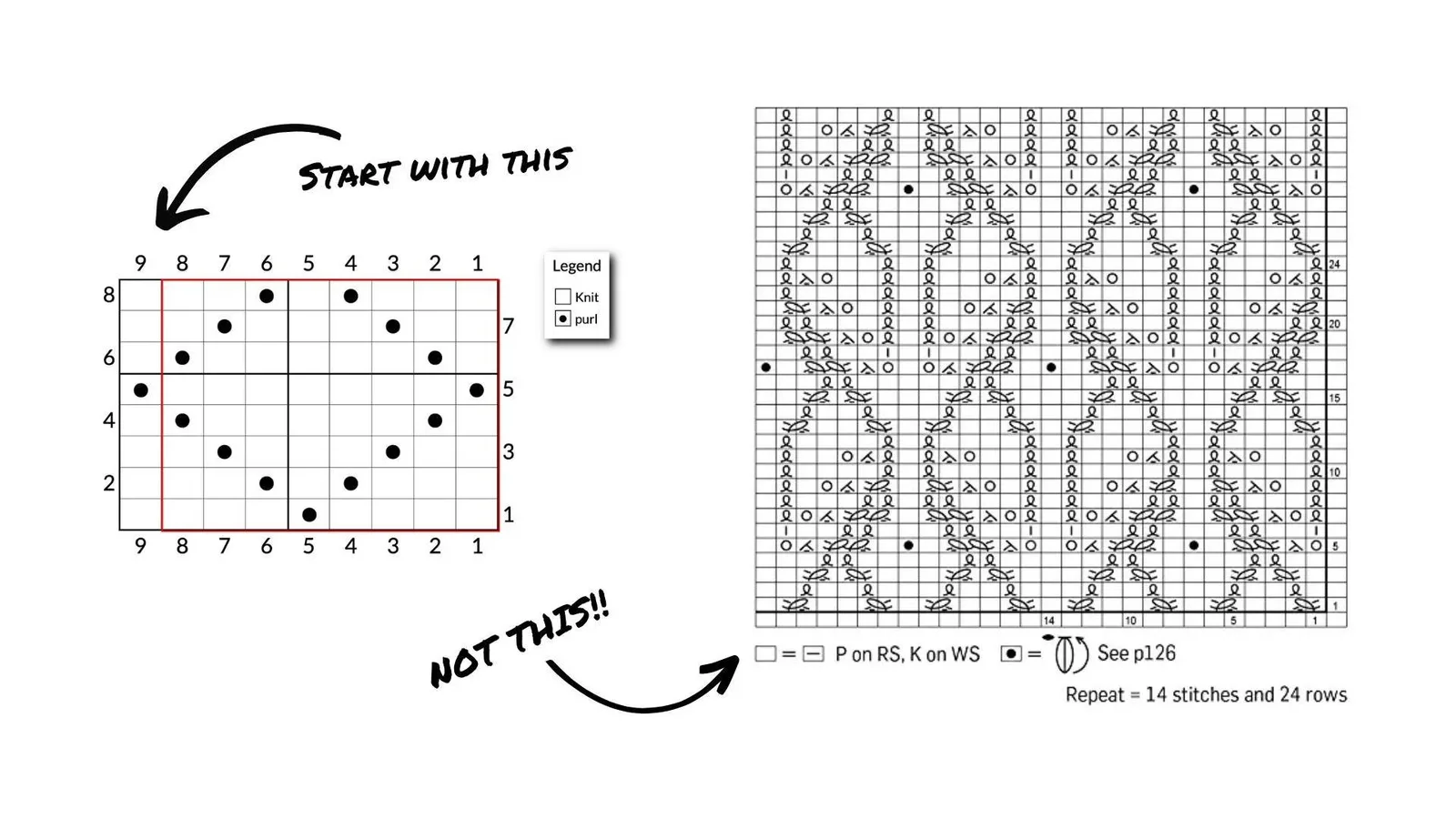
Even if it seems TOO easy, it’s better to begin by using a simple, symmetrical pattern.
Something with only knits and purls is ideal.
A good way to practice is knitting only from the chart. Try doing it without referencing the written instructions.
Key 3 - Print out your chart
Having a physical version of your chart will be a game changer. At least to start.
Yes everything is moving digital these days, but it will be A LOT easier to keep track of your chart by printing it out.
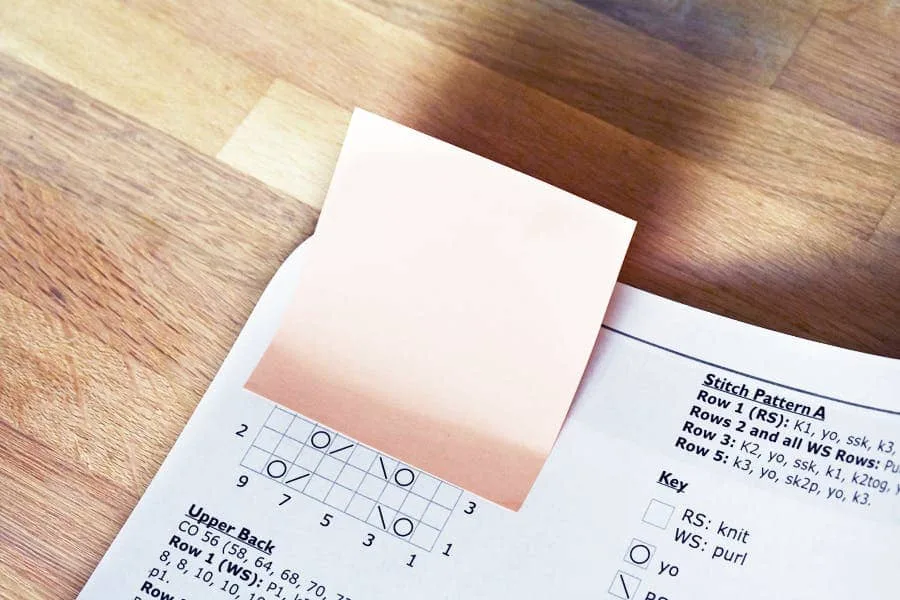
You can make notes, highlight, and even block out rows to focus completely on your current row.
TIP: Use a sticky note to block the part you haven’t knit yet.
Being able to track your progress in a physical form will help set you up for success.
And staying focused on one row at a time will keep you from getting overwhelmed.
You can be just whelmed instead.
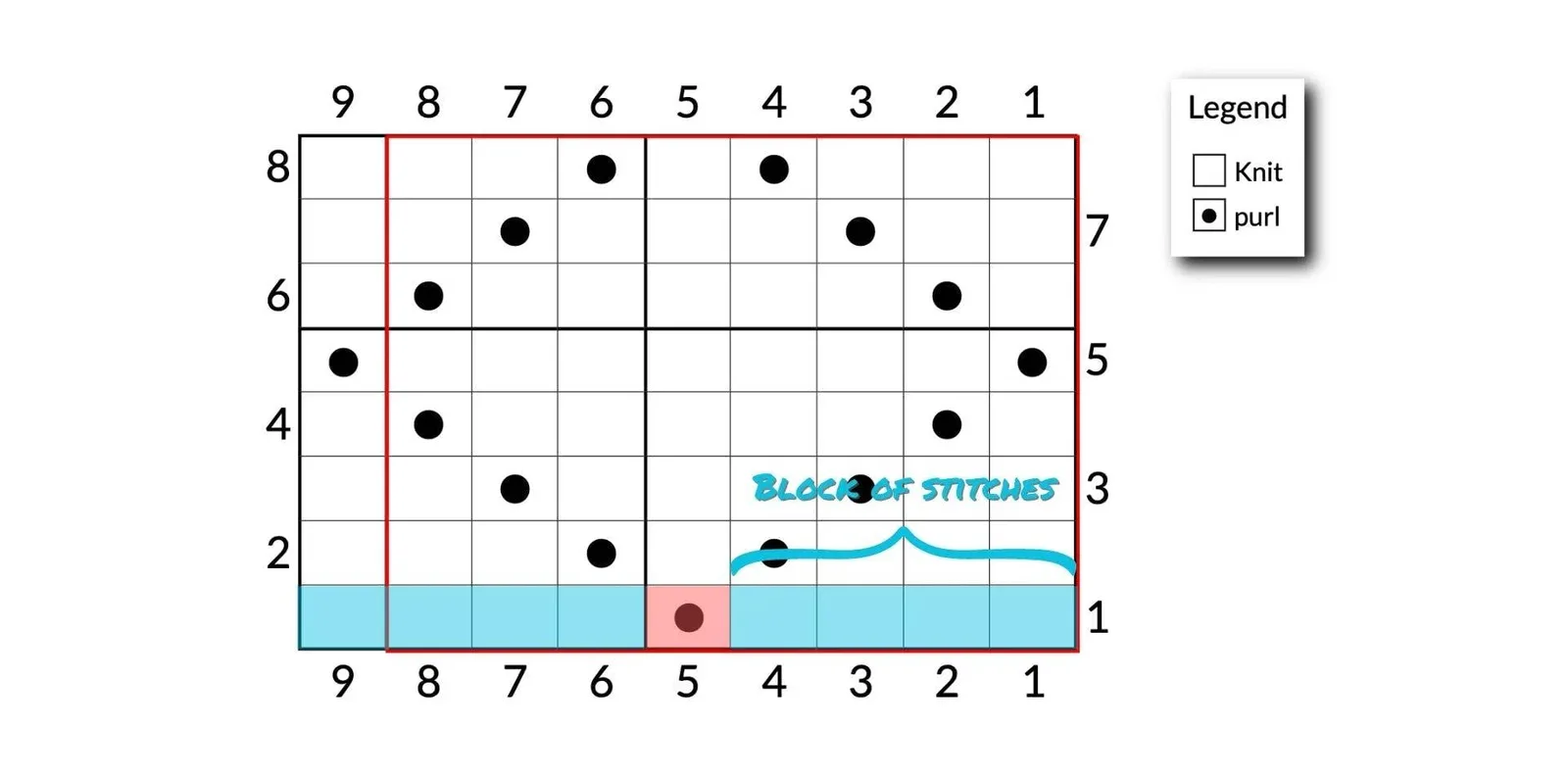
Key 4 - Think in stitch blocks
Charts help us make things simple by giving a visual representation of your stitches.
But, it will be really cumbersome to reference every single square in your chart.
Instead you’ll want to focus on sections of the row that are the same.
Ex. In row 1 of the chart above you have 4 knit stitches, 1 purl stitch, and 3 more knit stitches (in the repeat)
This is like how you actually read a sentence.
You don’t read each individual word.
Often you group together words into phrases and read them all at once.
We want to do the same thing with sections of the row while knitting.
Your knitting will go smoother this way, and smooth is fast.
Additional Resources
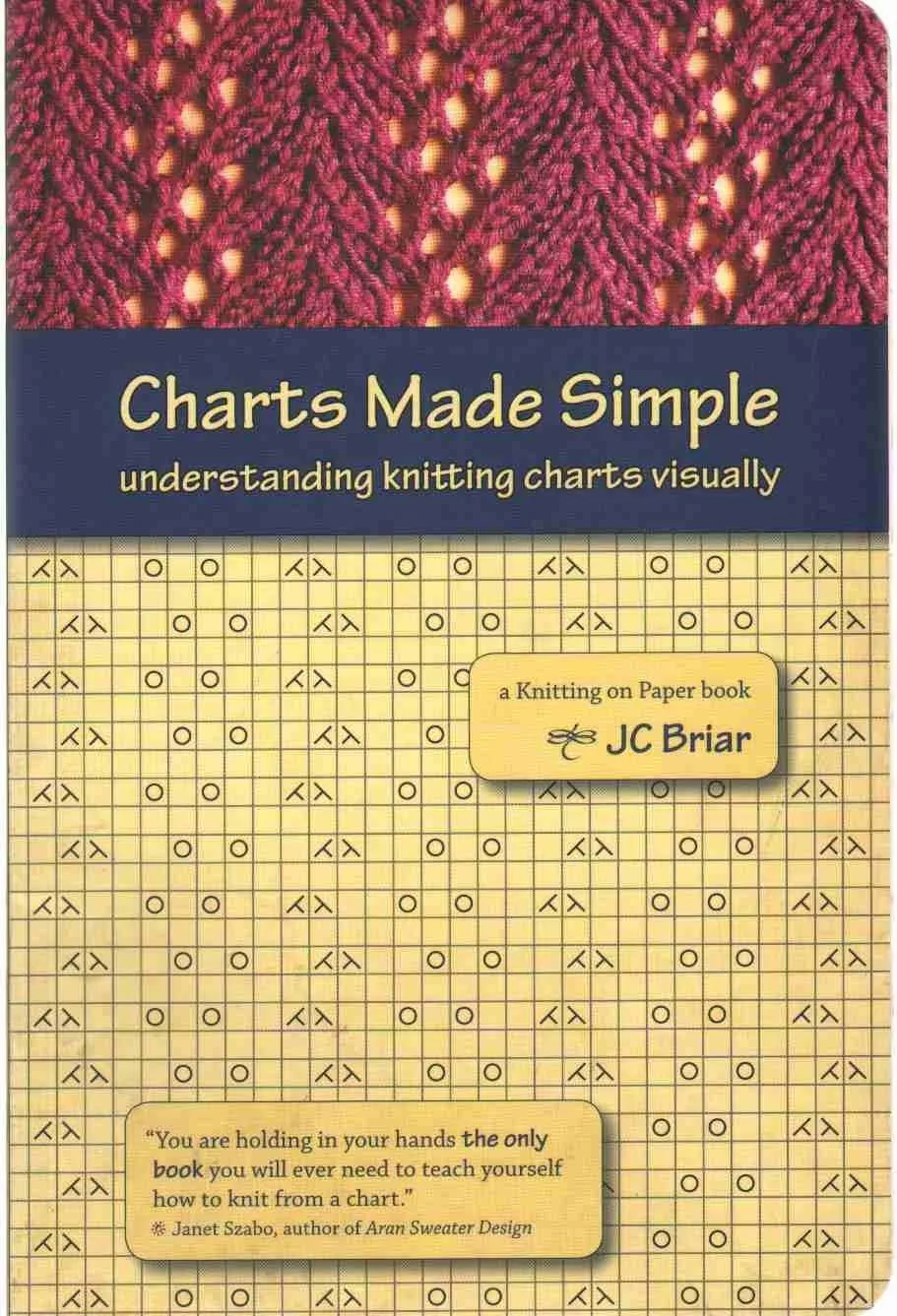
Charts Made Simple by JC Briar (Get it Here)
This book teaches knitters how to read charts – and, better yet, how to make the most of them: to see that a chart is a picture of knitted fabric; to use charts as guides for minimizing and recovering from mistakes; and to handle chart quirks – with ease.
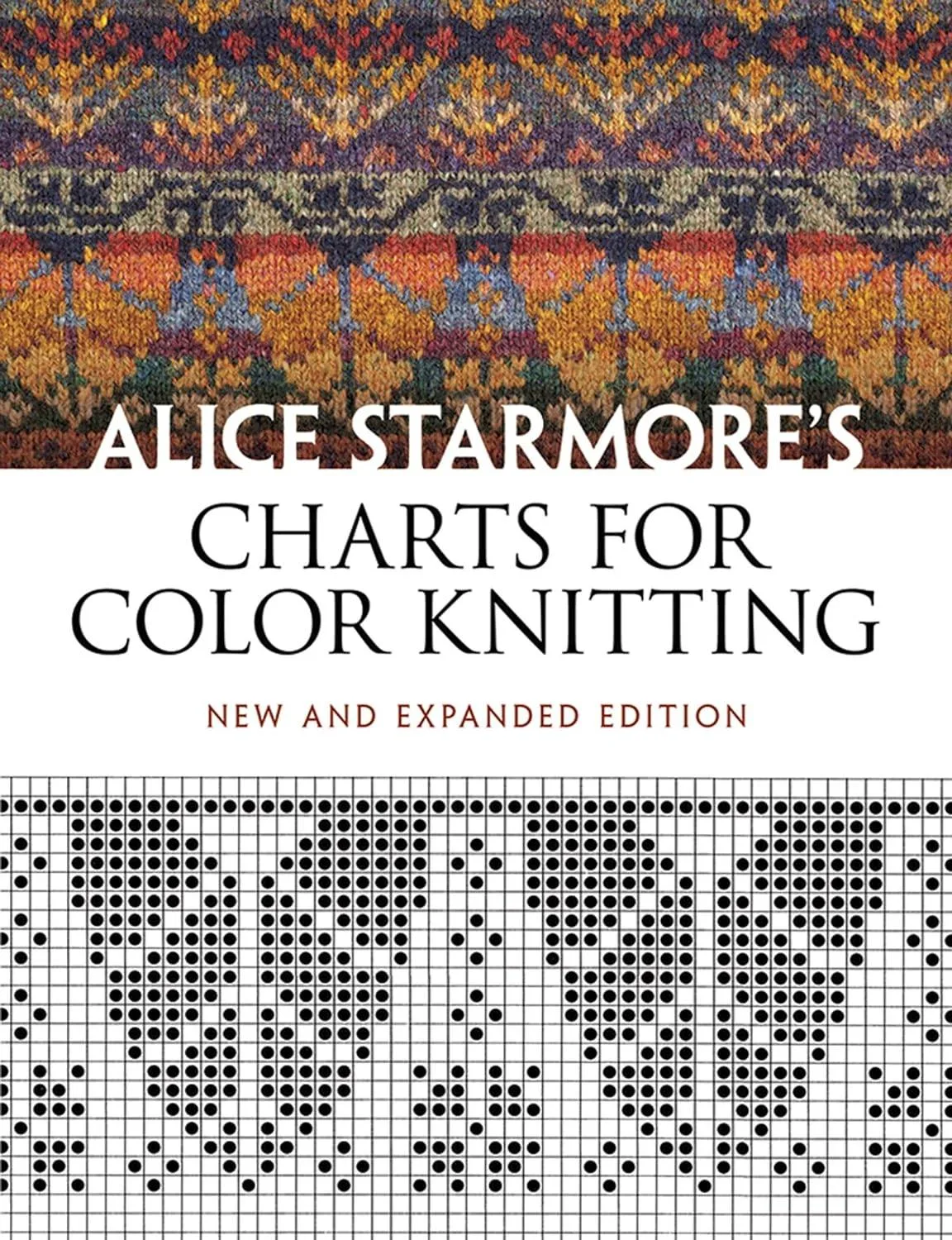
**Charts for Color Knitting by Alice Starmore
This treasury features a selection of chart designs, arranged into four parts: (1) Traditional patterns from Europe, Russia, and South America (2) Adaptations from textiles and other art, including Japanese porcelain and Celtic metalwork (3) Alice Starmore’s own geometric and nature-inspired originals (4) Practical instructions that explain how to incorporate these motifs into unique designs.
Knitter’s Graph Paper Notebook (Get It Here)
There’s nothing like writing out something by hand to get a better understanding of how it works. The same goes for charts, and this graph paper has squares that better match the actual shape of knitted stitches. Perfect for colorwork and practicing charting patterns.
Conclusion
So there you have it!
I hope these tips will help you get started with knitting charts, or improve the way you approach charts going forward.
But what do you think?
Are you a chart knitter?
Why or why not?