

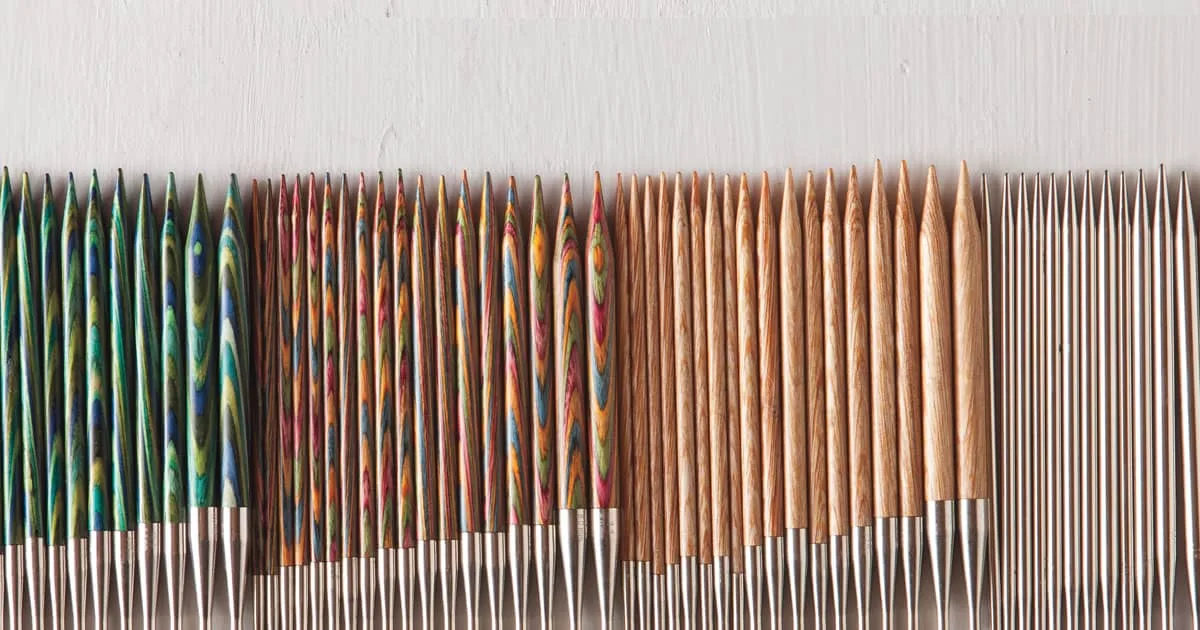
There are lots of knitting needle materials, from whale bone to glass to plastic derived from milk.
But there are two types of knitting needles that fight for the top of the pyramid.
Metal with it’s cold sleek coolness, and wood with it’s comforting warmth.
Each has advantages over the other, but which needle material is the best?
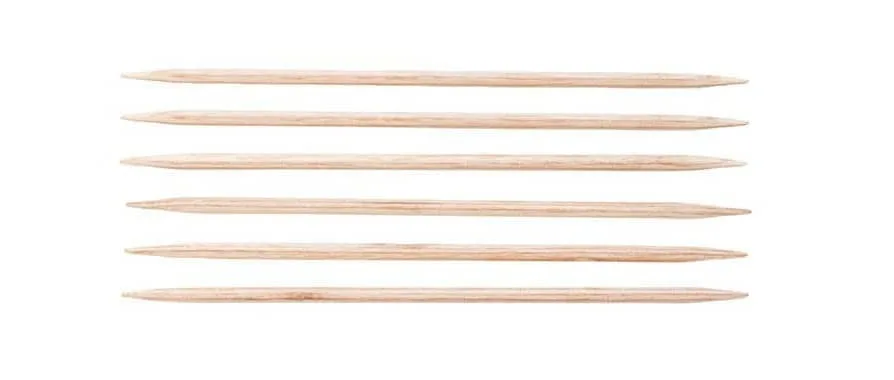
Wood Knitting Needles
We’ve probably been using wood to knit since back when the Egyptians were making socks for sandals.
A plentiful resource and easily shaped into sticks, one can imagine early knitting needles were literally tree branches whittled to a point.
But not all wooden needles are the same, so let’s take a looks at a few popular options.
Types of Wood Needles
- **Bamboo
**While technically not wood (it’s actually a type of grass) Bamboo is incredibly sustainable because of how quickly it grows. Sturdy and lightweight these are great for beginners. - **Laminated
**Love those colorful rainbow needles? They’re usually made from birch, an American hardwood, which is coated with a laminated skin making those beautiful designs. They’re lightweight and smooth and warmer in the hand. - **Hardwood
**From the aforementioned birch to exotic woods like rosewood and ebony, if you love a natural look to your wood, these are the way to go.
Pros of wooden needles
The natural material of wood has more give than metal, and feels warmer in the hand. This is useful for people who have arthritis or stiffness in their fingers.
Because wood is a softer material they make less noise while knitting.
And wood is also a renewable resource so they’re more environmentally friendly.
Cons of wooden needles
Wood is not as smooth as metal, so you’ll experience more friction on the needles.
It’s also possible to splinter the needles causing annoying catches on your yarn.
And be careful not to sit on your wooden needles. They may be strong, but they can still crack in half.
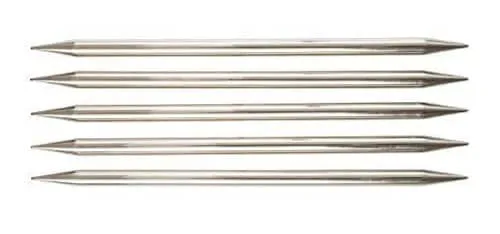
Metal Knitting Needles
Although metal knitting “pins” and wires have been used for a couple hundred years, the industrial revolution made them quick, easy, and cheap to produce.
From the bright aluminum needles that were popular in the mid 20th century to our modern Addi Turbos, metal needles have been the focus of innovation.
It doesn’t matter if they’re an affordable set from China or square needles made in Canada, metal needles have a lot of variety. So let’s take a look at a few.
Types of Metal Needles
- **Aluminum
**Boye made the knitting needle iconic in the 50s and 60s with their colored straight needles. Using a process called anodization, they took the knitting world by storm. - **Steel
**Strong but heavy, these metal needles are affordable options that come in many shapes, sizes, and…options… - **Nickle-plated
**Probably the most modern invention here, nickle-plated steel needles offer a smoother surface. These slick needles are coveted for their speed.
Pros of Metal Needles
If you have a need for speed then metal is for you. They glide off each other and easily move yarn across without bunching.
They last forever, have sharper tips, and can be made in very thin sizes for those itsy bitsy lace doilies I’m sure you’d love to make.
Cons of Metal Needles
They’re cold and stiff. If you’ve got arthritic hands, they are not forgiving at all.
Slick isn’t always great either, as silky yarns like Alpaca and…well…silk, tend to fly off the needles at the worst times.
And they may not break if you sit on them, but some can certain get bent out of shape!
Conclusion
So which needle material is best?
If you knit with a lot of silky luxury yarn, are eco conscious, or prefer a needle softer on the hands then wood is probably right for you.
If you like to knit fast, want something that’s going to last for decades with little maintenance, and need those nice sharp tips, you probably need some metal in your life.
In reality both have their place in your knitting toolkit.