

Not yet published: imported
Why "Complicated" Knitting Projects Are Simpler Than You Think
As a knitting teacher, I spend a lot of time thinking about how knitting works.
I have to take a lot of abstract ideas and make them easy to understand.
Because knitting isn’t intuitive.
It’s not like riding a bike where once you learn to balance you’re good to go.
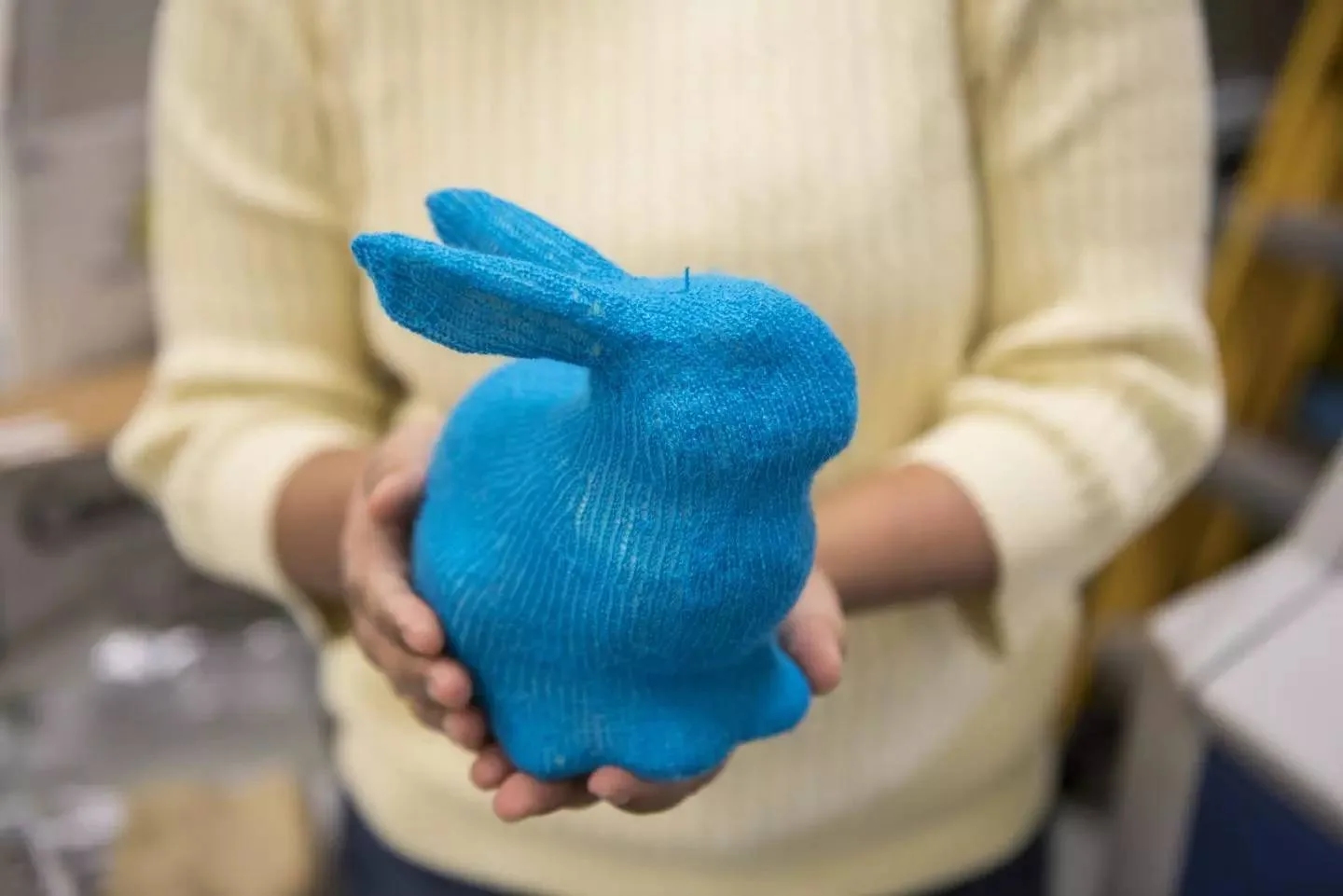
On some level, knitting involves additive manufacturing, algorithmic programming, even theoretical physics.
But here’s the truth: it’s really not that complicated
Geometry and knitting
In high school my favorite math class, if one can have a favorite, was geometry.
Something about angles and shapes made sense to me. Proofs never made sense, which is ironic. But I love me some equilateral triangles.
I think that’s one reason I enjoy knitting.
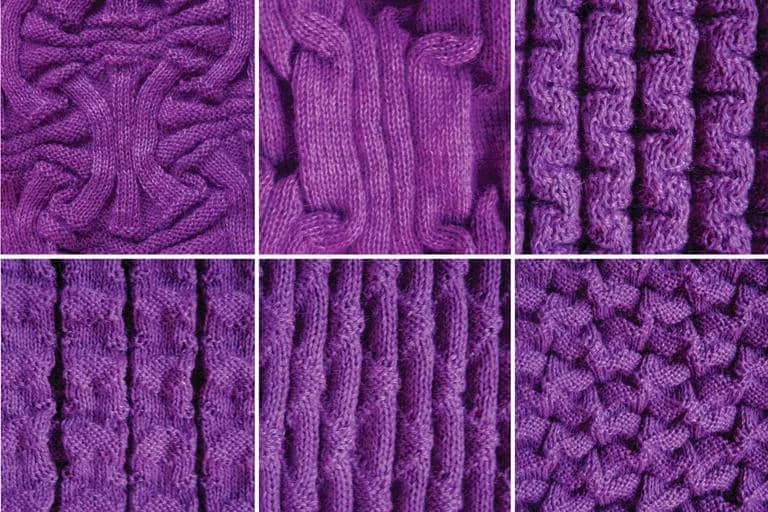
You’re using geometry to create 3d shapes out of fabric.
The good thing is you don’t even have to understand geometry to be good at it.
Squares, Triangles, and Cylinders
When I say that knitting isn’t that complicated, here’s a good example.
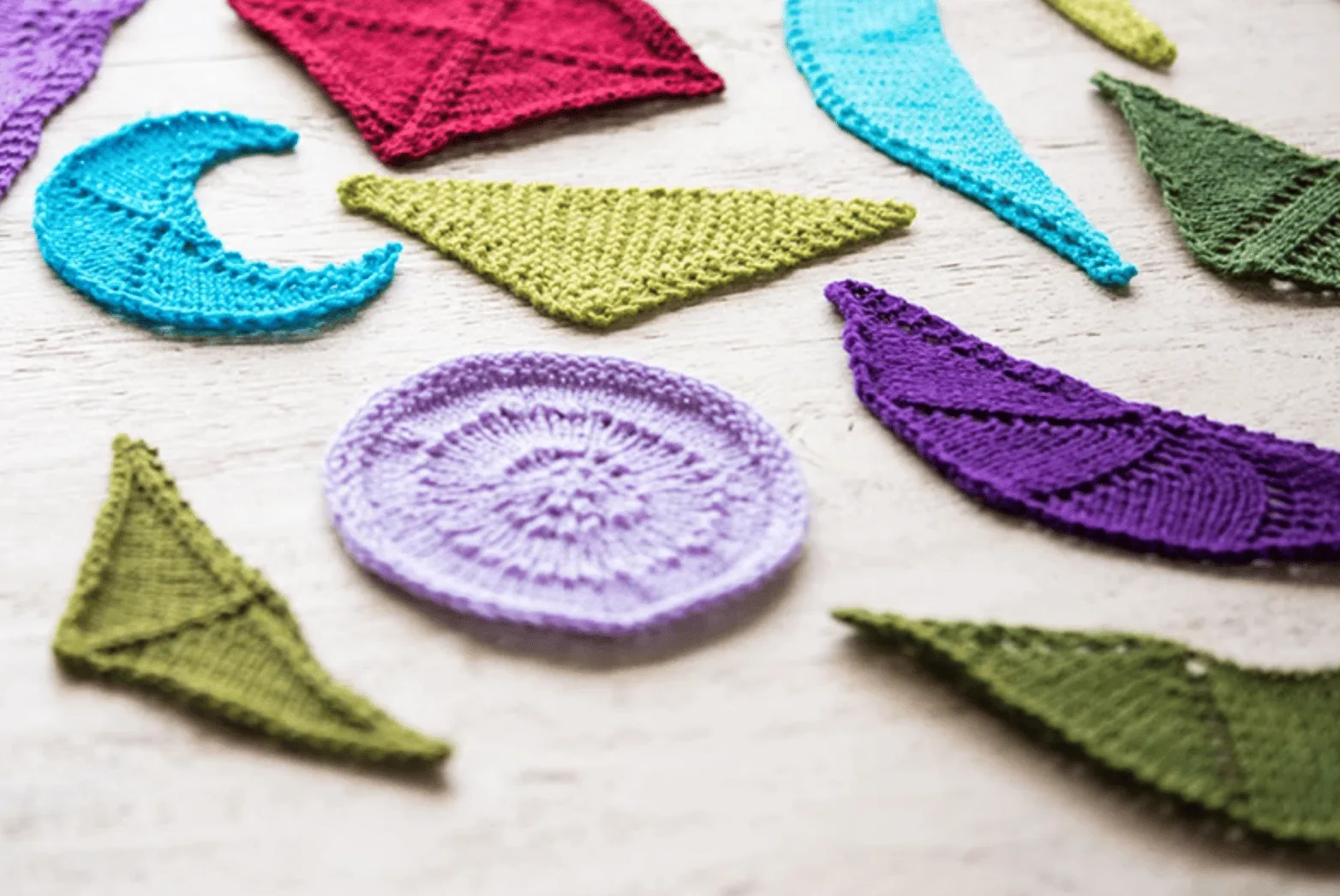
Most shawls are triangles. A blanket is a giant rectangle. A scarf is a long skinny rectangle.
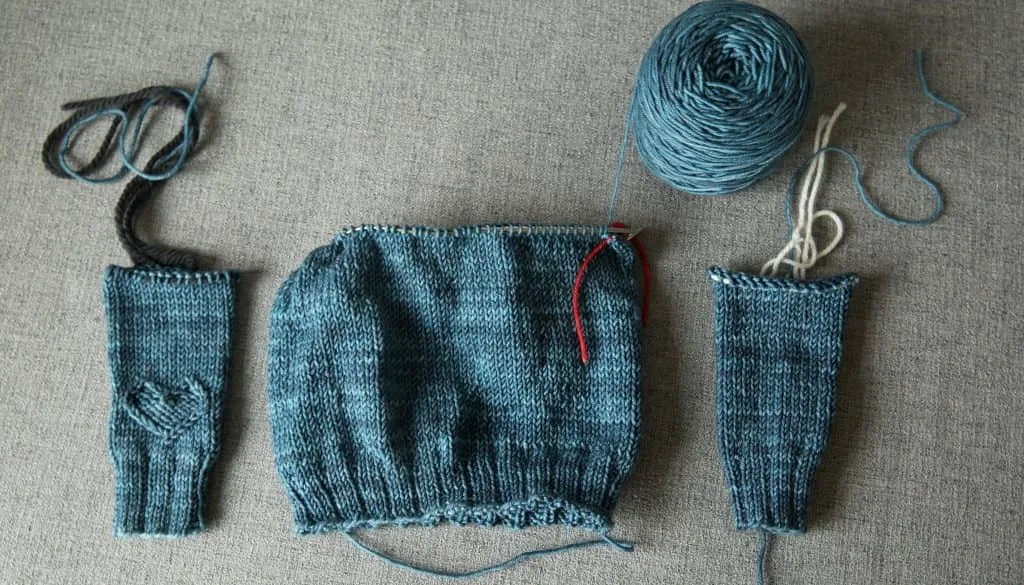
A cowl is a rectangle that has it’s sides connected; a tube.
You know what else are tubes?
Mittens. Socks. Hats. Those just have domes on one end.
And a sweater?
It’s three tubes connected by one big dome. At least that’s how you make a circular yoke.
Other sweaters are still mostly tubes too. 😉
Does This Mean Every Project Is Actually Easy?
Understanding that most projects use simple shapes doesn’t mean they’re easy.
Running a marathon is simple; start running and keep going for a long time.
Simple, but not easy.
Knitting a sweater still involves figuring out sizing, calculating shaping, and decisions around gauge and fit.
But when you start to recognize those underlying shapes, they seem less complicated.
Instead of seeing a bell sleeve you start to see increases, decreases, and a long tube.
You can look at any pattern and mentally deconstruct it into shapes you already know how to knit.
That shift is what transforms you from a pattern-follower into a fearless knitter.
Final Thoughts
You don’t have to be a theoretical physicist to understand how knitting works.
All you need is to see the underlying shapes that make up your favorite patterns.
Once you see those they’re like black lines on a coloring page.
And you can fill them in with whatever you want; cables textures, lace motifs, colorwork.
It may not be easy to do without some practice, but it is simple.