

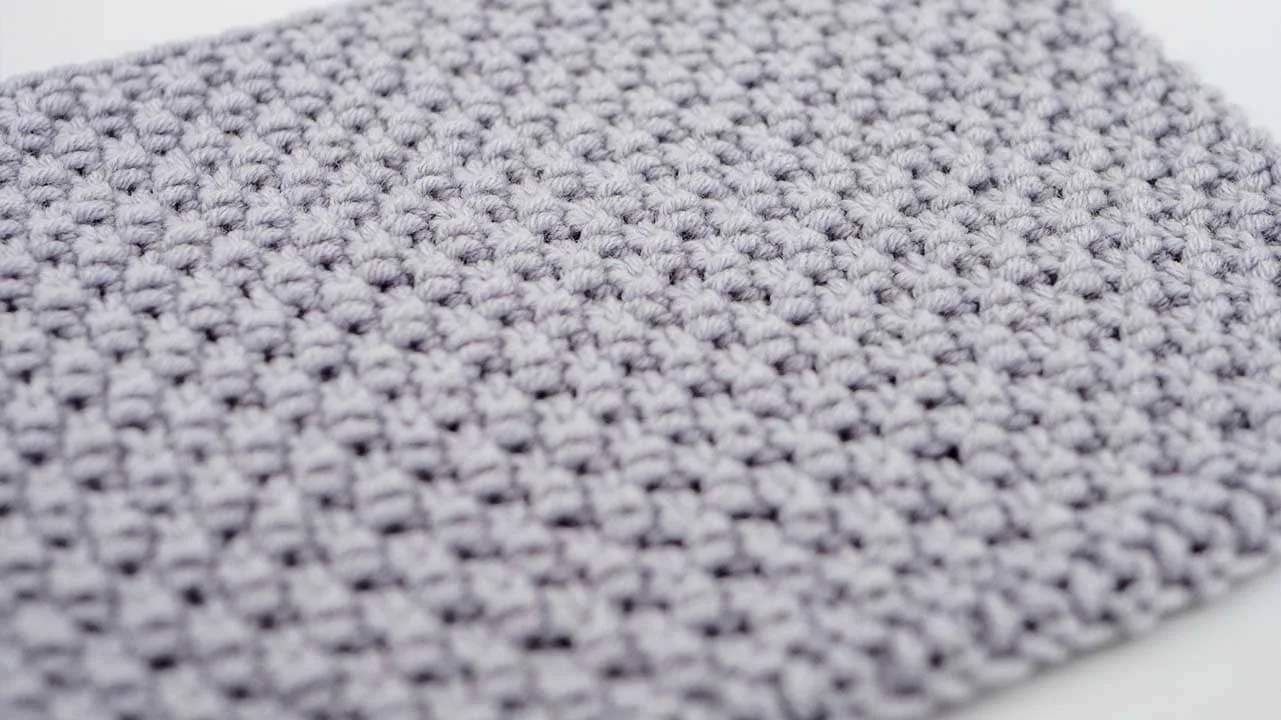
In the past we’ve talked about the importance of learning to read your knitting.
We’re going to expand on that idea today by taking a closer look at what you can achieve with just knits and purls.
And with the aid of some simple charts, we can start to visualize how little changes can give you completely different textures.
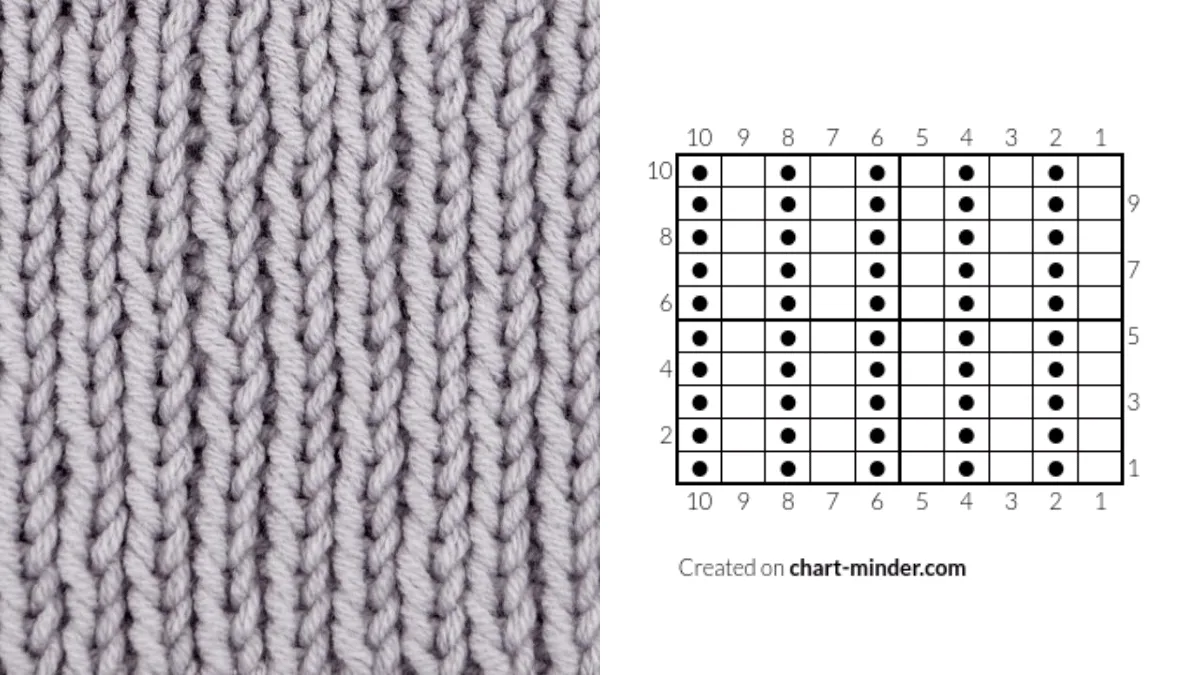
Knit 1, Purl 1 Rib
The first thing that comes to mind when I think of knit and purl is ribbing.
Not only is it simple beautiful, it’s incredibly useful.
We’ll talk much more about ribbing next week, but it’s going to form the foundation of everything else we cover today.
Basic ribbing is knit 1, purl 1.
In our chart above you can see the knit stitches are blank and the purl stitches are a black dot.
These two stitches create vertical columns, but what happens when we shift one row over?
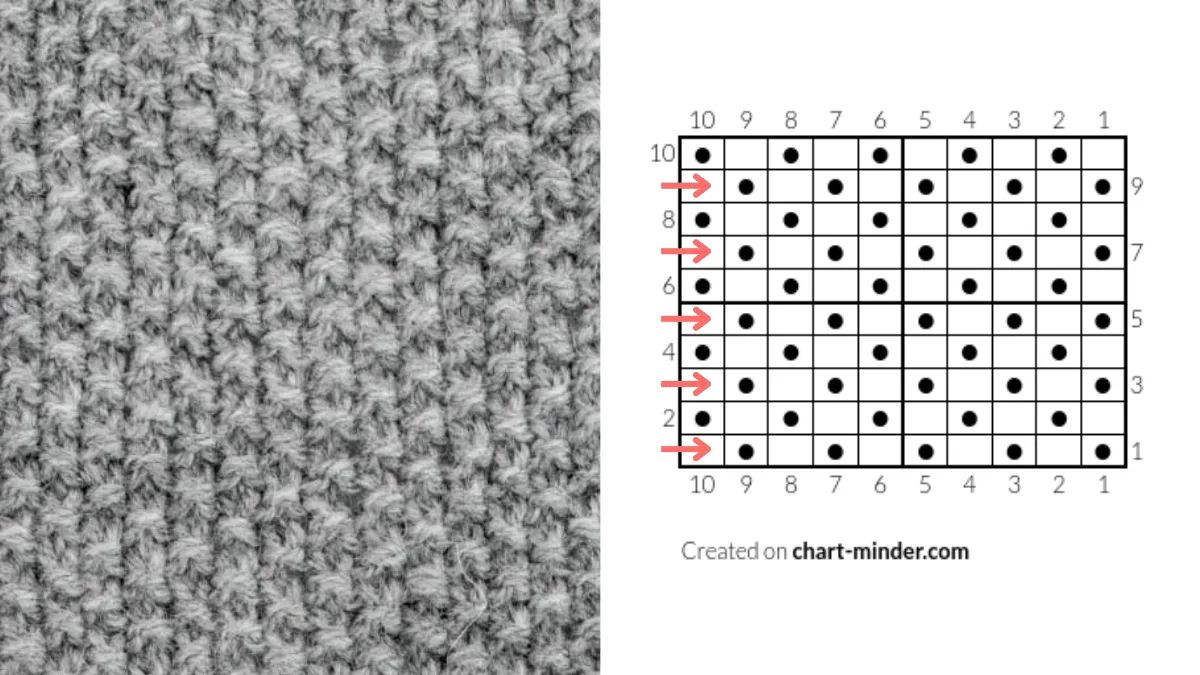
Seed Stitch
By taking the even rows and shifting the knit 1, purl 1 pattern over we get a fabric with much more texture.
It’s also loses most of it’s horizontal stretch and drape.
This fabric feels more dense and not as nice against the skin, but if we remove some stitches things shift again.
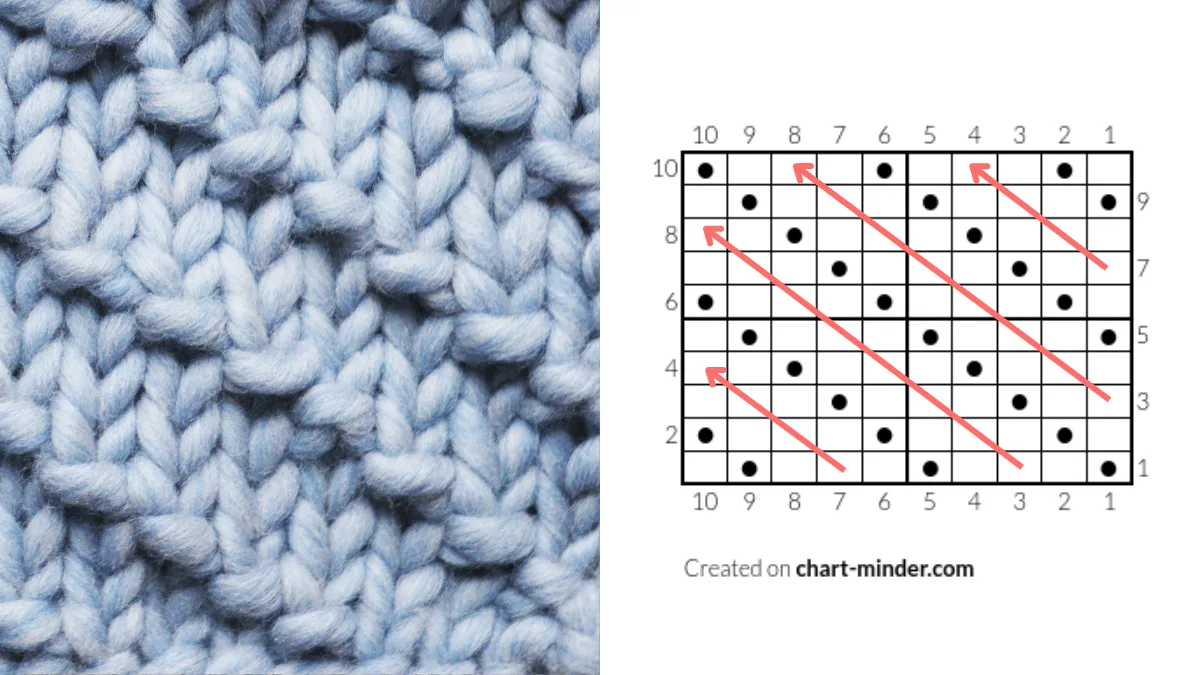
Diagonal Seed Stitch
When we take out a diagonal row of purl stitches we give the remaining stitches room to beathe.
As there’s more stockinette now the fabric is smoother, and the fine drape returns.
We still get the purl ridges for texture, and the subtle diagonal lines offer nice visual interest.
Now, if we go back to the original seed stitch, but change the row repeat, something interesting happens.
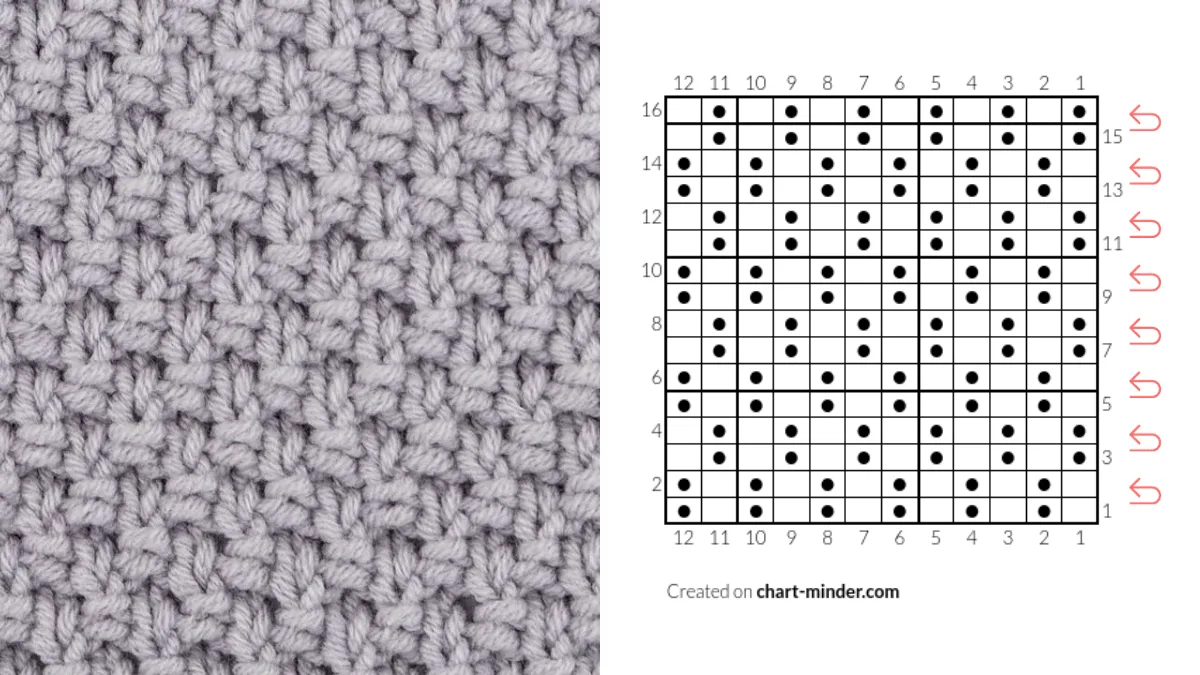
Moss Stitch (Irish Moss Stitch)
This looks a lot like seed stitch, but the some short pillars form.
The fabric has more drape because we’ve created something like a broken rib. Just those two knit stitches stacked on top of each other offer the whole thing more movement.
We also have a lot of texture since we’re still maintaining the nubs created from the seed stitch.
But watch happens when we remove some stitches from this pattern.
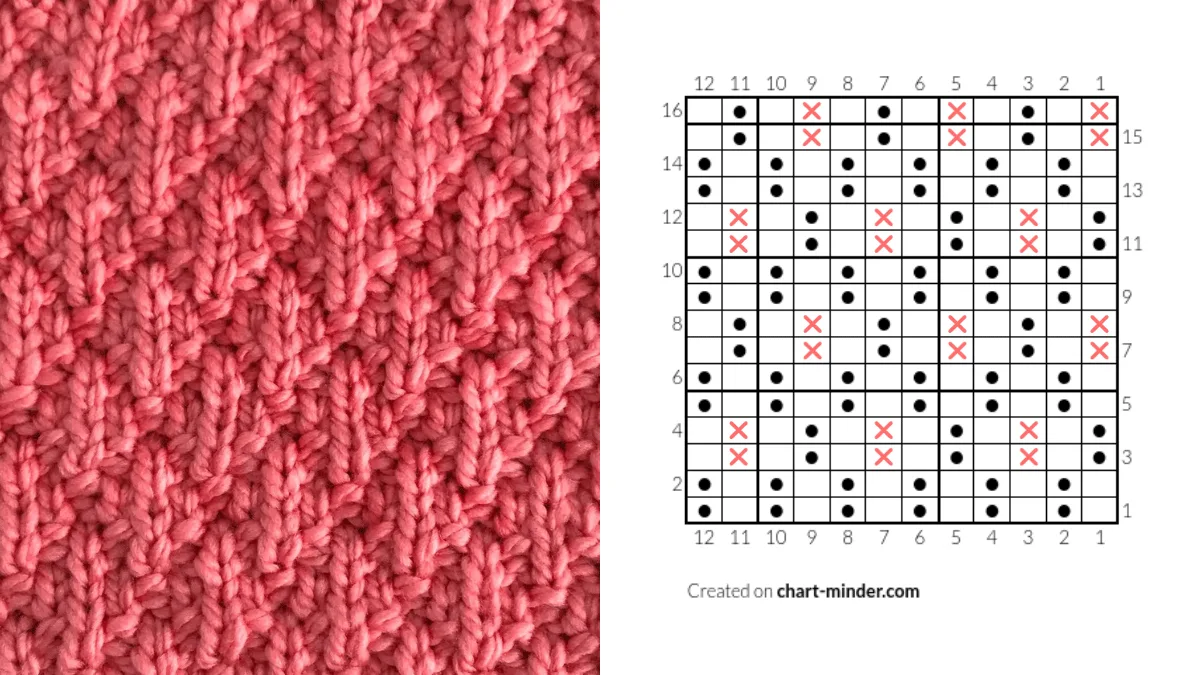
Seersucker Stitch
Even though we’ve only removed a portion of the stitches that are repeated, the fabric has drastically changed.
Now we’re getting some recessed diamond lines. We also get a 3D effect created by 6 rows of knits stacked in the center of those diamonds.
We still have hints of the moss stitch from before, but those missing middle stitches morph the fabric with new hills and valleys.
Conclusion
We could do this all day.
It’s amazing how moving a row, removing some stitches, or just spacing them differently changes knitted fabric.
If you’re practicing reading your work, hopefully you can start to see how knits and purls interact, and more easily identify the differences.