

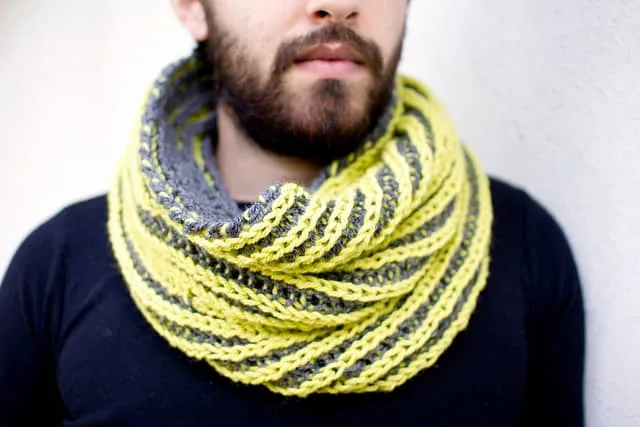
There are few things in knitting that give me as much pleasure as knitting up a piece of brioche fabric.
When I first discovered it I was flabbergasted.
You see, brioche has its own language.
And because I was still a newbie at the time, I had no clue what the heck a BRK1 was. Or a Sl1yo?!?
It might as well have been written in Greek.
Luckily I stumbled onto Nancy Marchant’s work, where she explained how everything works.
In fact, it was Nancy who came up with the abbreviations we use to describe brioche knitting today.

Why is it called brioche?
Yes, it is brioche like the bread.
But the name didn’t start with the stitch.
In the mid-1800s a “brioche” was a small, round, puffy cushion or footstool.
It looked like a loaf of brioche bread, so that’s what people called it.
The earliest English pattern Nancy has found is the “Moorish Brioche or Cushion” in Miss Watts’ The Ladies’ Knitting and Netting Book from 1840.
Over time the name transitioned from the cushion to the stitch used to knit it.
It also picked up a few other names along the way, like fisherman’s rib, shaker knitting, and patentsteek.
Victorian knitters loved it, and then it mostly faded away in the US.
Nancy learned it after moving to the Netherlands in the 1970s, where it was everywhere, and her books brought it back to American knitters.
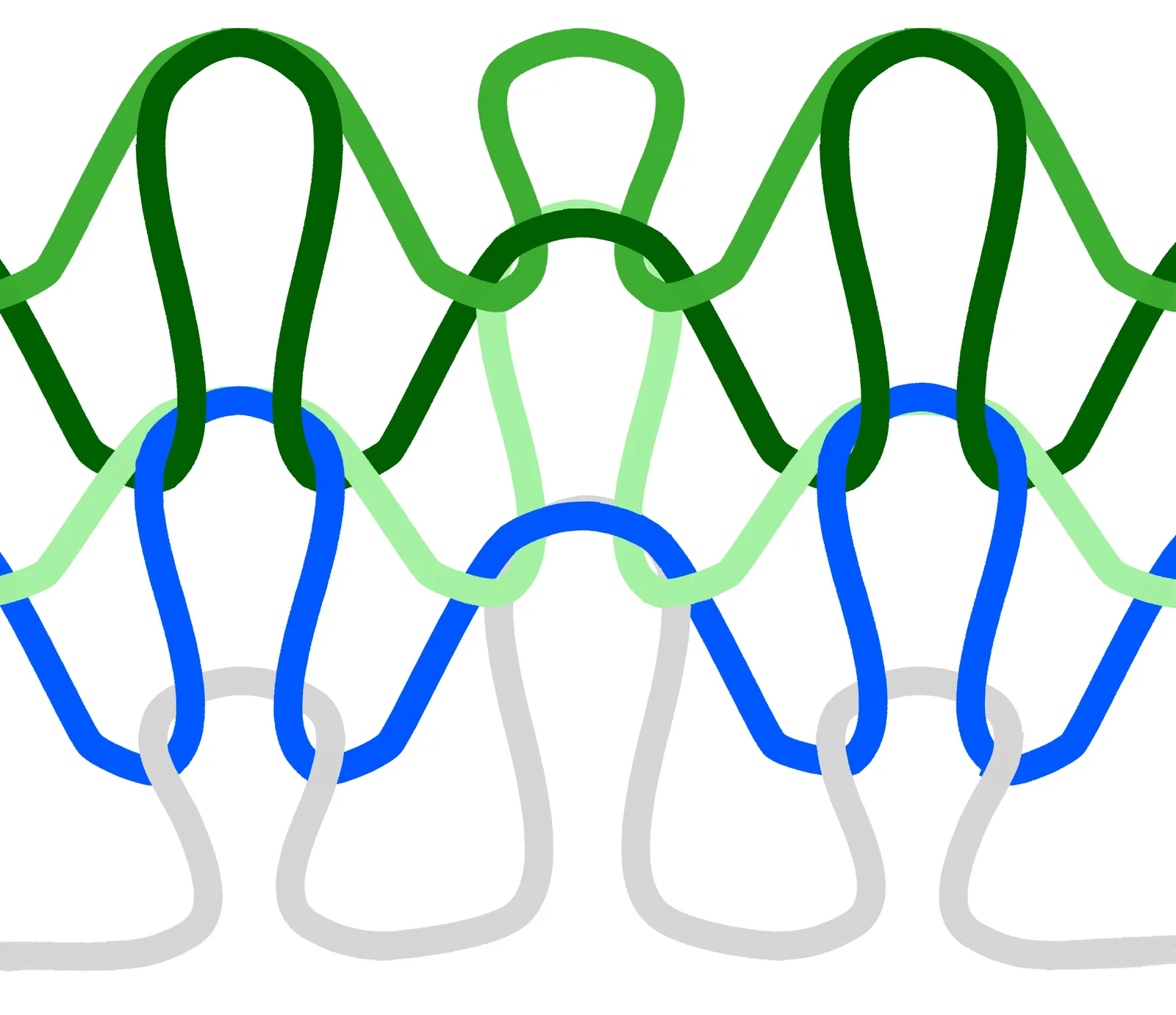
What makes Two-Color Brioche different?
There are three things that set two-color brioche apart from other types of ribbing or colorwork:
It’s reversible. Both sides show the pattern, but the colors swap places on the back.
It’s double sided. You’re literally knitting one side of the fabric with one color and the other side with the second color.
It’s built differently. Each row takes two passes, and the yarn overs get knit together with their stitch to make that iconic “V” rib.
What’s so great about 2-color brioche
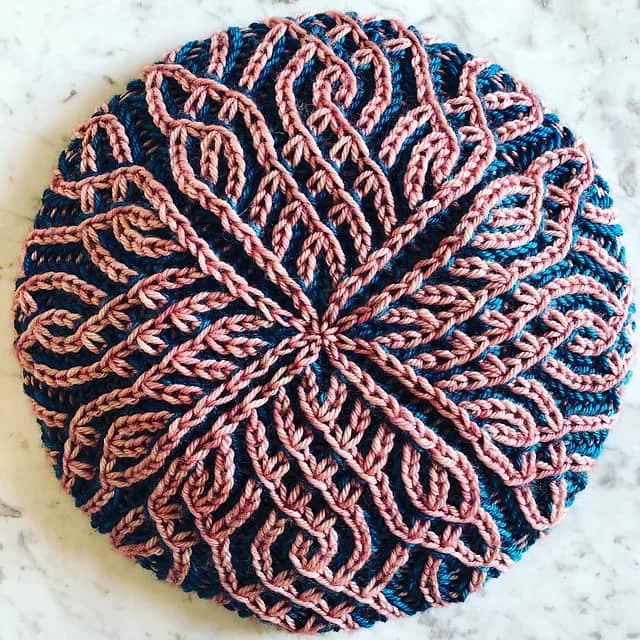
Squish. It’s thick, lofty and warm, like knitting a cozy cloud. ☁️
One color at a time. Each pass only uses one color, so there are no floats to manage.
Stitch patterns. Once you get the hang of it, there’s a whole world of gorgeous brioche stitches to try.
Drawbacks of 2-color brioche
So is brioche worth the trouble?
Sort of…
The language. BRK1, BRP1, sl1yo. It takes a while before the abbreviations stop looking like Greek.
Fixing mistakes. Tinking back is trickier than regular knitting, because every stitch has a yarn over riding along with it.
Knitting flat. Every row takes two passes, and you have to slide your work back and forth to pick up the other color when knitting flat.
Yarn. It eats a lot more yarn than stockinette.
But that’s ok, because nothing else feels quite like it.
The key to easier 2-color brioche
Success with this technique comes down to understanding how brioche stitches work.
And in my opinion that’s MUCH easier to learn when you knit in the round.
Why?
Because in the round, each repeat is only 2 rounds instead of the 4 passes it takes when you knit flat.
No sliding and no turning.
You knit a round with one color, then a round with the other.
So you can focus on how the brioche knit and brioche purl work, instead of chasing your yarn back and forth on the needle.
That’s it.
📚 Want to go deeper?
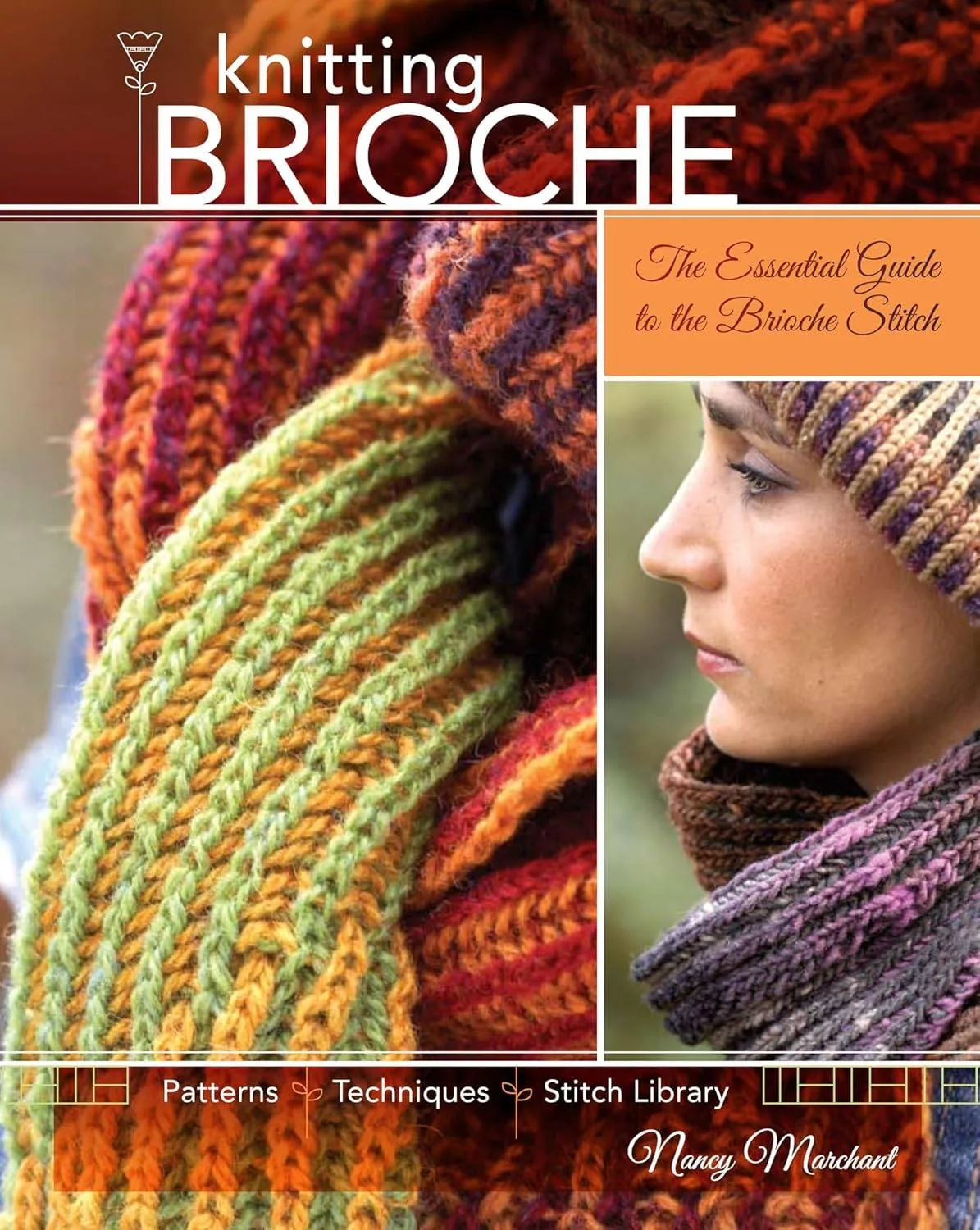
**Knitting Brioche by Nancy Marchant
**Get it @ Amazon
Book | The Essential Guide to the Brioche Stitch
This is the book that brought brioche and all its strange abbreviations back to American knitters. If you want to learn, there’s still no better place to start.
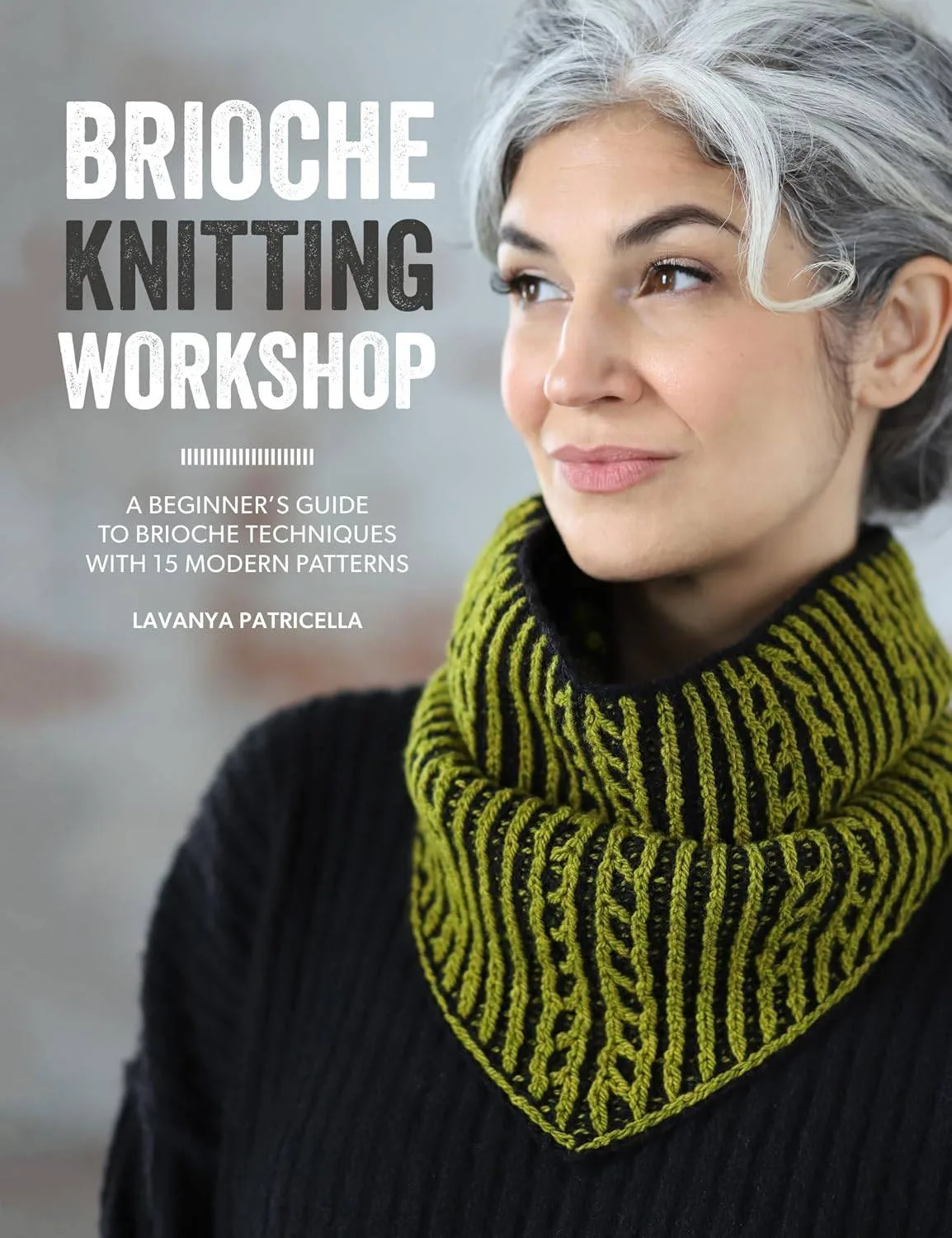
**Brioche Knitting Workshop
by Lavana Patricella
**Get it @ Amazon
Book | A beginner’s guide with 15 modern patterns
This practical guide to brioche knitting will explain all the basics with very clear step-by-step photography and instructions
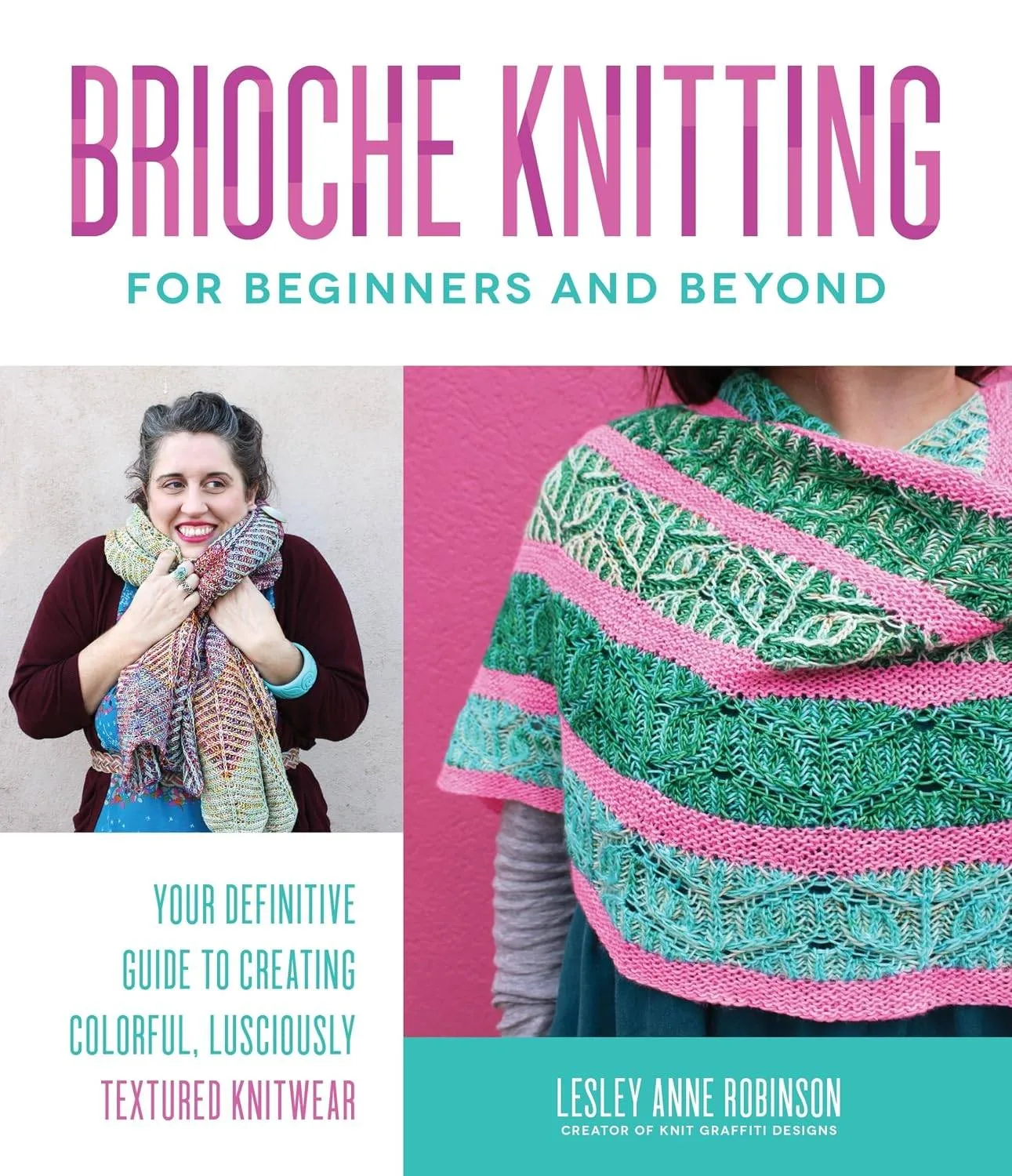
**Brioche Knitting for Beginners and Beyond by Lesley Anne Robinson
**Get it @ Amazon
Book | A Guide to Lusciously Textured Knitwear
This book is for any knitter who has ever been intrigued by the colorful designs and luxurious texture of brioche, but too intimidated to pick up their needles and cast on.
Conclusion
BRK1 and sl1yo might look like Greek at first.
Give it a few rounds and the language starts to make sense.
You’ll be glad you stuck with it.