

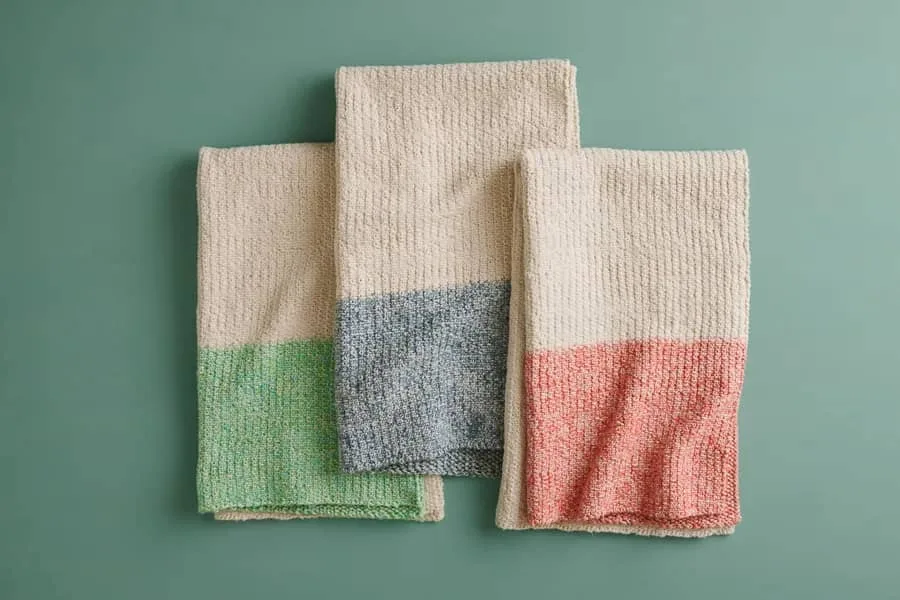
When is a stripe not a stripe?
When it’s a fashion trend.
Over the past few years the use of large “blocks” of color has become a staple of pop star wardrobes.
While the idea of separating a garment into colored sections is nothing new, it’s recently seen a resurgence in knitwear.
And it’s easy to see why.
Color blocking allows you to create bold graphic designs that are simple to construct.
As part of our Summer of Color, today were taking a closer look at the history of this technique and how it’s used in modern knitting.
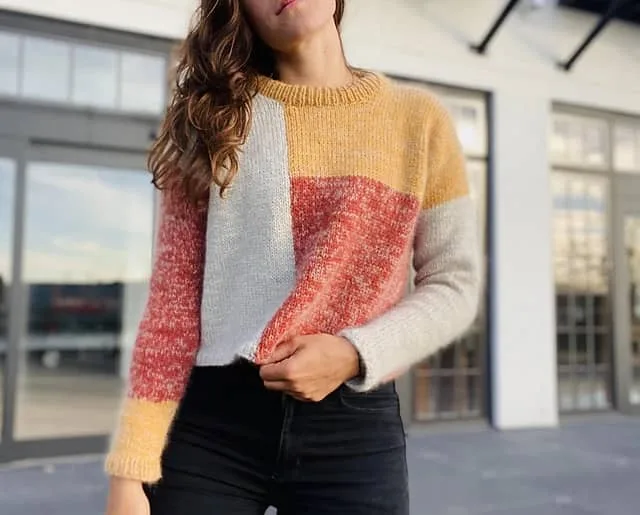
What is Color Blocking?
There is no clear definition of this design trend.
Some consider it any design that uses blocks of color.
I think that’s too vague.
So allow me to offer my own definition.
While designs of this type can be striped, usually they focus on dividing the fabric into different sections: top, bottom, right, left, body, sleeve, etc.
So how did this trend come about?
A Quick History of Color Blocking
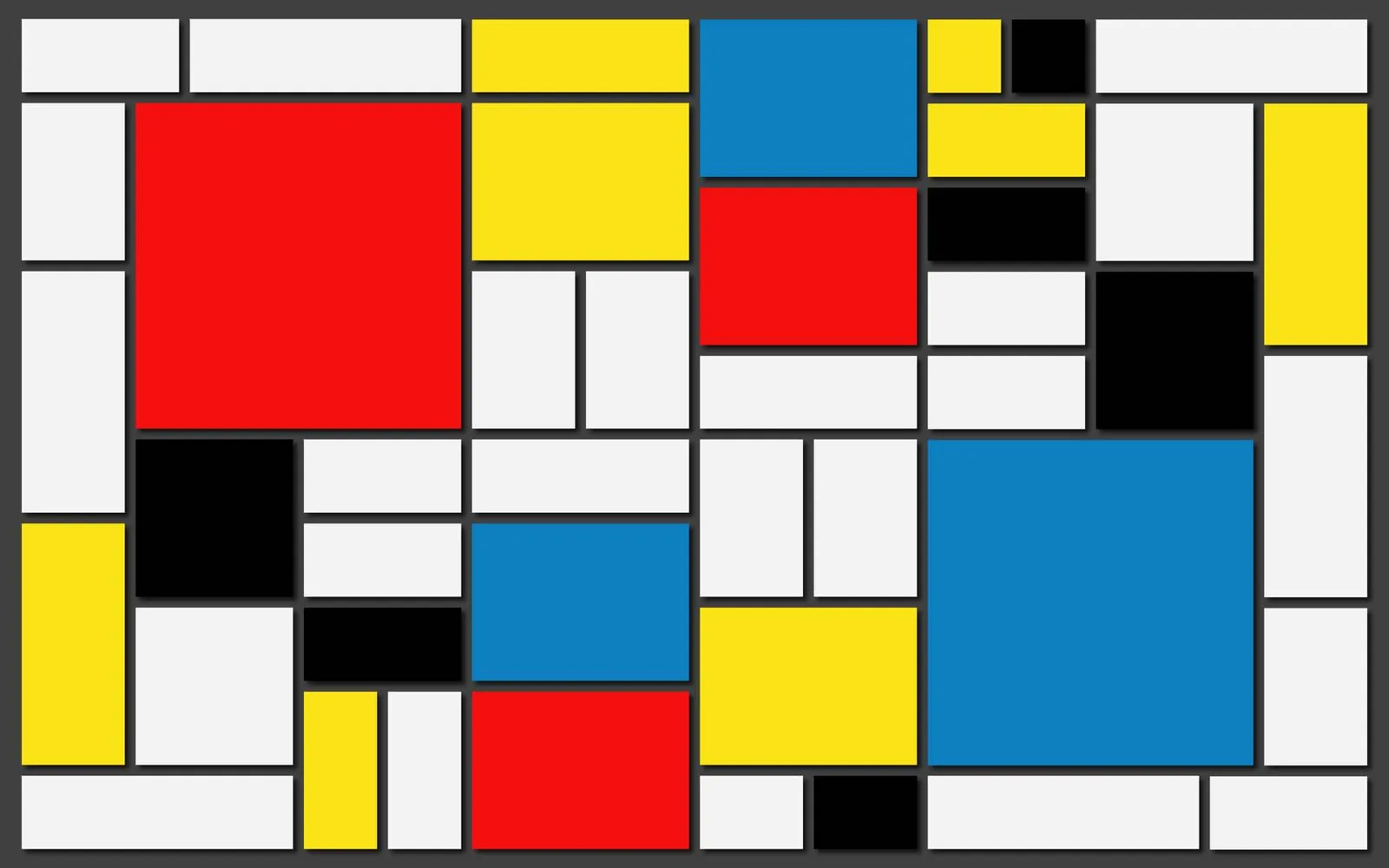
Most historians agree that the color blocking trend can be traced back to the work of Dutch painter Piet Mondrian.
A key figure of the modern art movement, Mondrian named his style Neoplasticism.
His goal was to push the limits of simplicity within his art.
No doubt you have seen his many geometric paintings focusing on bold black line and simple colors.
While he painted these classic pieces during the 1920s and 30s, his work would take on a new life in the mid-century.
Color Blocking in Fashion
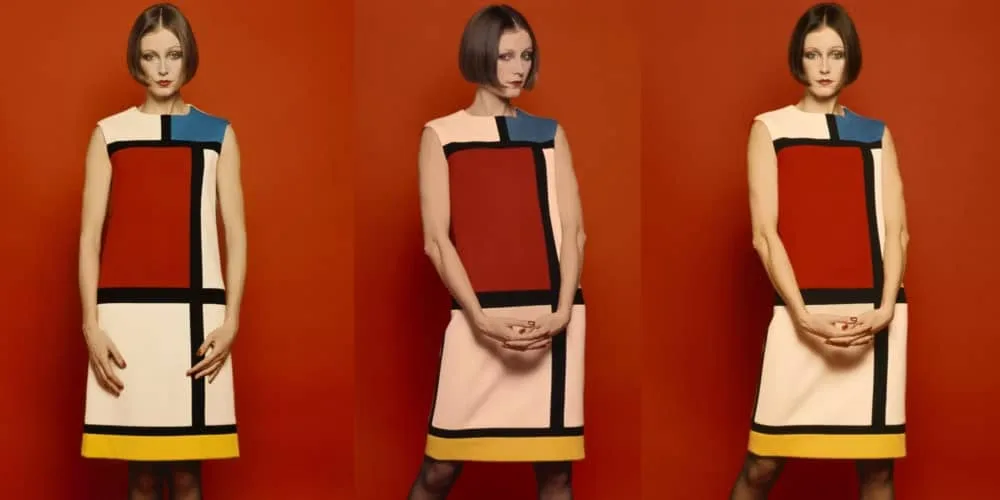
In 1965, up and coming designer Yves Saint Laurent was looking for a way to stand out in the Paris fashion scene.
Taking inspiration from Mondrian’s work, he developed a collection of cocktail dresses utilizing the bold designs.
The dresses were an instant success and the design became a cultural icon around the world.
Similar designs began popping up all over, especially in the US.
Gradually the trend morphed from straight blocks to more involved patterns.
And by the 1980s it was fully embraced by the knitting community.
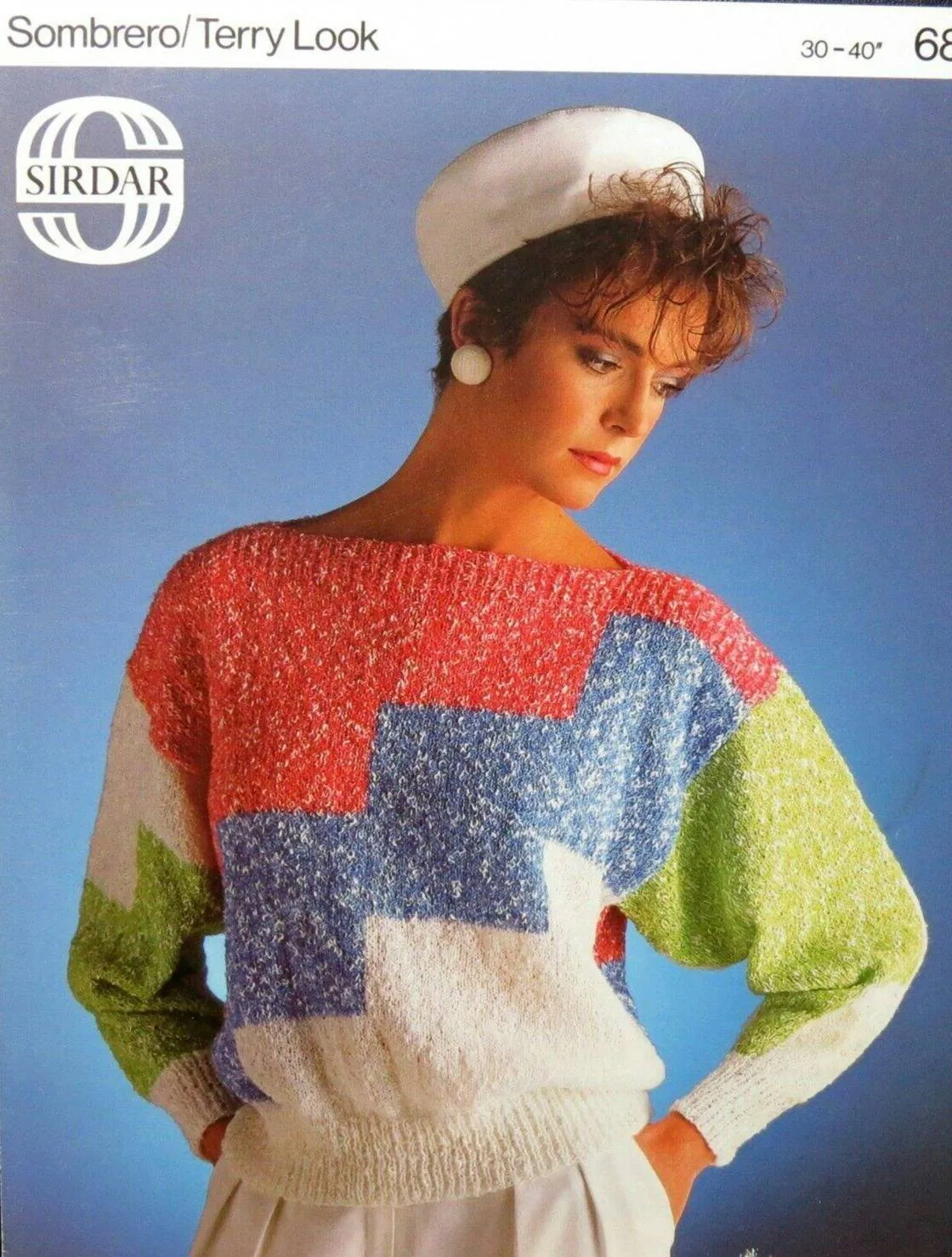
The technique was a simple way to add color into a project.
Some patterns use Intarsia to create fabric with vertical division, often offset to one side for more visual interest.
But as the big bold designs of the 80s and early 90s gave way to the more minimalist 2000s, the trend eventually died down.
It was not until recently that we’ve seen a resurgence of the technique, growing bolder and bolder each year.
Benefits of Color Blocking in Knitting
Color blocking has a few benefits for those wanting to experiment with colorwork:
- One color at a time
Since we’re working in blocks of color, we don’t have to switch back and forth between a bunch of different colors. Once we’re doing with the color that’s it. Easy peasy.
- It looks pretty cool without much effort
You wouldn’t think switching colors 1/3 or half-way through a project would make a huge difference in the way a pattern looks, but you would be wrong. Even subtle color changes can take a simple design up a notch.
- A great way to customize a pattern
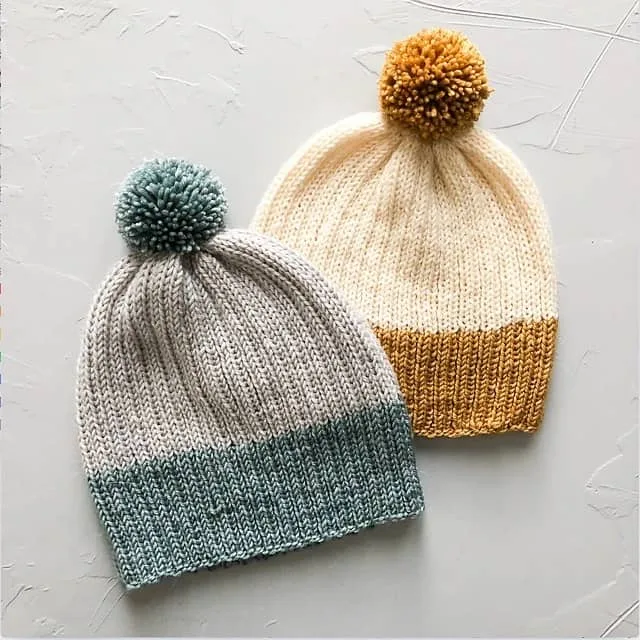
Sometime you want to make something your own, especially if you’re knitting a popular pattern. By changing the yarn color for the brim or the cuffs, or even a section of the body or sleeve you can personalize any pattern.
Conclusion
So there you have it.
Color blocking has been around for almost 100 years now.
It’s popularity may ebb and flow with the times, but it doesn’t look like it’s going anywhere.
But what do you think?
Have you made a color blocked project?
What was your experience?
Hit reply and share your experience with us!
We’d love to hear your feedback. 😊