

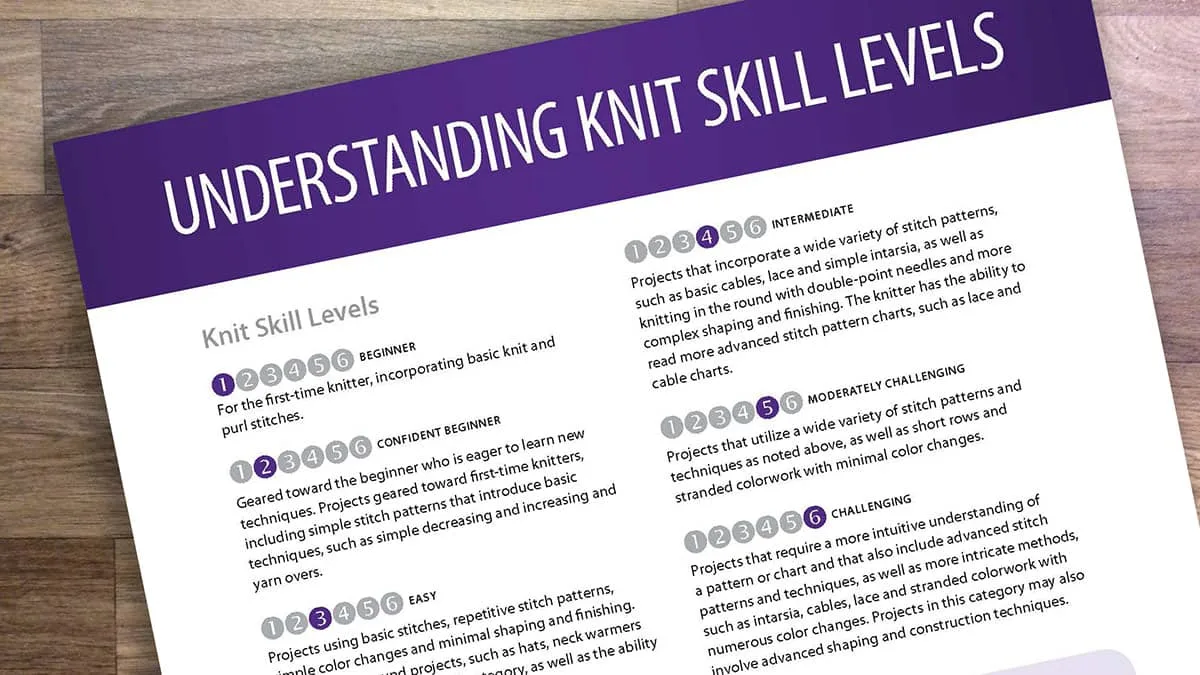
Last week I introduced a proposal for a new way to measure knitting skill levels.
I believe the current system is broken, in part because there is no agreed upon system.
But knitting is very much like a language, and just as we can learn to be fluent in a language, we should be able to do the same with knitting.
My Knit Rank system attempts to create an *ideal* learning path that when followed, will take a person from beginner knitter to a master one.
Responses to feedback
Almost all of the feedback to my last article on this topic was positive. I’m relieved to hear most people find this idea interesting at the very least.
But there was a little bit of confusion and even some pushback.
One person commented that according to my system they would be still at level 1 because they don’t know how to read charts and use only one cast on. This is in spite of having knit for 60 years and making complicated aran cable sweaters.
Another mentioned that they wondered how they would progress if they didn’t want to learn a particular skill. They didn’t want to get stuck at level 3 because they hate knitting lace.
So, let me address these comments and a few others by clarifying how I *think* the system should work. Mind you I’m working this whole concept out in public so it will certainly morph and change as feedback comes in.
How the Knit Rank system actually works
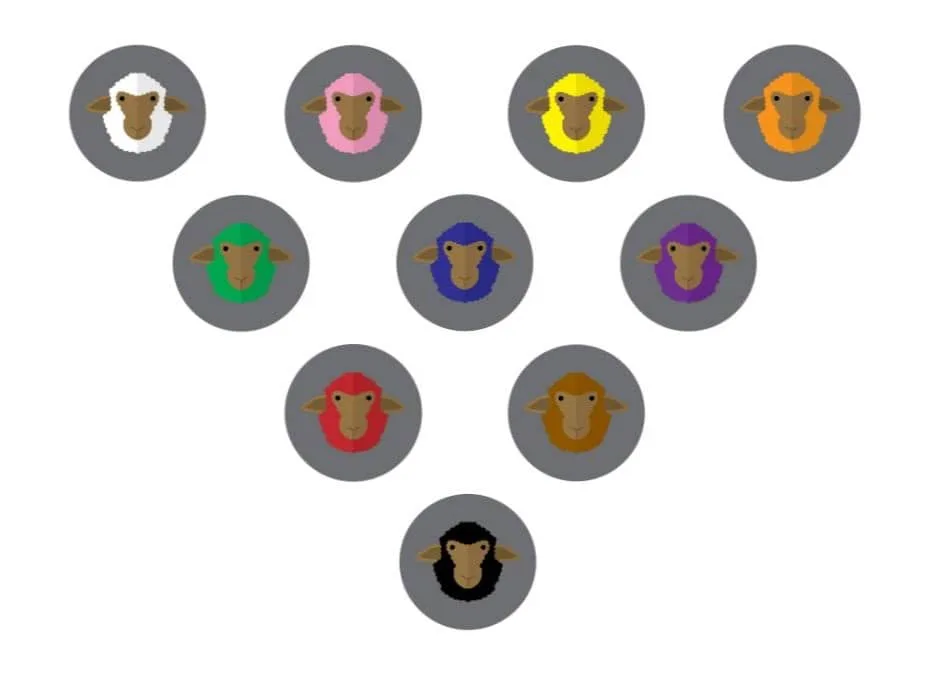
The Knit Rank system is a 10 level ranking system for knitting skill level.
Each level focuses on a few key knitting skills along with practicing a *virtue* associated with a knitting mindset.
These skills are practiced through swatching, and we *test* or measure competency at each level with a final project.
Each level builds on the one before.
If you are new to knitting you can use the Knit Rank system as a curriculum, giving you steps to follow to level up your skills in an organic way.
If you are an experienced knitter and you’re not sure what your skill level is the final project is key. Take the most complicated thing you have knit and match it with the highest level final project. That’s most likely what skill level you are at.
But what if you don’t know skills lower down the ladder?
Who cares!?
If you know how to knit an all-over cabled aran sweater it really doesn’t matter what cast ons you know. And if you can knit that without using a chart then more power to you.
I think those skills are good to learn along the way, but if you’ve been knitting for 40, 50, or 60 years who am I to say what you should and shouldn’t know. Do what works for you.
The goal of the Knit Rank system
This system is meant to be a guide.
It’s a map of how to get from A to…
…some other letter further down the alphabet, because there is no end to learning within knitting.
My goal is twofold:
- Empower those who know more than they realize with the knowledge that they are further along than they thought.
- Help those who aren’t sure how to reach their knitting goals, by helping them identify skills and projects they can practice to achieve them.
Do I think everyone should learn to knit a lace shawl?
Of course not.
Knit what you like.
But if you want to be a master knitter then you certainly need to know how lace works.
Most people don’t want to be master knitters, and that’s fine.
Knit Rank Craftsman: Levels 4 - 7
I’ve split the different levels up into 3 phases, based on traditional medieval guild designations; Apprentice, Craftsman, and Master. Some guilds had a 4th term, Journeyman, but that’s less commonly known so we’re not using it.
Last week we looked at the Apprentice levels; White, Pink, and Yellow.
This week we’re going to explore the Craftsman ranks; Orange, Green, Blue, and Purple.
Level 4 • Orange Fleece
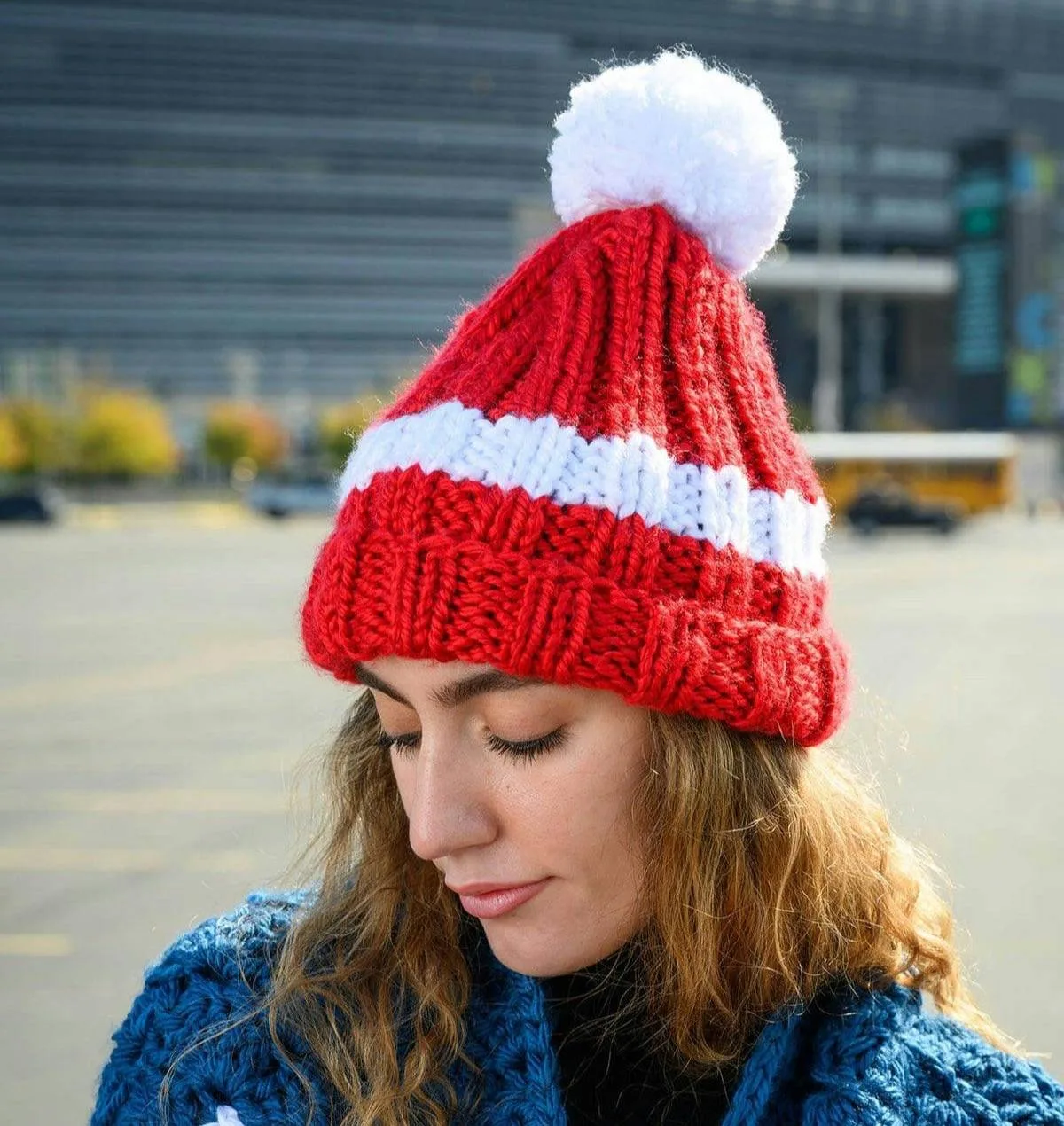
Skills focus: Ribbed Cast On, Knitting in the round, using two colors for stripes, paired decreases, matching gauge, making a pom-pom.
Virtue: Generosity
Mastery Project: Ribbed Striped Hat
The first major skill we want to learn at this level is knitting in the round. The ideal project for this is a hat. Not only can we explore knitting with a circular needle in the round, but also with double pointed needles.
On top of that we’ll introduce using multiple colors and how to carry yarn up the hat. Decreasing in pattern is another thing we’ll learn about as we shape the crown of the hat. And making pom-poms will help use up yarn scraps for all kinds of projects.
Our virtue for this level is generosity. Gifting is a big part of knitting, whether to friends and family or to charity. Knit this hat with the intention of making it for someone else.
Level 5 • Green Fleece
Skills focus: Swapping stitches (cables), reading basic cable charts, working in the round using magic loop, suspending stitches.
Virtue: Courage
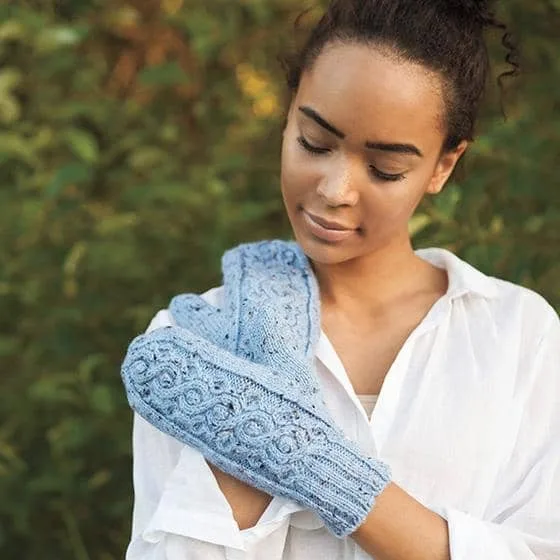
Mastery Project: Cabled Mittens
In this level we’re taking what we’ve learned about knitting in the round and scaling it down. We’re also upping the complexity by adding cables. We’ll experiment with magic loop and learn how to suspend stitches on waste yarn for the mitten thumb.
Our virtue is courage because from this point on we’re starting to layer multiple skills on top of each other. Cables can also be scary, so we want to approach our knitting with the faith that it will all be ok in the end, even if we make some mistakes.
Level 6 • Blue Fleece
Skills focus: Stranded colorwork, swatching in the round, short row shaping, reading colorwork charts, basic sock construction.
Virtue: Creativity
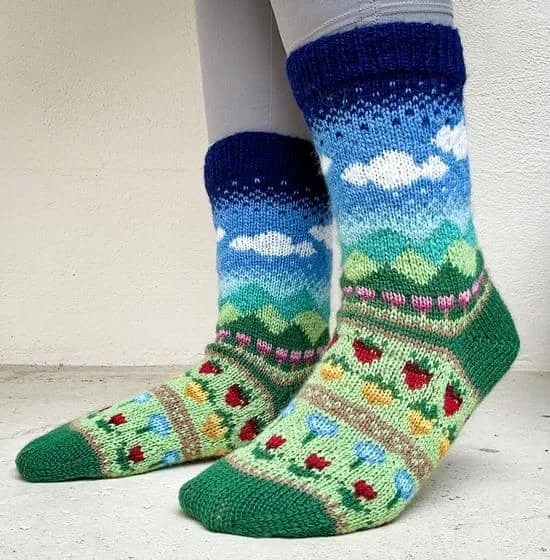
Mastery Project: Fair Isle Socks (Toe-up or Cuff-down)
Stranded colorwork is almost synonyms with knitting. Here we’re coupling knitting with two colors at once with making socks. This will also introduce short rows to our repertoire.
Our virtue is creativity, since this style of colorwork opens up a world of options for everything we’ve knit so far, and everything to come.
Level 7 • Purple Fleece
Skills focus: Shaping for garments, raglan shaping, tubular bind off, picking up stitches along an edge.
Virtue: Perseverance
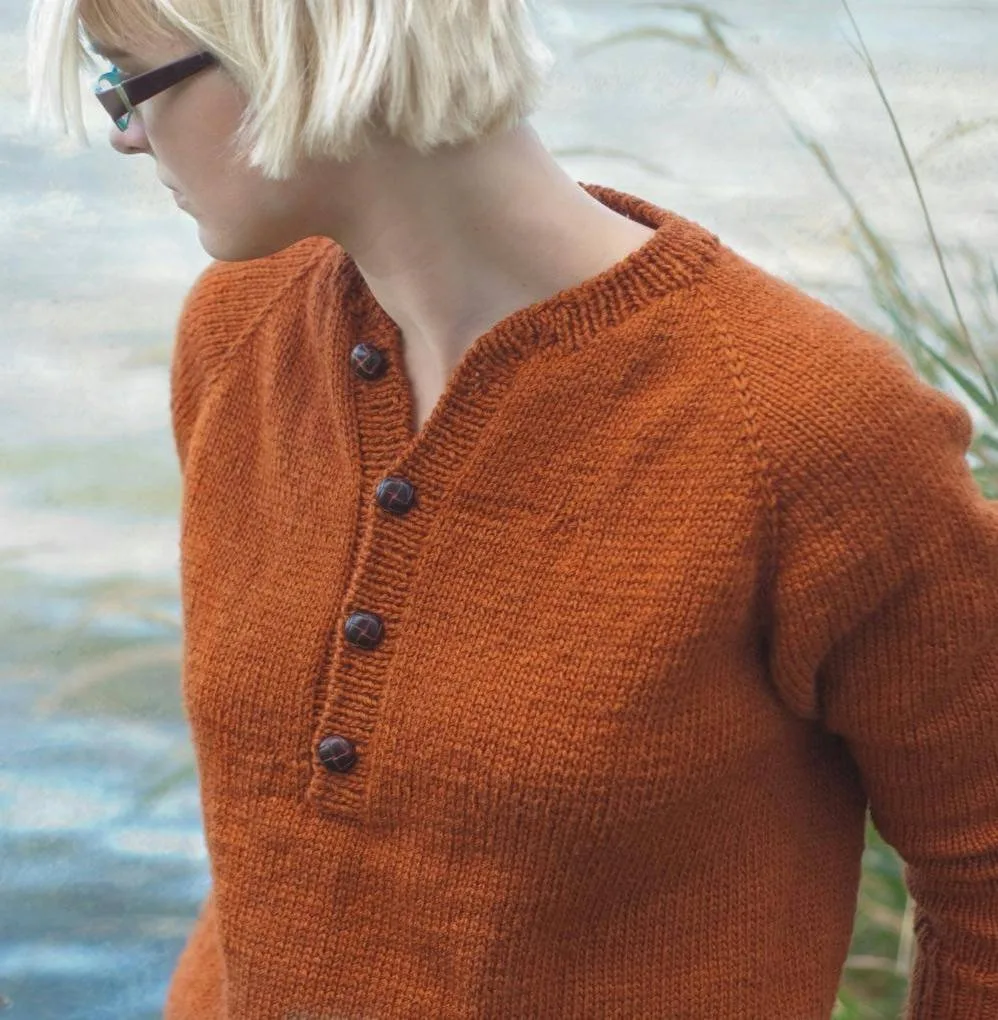
Mastery Project: Top-Down Raglan Sweater
Now things get serious.
This is our first big project, and the final project type we need to have experience with before we bring it all together. Top-down raglans are great to learn the basics of sweater knitting. But the key skill here is tied up in our virtue; perseverance.
A project like a sweater can take some people months. Staying focused and continuing to work through the project, even if it gets hard (or boring), is something every knitter needs to learn.
More to come…
We have one more group of levels to break down.
In the next part we’ll finish up by exploring levels 8-10, the Master phase.
But what do you think?
Am I on the right track?
Did I miss something? Should the order be different?
Is this helpful in understanding your own skill level?
Hit reply and send your feedback! I’m eager to hear.
🥳 WE DID IT!!!!
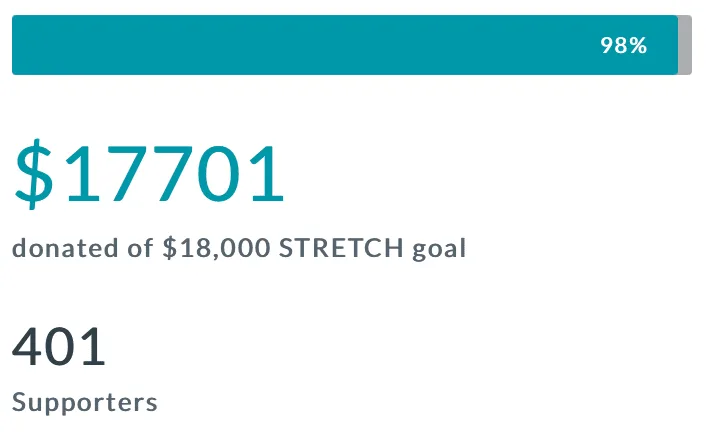
Yesterday we reached our $16,000 funding goal! 🎉
Thank you SOOOOO much to the 400+ people who have been so generous to support our work here. I am so grateful and humbled to have the opportunity to create for you. 🙏🏽
I’ve closed down the rewards, but we do have a stretch goal. If we reach $18,000 I will do a special workshop for all supporters and release some unpublished podcast interviews.
So if you still want to support you’ll be included in those bonuses AND get our Yarnist Insider bonus content unlocked in every newsletter going forward.