In recent years knitting has made a big shift towards big knits.
With a flood of new yarn crafters joining the ranks during the pandemic, quick knits have been on the rise.
Chunky sweaters, fluffy hats, and handmade toys have all made bigger yarns the next big thing.
So today we’re breaking out the big needles to explore the world of bulky yarn…
What is Bulky Yarn?
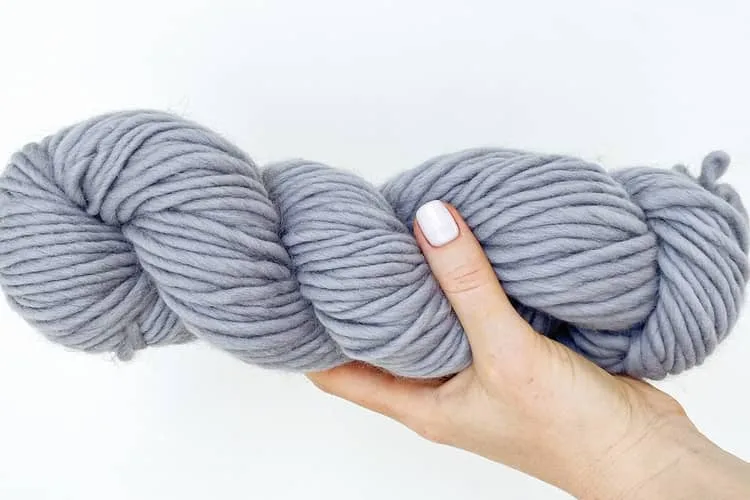
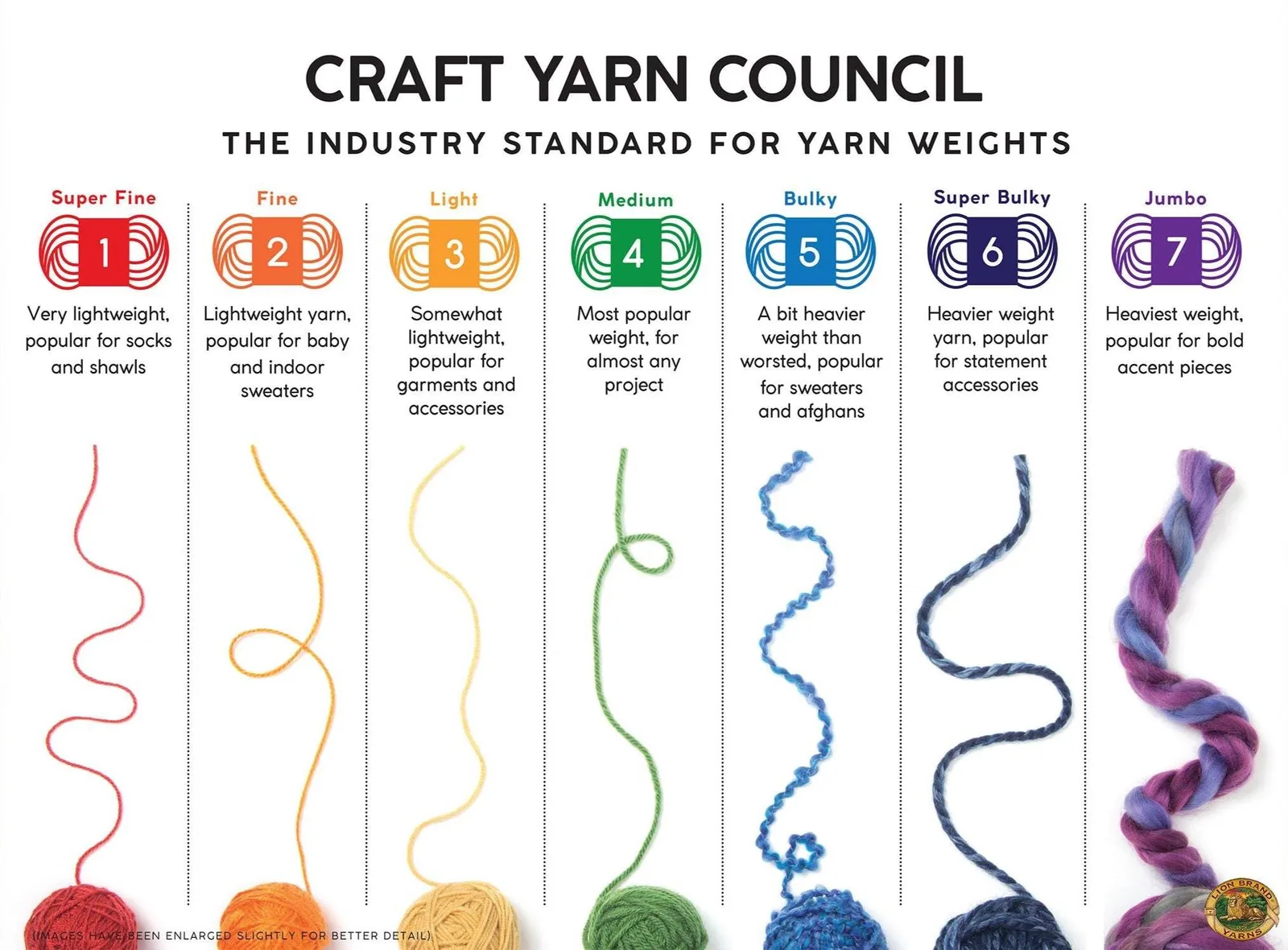
Bulky yarn is defined by the Craft Yarn Council as a #5 weight yarn.
Any yarn with a stitch gauge between 12-15 stitches per 4 inches (10cm) falls into this category.
It’s typically knit with needles ranging from size US 9 (5.5mm) to US 11 (8mm).
Most bulky yarns are made from 2 to 4 plies, but some single ply bulky yarns exist. However, single ply yarns are known to have much more variance in their thickness as they are often loosely spun.
So where did bulky yarn come from?
A quick history of bulky yarn
The history of bulky weight yarn is intertwined with the evolution of knitting itself.
Originally, yarns were handspun, and their thickness varied based on the spinner’s skill and the intended use.
With the advent of machine spinning and the industrial revolution, yarn production became more standardized.
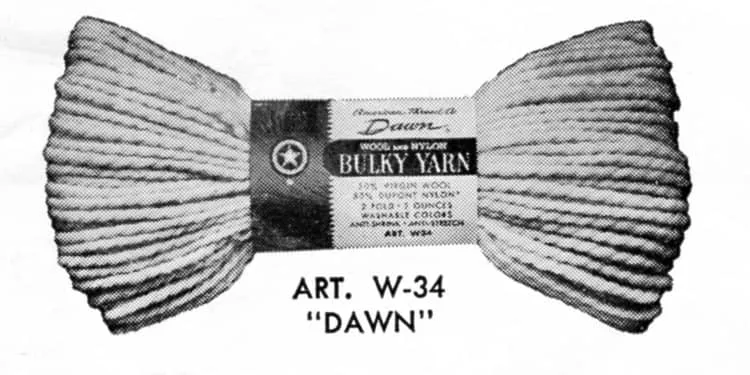
Bulky yarn gained popularity in the mid-20th century, especially in the 1960s and 1970s, as a response to the demand for quicker, more efficient knitting projects.
This was a time when DIY culture flourished, and people sought ways to create warm, durable items with less time investment.
The bulky yarn provided an ideal solution with its thick strands and easy workability.
But just because a yarn is BIG doesn’t mean it’s bulky.
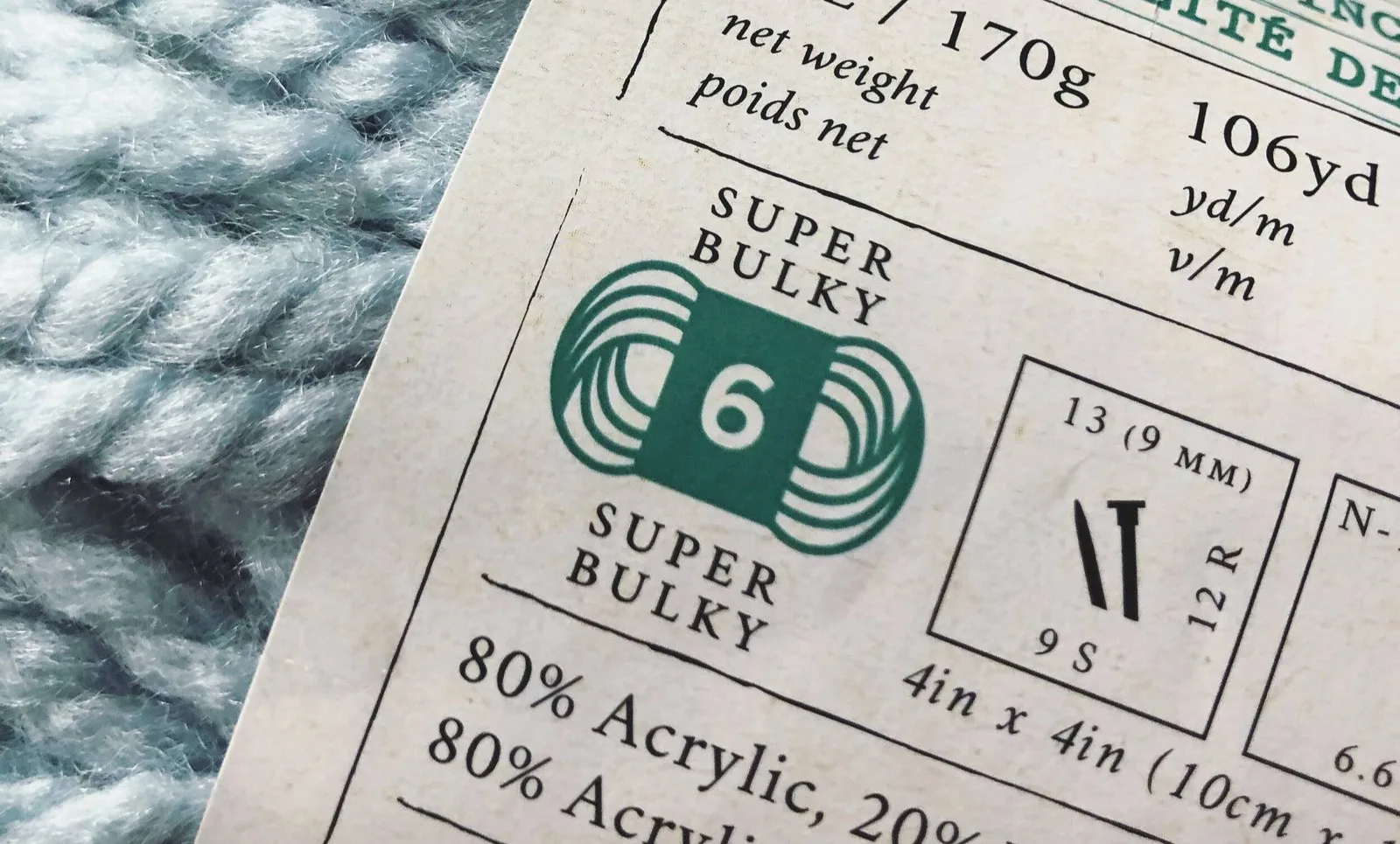
Bulky vs. Super Bulky vs. Jumbo
Bulky yarn is certainly thick, but there are much, MUCH thicker yarns.
It is often confused with SUPER bulky yarn (CYC #6) which has a gauge range of 7-11 stitches per 4 inches (10cm).
But the popularity of arm knitting and oversized knits back in the early 2010s made way for a new yarn category. The CYC introduced JUMBO yarn in 2014 as it’s 7 yarn weight, and redefined super bulky in the process.
Jumbo yarns are any yarn with a gauge under 6 stitches per 4 inches.
Bulky yarn provides a nice balance of thickness and usability, not sacrificing function for extra volume.
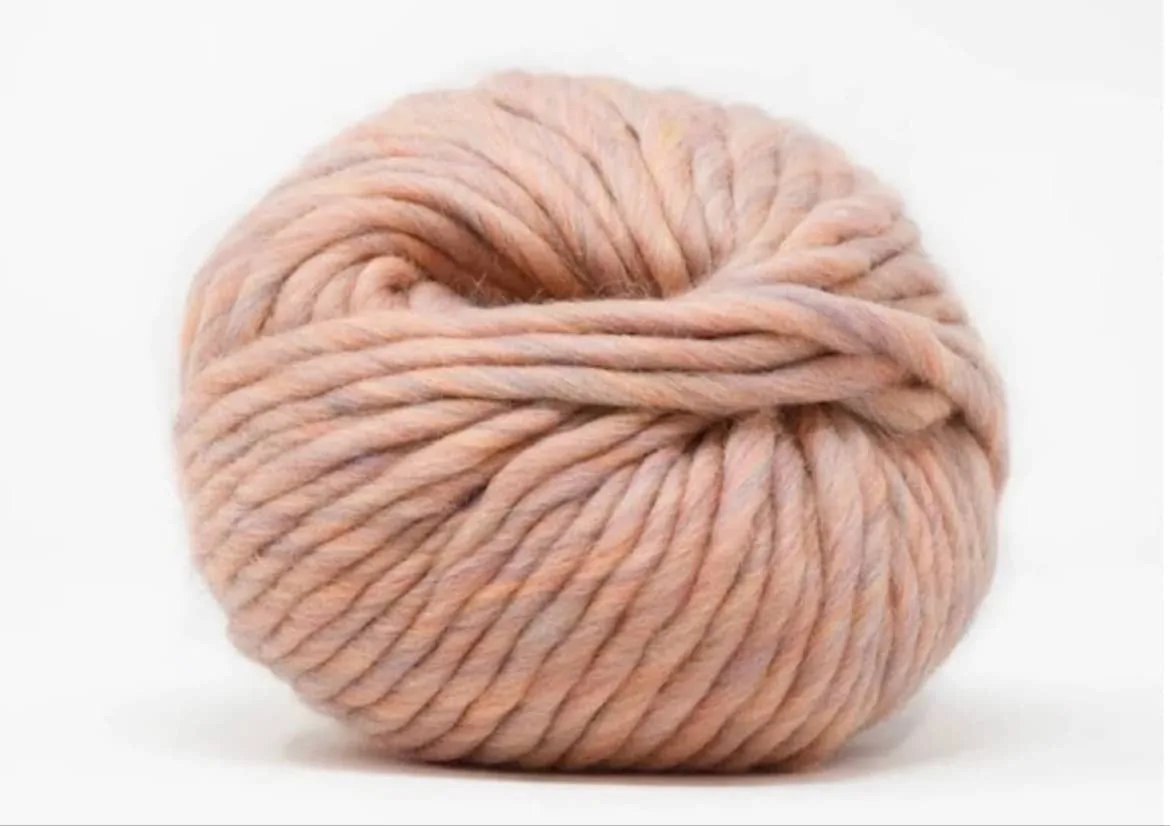
Benefits of bulky yarn
Bulky weight yarn offers several advantages:
- Quick Results: Due to its thickness, bulky yarn works up quickly, making it perfect for last-minute gifts or projects with tight deadlines.
- Warmth: Its thick fibers provide excellent insulation, ideal for creating cozy winter garments and accessories.
- Easy Handling: For beginners, the larger size is easier to handle and see, which helps in learning basic stitches and techniques.
- Bold Textures: It lends itself well to creating bold textures and chunky stitch patterns, adding visual interest to simple designs.
Drawbacks of bulky yarn
Despite its advantages, bulky weight yarn also has some drawbacks:
- Less Detail: The thickness can obscure intricate stitch patterns, making it unsuitable for detailed lacework or fine textures.
- Heaviness: Garments made with bulky yarn can be quite heavy and less drapey, which might not be ideal for certain types of projects.
- Yarn Consumption: It requires more yarn to complete a project, which can make it more expensive compared to finer yarns.
- Limited Use: While it is possible to make garments and accessories, sweaters, hats, and scarves are less practical than when using smaller yarn weights.