In America today is Memorial Day.
It’s a day that we honor those who have died serving their country in the armed forces.
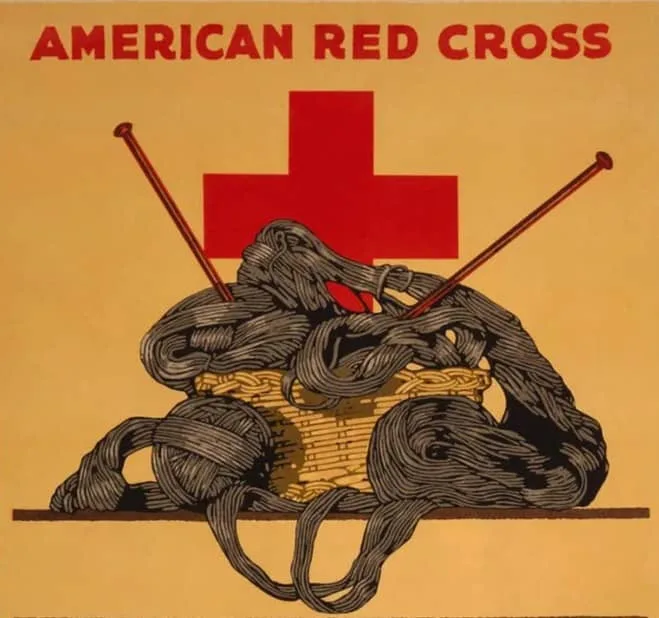
So I thought it was a good time to take a look at how The Red Cross changed the knitting landscape throughout World War 1 & 2.
A few years ago I recorded an interview with knitwear designer and author Elizabeth Lovick.
She wrote a book called Centenary Stitches which pulled together a collection of 50 wartime knitting patterns.
These patterns where knitted for use in a movie called Tell Them Of Us, a true story about a family during WW1.
During our conversation something quite interesting came up.
Well lot’s of interesting things came up 😂 but I found the discussion about the Red Cross particularly enlightening.
A quick history of the Red Cross
The International Red Cross and Red Crescent movement began in 1863, inspired by a Swiss businessman, Henry Dunant who proposed that countries create national relief societies.
These organizations would train during times of peace to provide impartial, neutral care to those suffering during times of war.
His proposal was adopted during the original Geneva Convention in 1864 and established the recognition of medical services and the wounded on the battlefield.
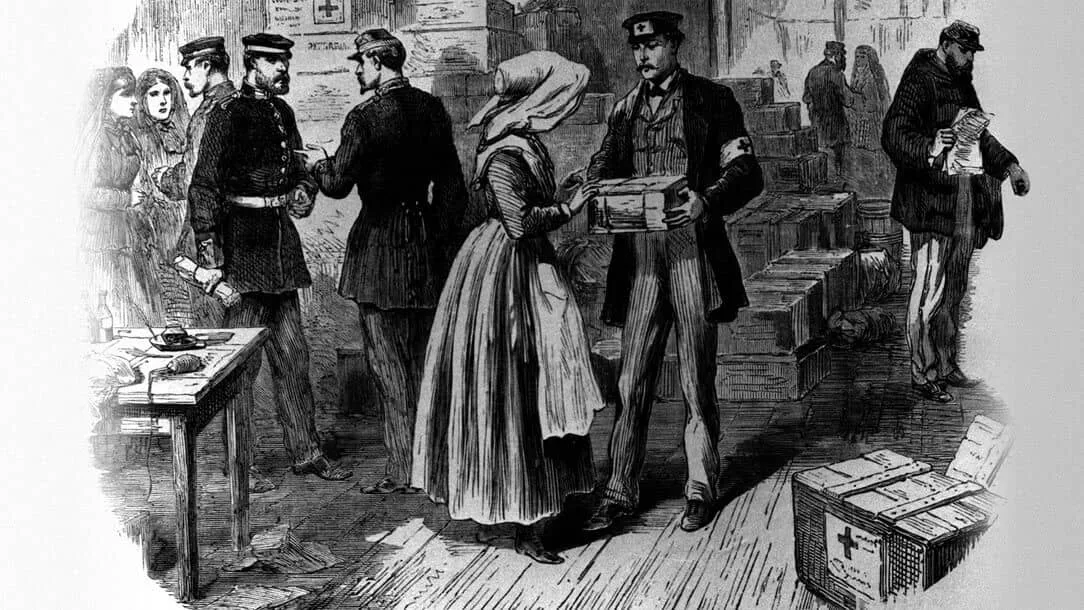
Today most countries have a Red Cross organization (and Red Crescent in predominately Muslim countries).
These non-profits provide much needed services in conflict zones such as medical attention, blood donations, and even distributing postal parcels.
But during the early 1900s the Red Cross became known for something else…
The Red Cross and Knitting
As World War 1 broke out in Europe, a campaign began to get knitted items to soldiers on the battlefield.
Everything from hats, socks, sweaters, hot water bottle covers, to something called a “Helpless Case Shirt” were requested for donation.
But there was a problem.
The Red Cross needed to ensure consistency of the items they received, and would only accept donations of top quality work.
To do that they needed to change the way people knit.
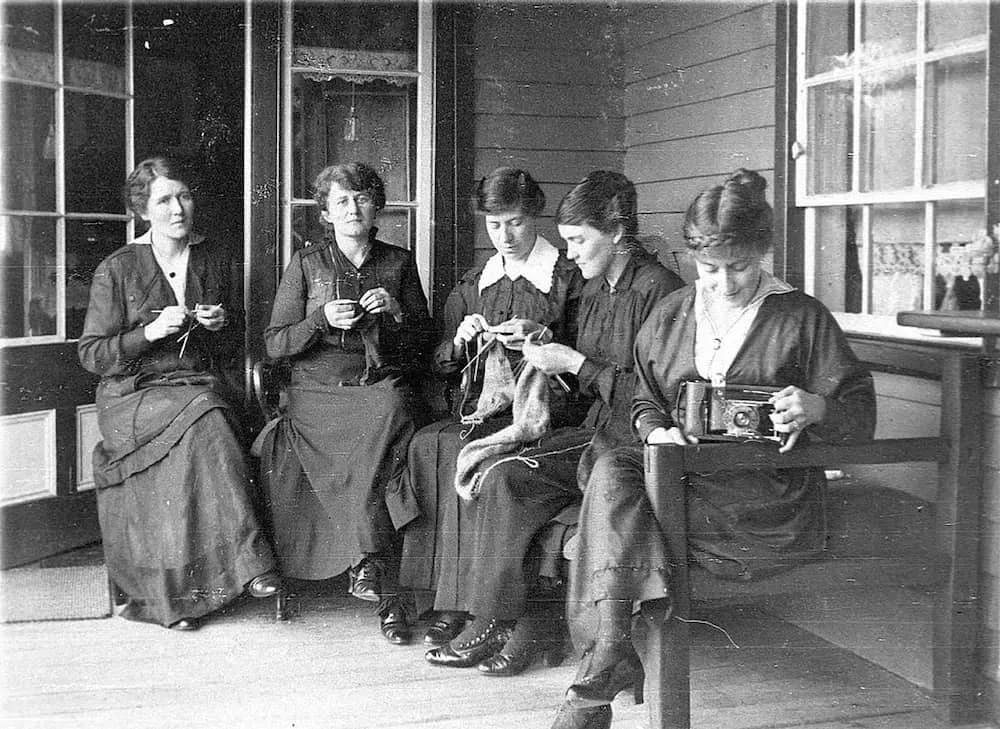
The first challenge was making sure everyone was knitting the right things.
This required standardized patterns which met certain specifications.
Items had to be made in specific colors using the right “weight” yarn in the right sizes.
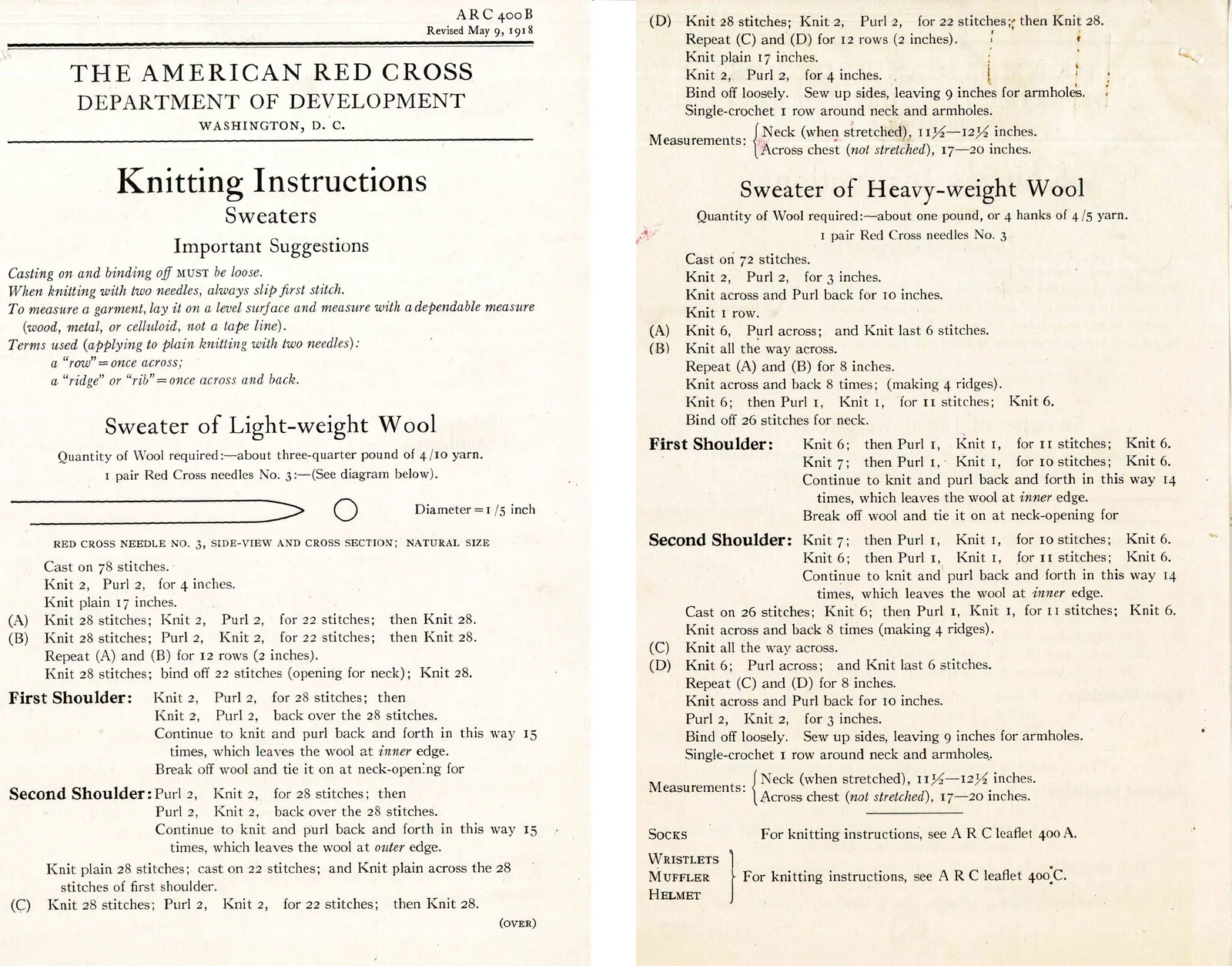
Their first booklet, Instructions for Knitting, was published in the middle of 1917, and outlined 7 patterns the military recommend to knit.
They also worked with magazines, yarn companies, and local Red Cross chapters to publish knitting patterns which were deemed acceptable for donation.
Since knitting needles had no standard sizes at the time, The Red Cross even specified their own knitting needle sizes (no 1. 2. & 3.) to ensure consistency.
Knitting circles were established in big cities, and yarn was distributed in green, gray, khaki, and navy so the knitted goods worked with the soldier’s uniforms.
By the end of WW1, Americans had knitted more than 22 million garments for service men stationed at home and abroad.
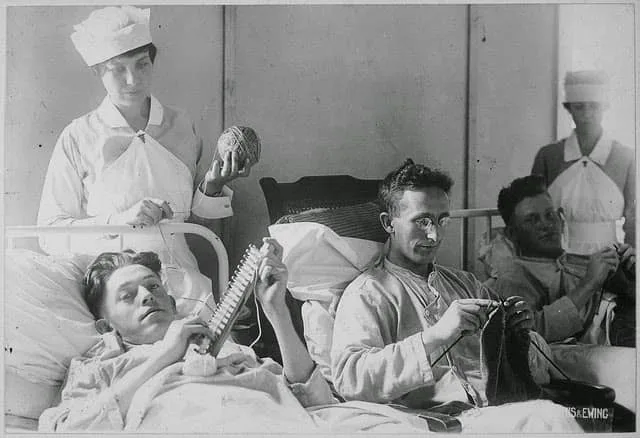
And knitting was even used as a method of therapy for soldiers who were dealing with “Shell Shock” or what we now call PTSD.
The simplified patterns created by the Red Cross were designed to be easy for knitters of all skill levels.
They required minimal shaping and seaming, a trend that remains popular in knitting today.
Items like the Watchman’s Cap have become iconic fashion staples even now.
And tens of thousands of people learned to knit, passing on these traditional skills to younger generations for decades.
Knitting may not be as popular as it was 100 years ago, but for those of us who still enjoy it, we owe a huge debt to the work of The Red Cross.
//
If you or members of your family have served in the military, we give you our deepest thanks.