

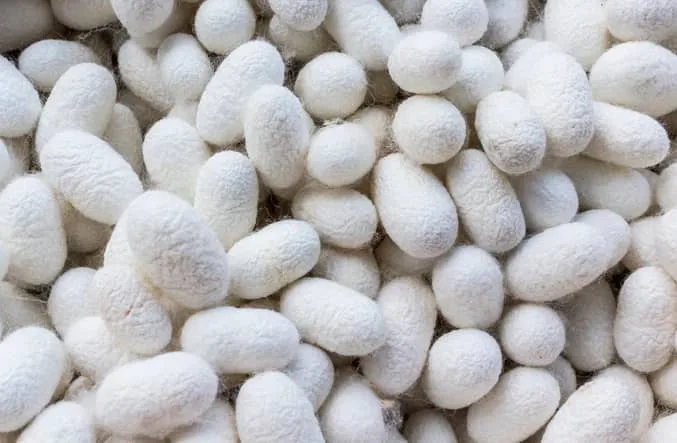
How did the cocoons of a special moth become one of the most luxurious fibers of all time?
Today we’re going to explore what makes silk so special and one of the oldest textile fibers in the world.
We’ll discuss it’s history, manufacture, benefits, drawbacks, and controversies.
Let’s dive in…
A quick history of silk
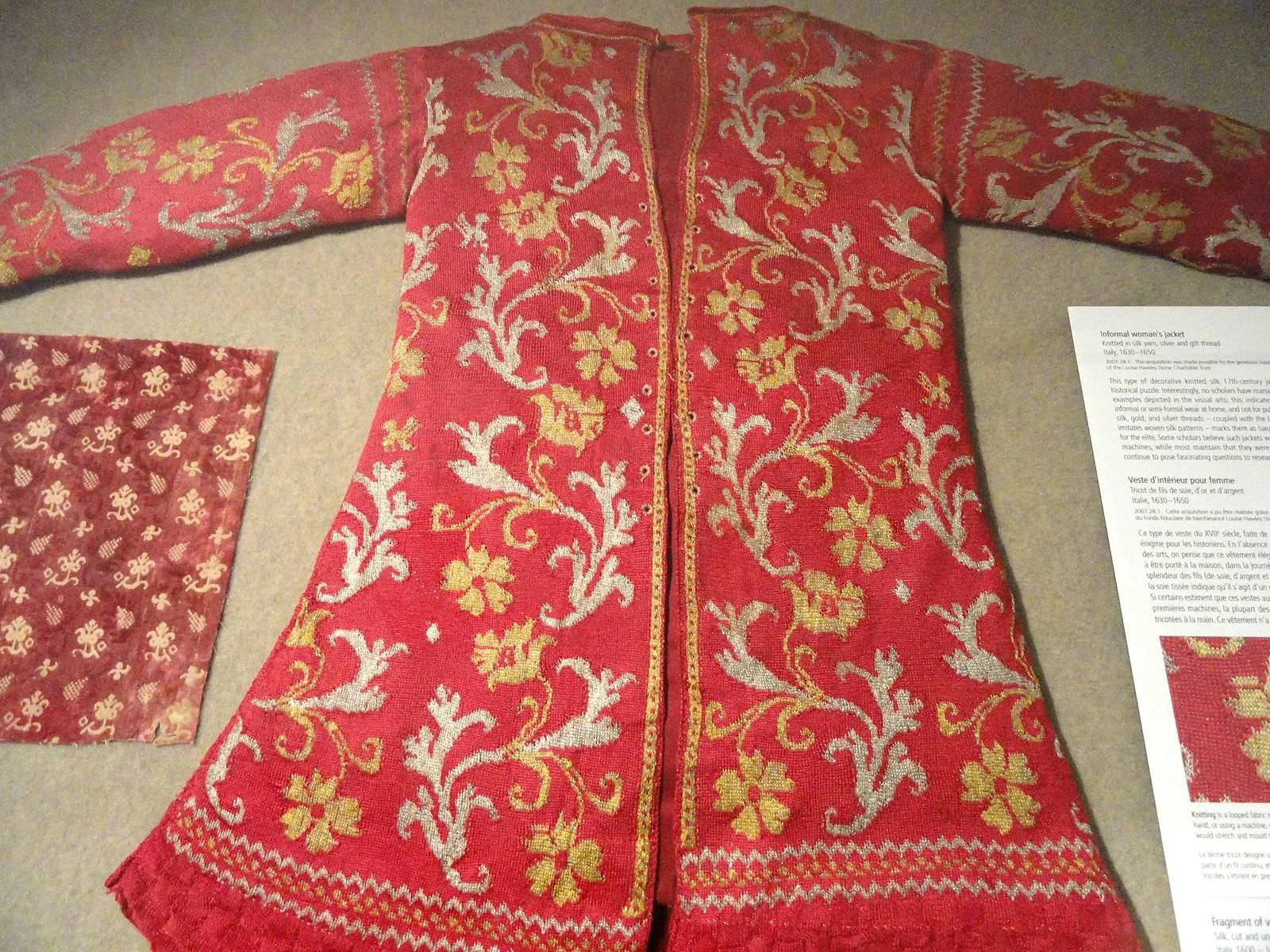
Silk production originated in China as far back as 10,000 BC and remained in the region until the creation of the silk road in 1,000 BC.
Our oldest example of silk fabric dates back to 3,630 BC as a burial wrap for a child near Xingyang, Henan.
The Chinese became known around the world for their silk fabrics, which quickly became popular as a luxury item for nobles and royalty. It was also used as paper since it’s white color and ink absorption made it ideal for writing on.
Silk production slowly moved outside China to India and other asian countries.
With the opening of the silk road, the highly sought after fabric found it’s way across Asia and the middle east and into North Africa and Europe. During the middle ages, Italy became a major producer of silk.
Today silk is still incredibly popular and China accounts for more than half of the world’s prouduction.
How is silk made?
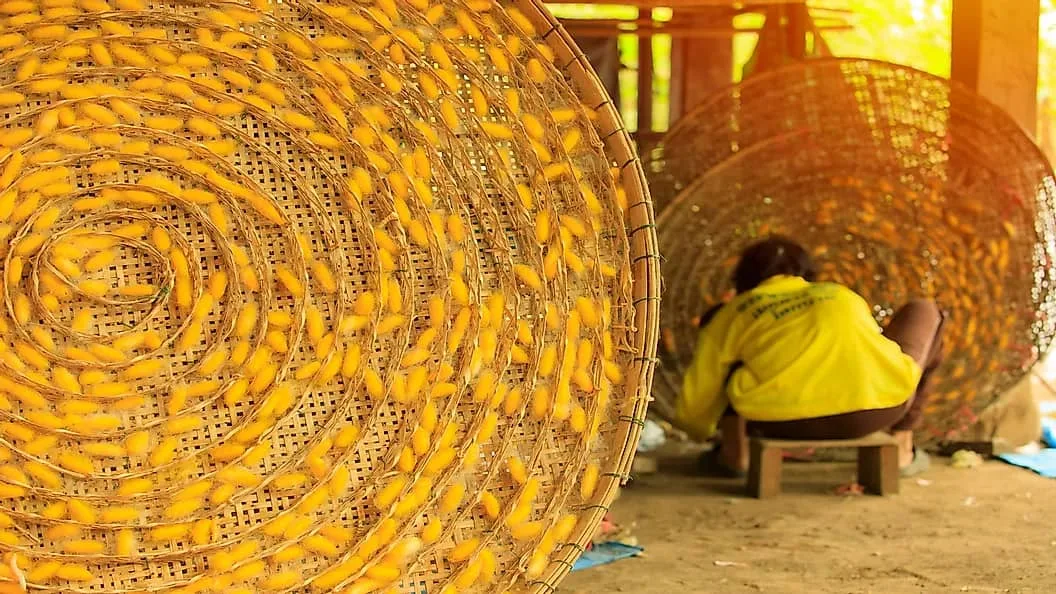
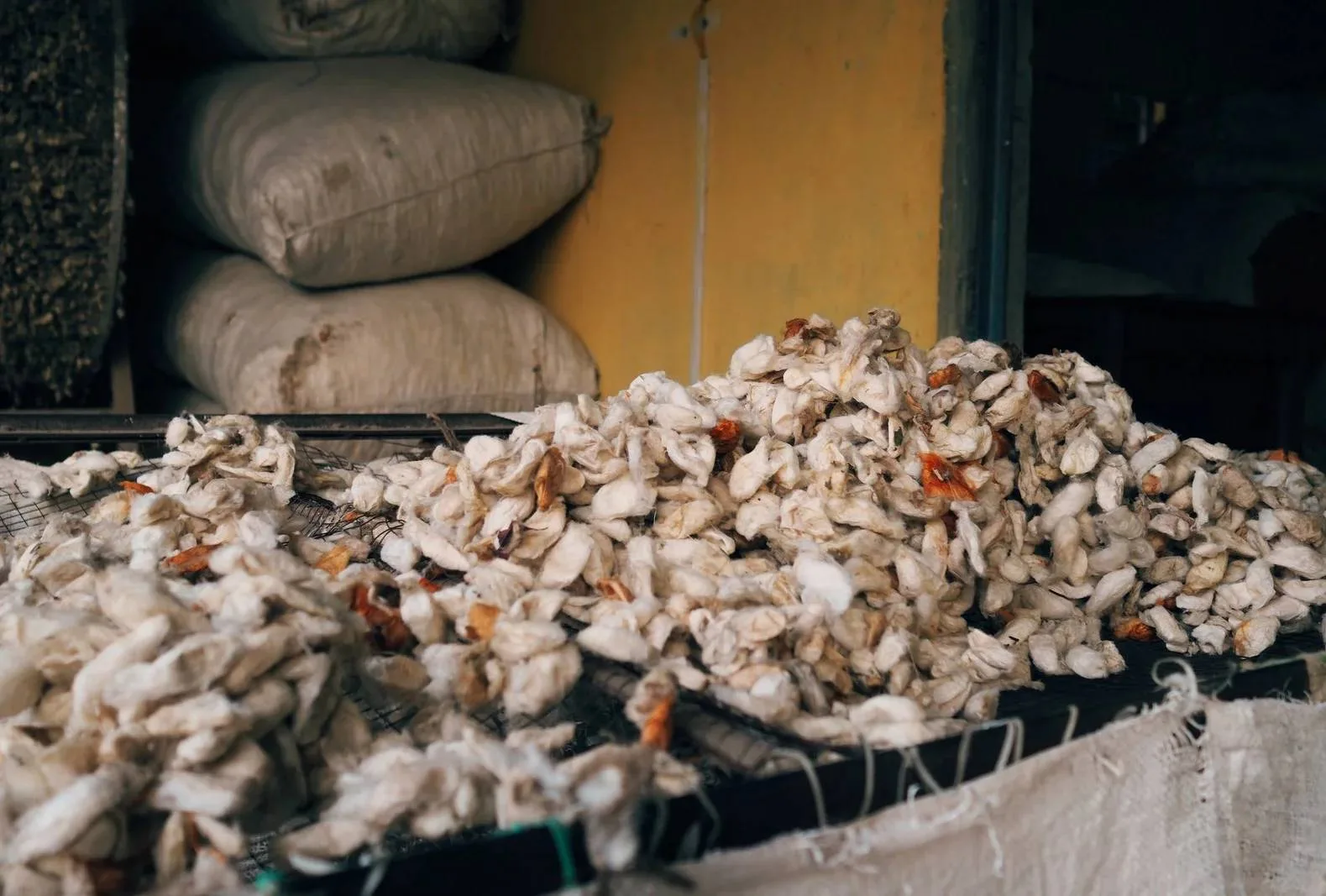
Silk comes from the cocoons of the domestic silk moth (Bombyx mori). While 95% of silk comes from the Mulberry silkworm, the Eri silkworm, Tussar silkworm, and Muga silworm are also cultivated in a process called sericulture, or silk farming.
Essentially, silk is silkworm spit, which is secreted to form the cocoon during the pupa stage. The cocoon is created in one long strand which measures around 1,000 feet long.
Before the moth can emerge from the cocoon, the cocoons are boiled, steamed, or left in the sun to kill the insects.
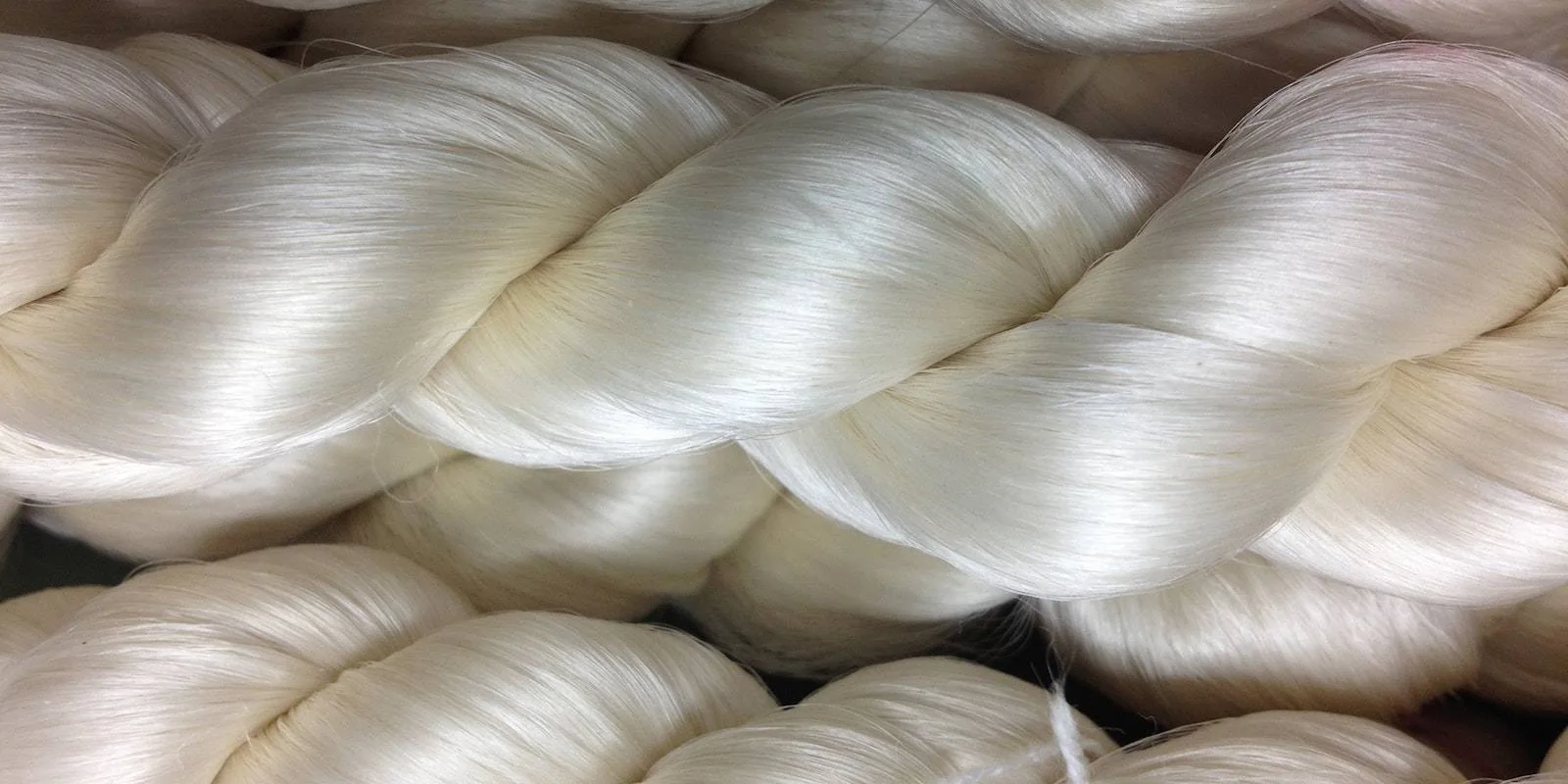
From there hot water is used to loosen the silk fiber in the cocoon and several strands are spun together to create thread. Those threads are spooled for use in other textiles like fabric and yarn.
It takes about 2,500-3,000 worms to create 1 pound of silk fiber.
Benefits of silk yarn
Silk has been used for hand knitting since knitting was a thing.
And there’s good reason for that. Silk has a ton of attractive properties that make it great for knitted fabric.
Here are just a few:
-
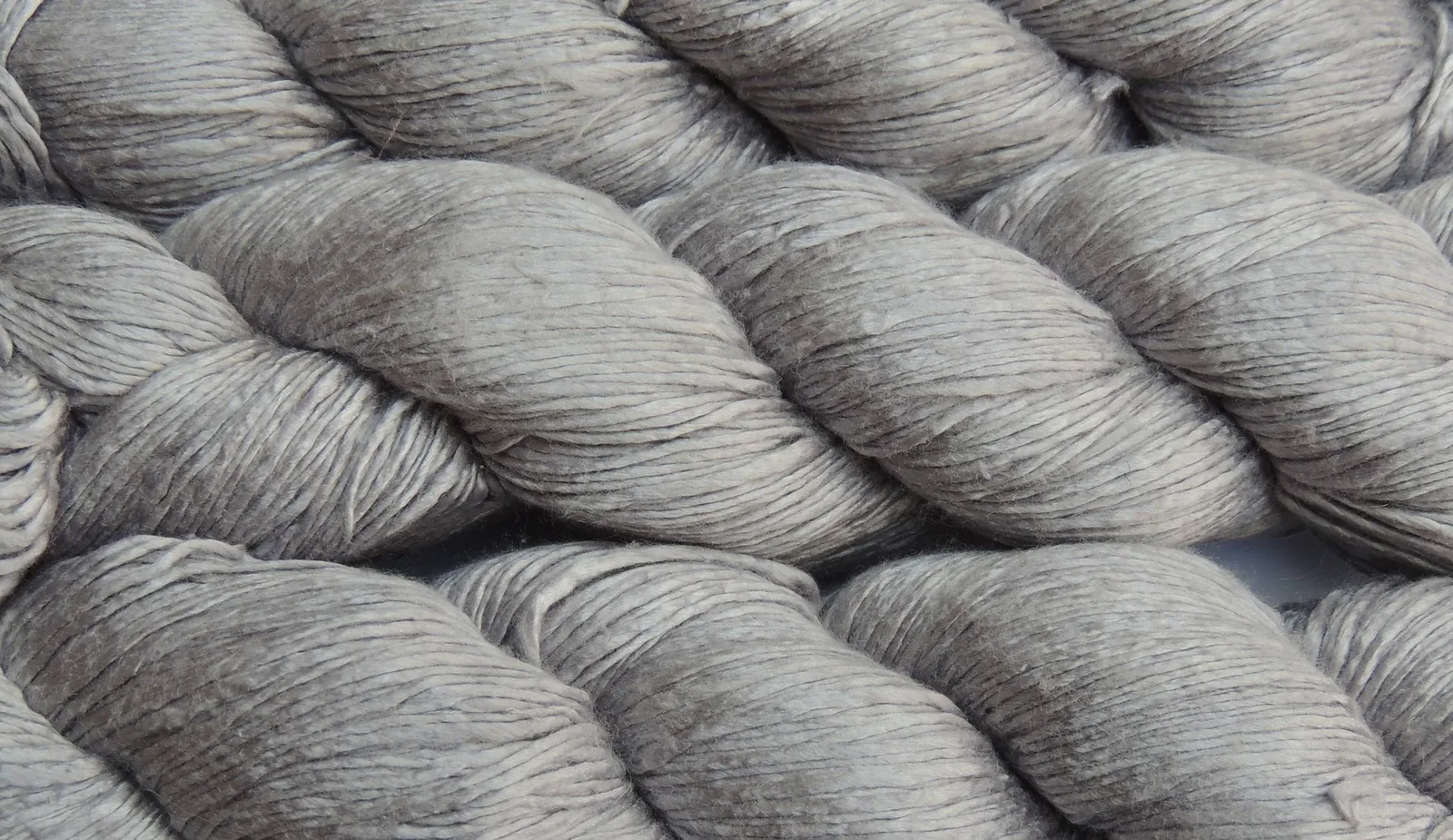
That silky sheen
Silk is known for its luster, the shiny quality certain fibers have which are better at reflecting light. -
Keeps the heat in and lets moisture out
As a fabric silk does great at trapping air, making it good as a thermal insulator. It also is great at wicking away moisture, helping to keep you cool. -
Exceptional strength
Silk is the strongest natural fabric in the world. It is incredibly durable and resistant to pilling. -
Hypoallergenic
It won’t irritate sensitive skin and isn’t processed with any harsh chemicals. -
Extremely good for dyeing
Silk is very similar to human hair, so it takes colored dyes incredibly well for rich, vibrant colors.
Drawbacks of silk yarn
Like any fiber, silk is not perfect.
Here are a few of it’s not so attractive properties:
-
**Inelastic
As mentioned before, silk is a lot like human hair, which doesn’t stretch well. It might be strong, but it doesn’t like to move much and won’t return to it’s previous shape.
** -
**Loses strength when wet
**Silk can lose up to 20% of it’s strength when wet. So, you know, don’t rip it when blocking. -
**Expensive
**Harvesting silk is very labor intensive, and some types of insect friendly silks can cost 6x more than regular silk.
Is silk production problematic?
There is some controversy around silk production because it requires killing thousands of insects for every pound produced.
Animal rights activists consider it a cruel practice, so some silk has come on the market claiming to not hurt the insects.
These are often labeled peace silk, vegan silk, or ahisma silk. Usually the moths are still kept for breeding and die once they cannot produce eggs anymore, so those practices may not be so humane after all.
On the other hand, these insects easily lay 300-400 eggs at a time, so they reproduce very quickly. You’re not a bad person if you’re ok with killing silkworms, but if insect well fare is important to you it is something to consider.
Silk Yarns We Love
Here’s some of our favorite silk and silk blends yarns you might want to check out:
-
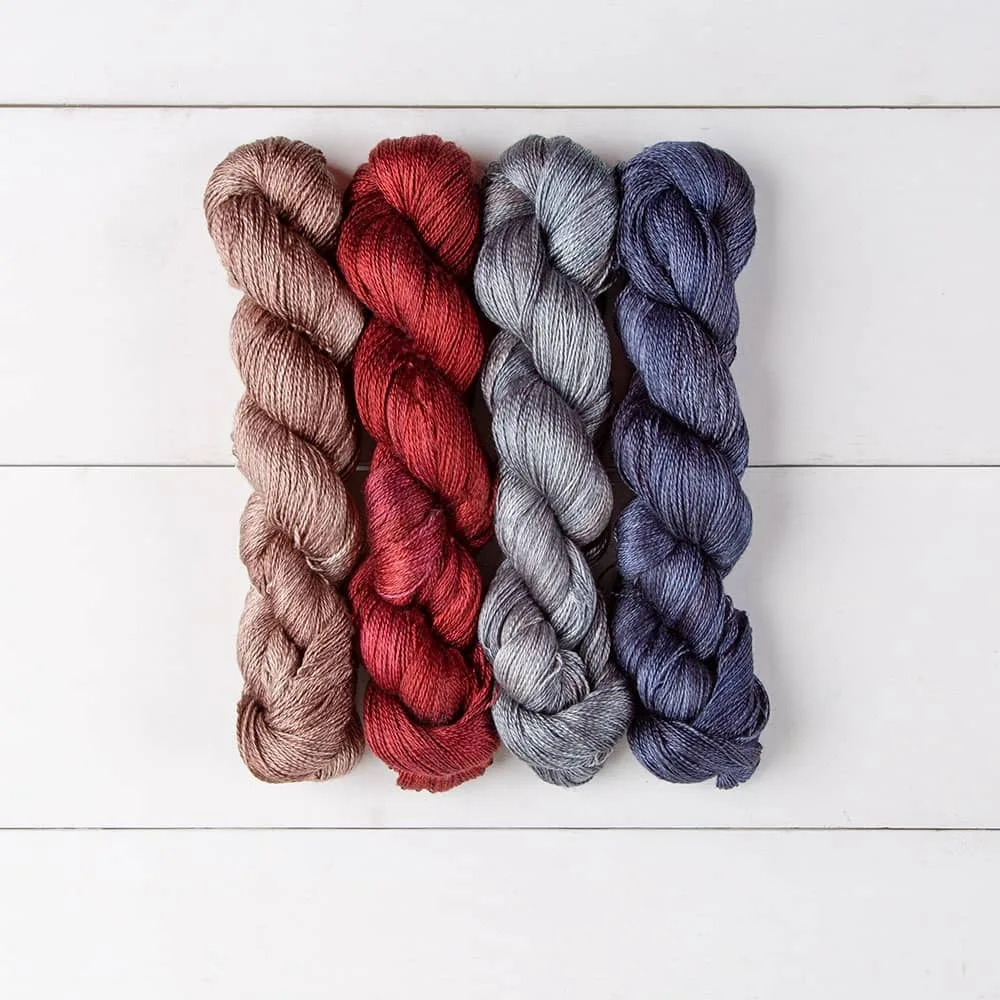
Luminance Lace by Knit Picks
Lace Weight (CYC #0) | 100% Silk (439yds / 50g)
Luminance has amazing depth of color, superior sheen, and excellent drape, making it the perfect yarn for the finest shawls and flowing scarves.
Get it here -
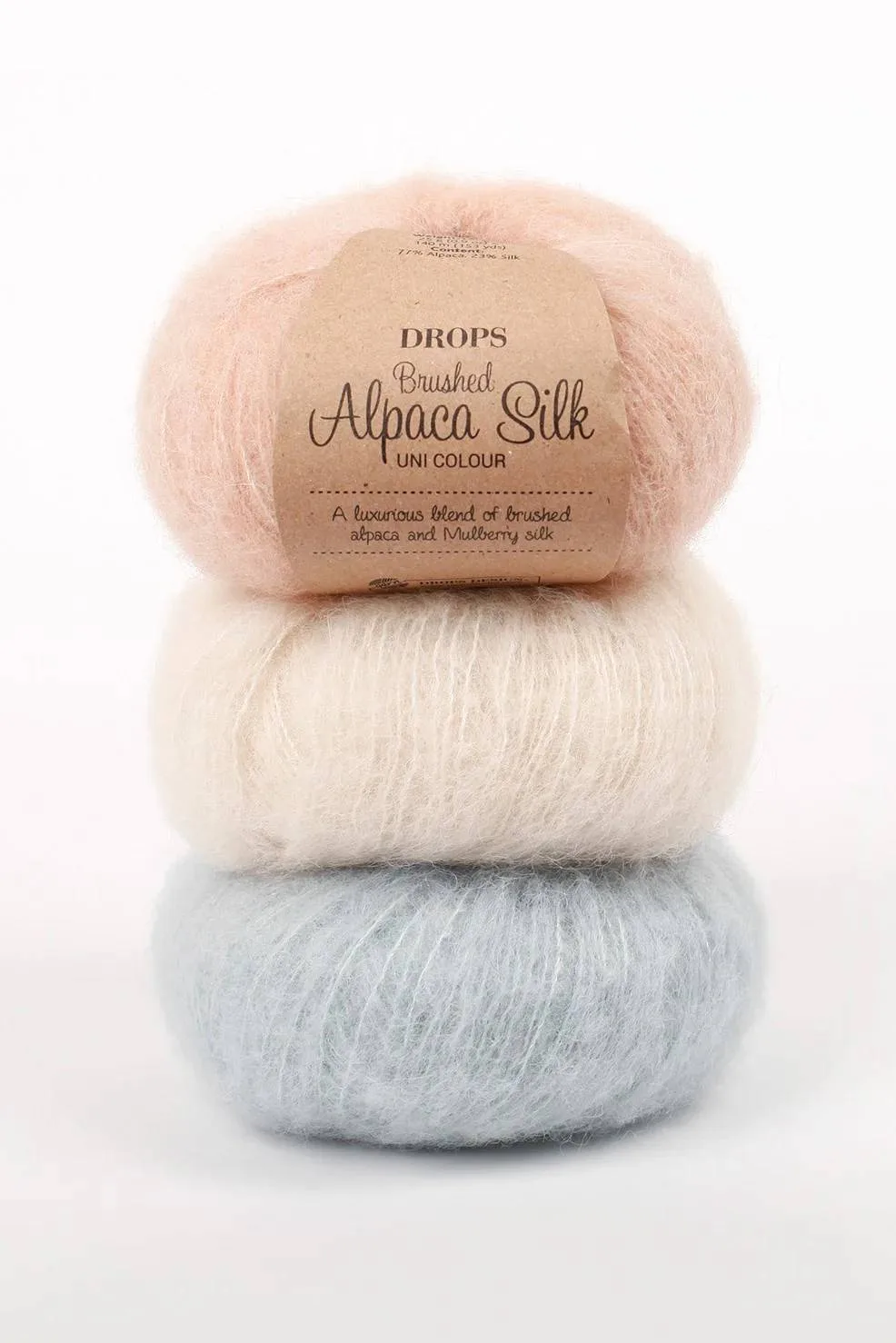
Brushed Alpaca Silk by Drops
Worsted Weight (CYC #4) 77% Superfine Alpaca, 33% Silk (153yds / 25g)
This yarn feather light and surprisingly warm features make it suitable for both small and large garments, and it can be knitted relatively fast on larger needles. A luxurious yarn in an exclusive mix of brushed, superfine alpaca and subtle shiny silk!
Get it at Amazon -
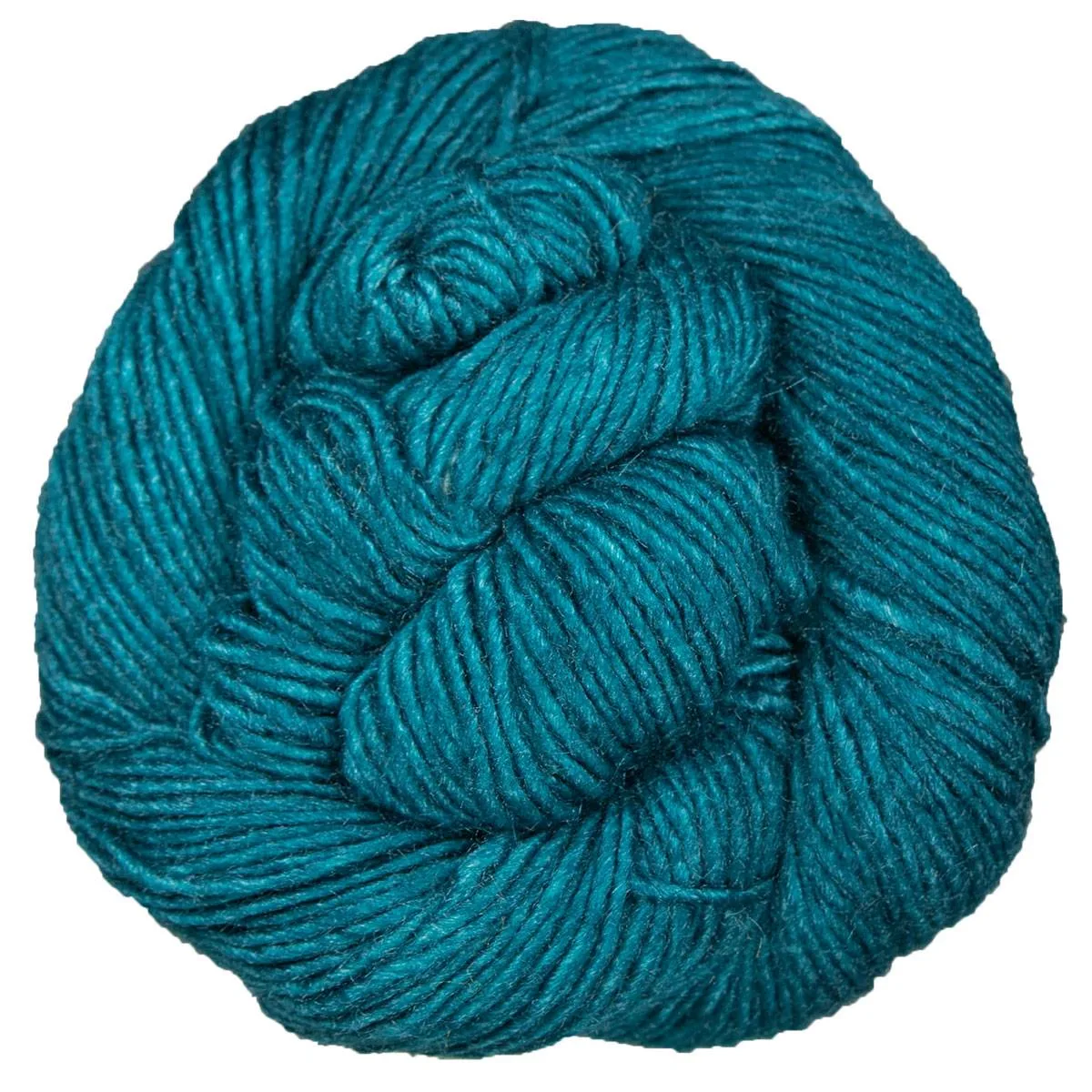
Silky Merino by Malabrigo
DK weight (CYC #3) | 50% Baby Merino Wool / 50% Silk (150yds / 50g)
The single-ply Malabrigo Silky Merino is a stunning blend of baby Merino wool and silk in a scrumptious DK-weight! The subtle sheen gives depth to the gorgeous kettle-dyed colorways, making Malabrigo Silky Merino the perfect choice for high fashion projects and dressy accessories.
Get it here -
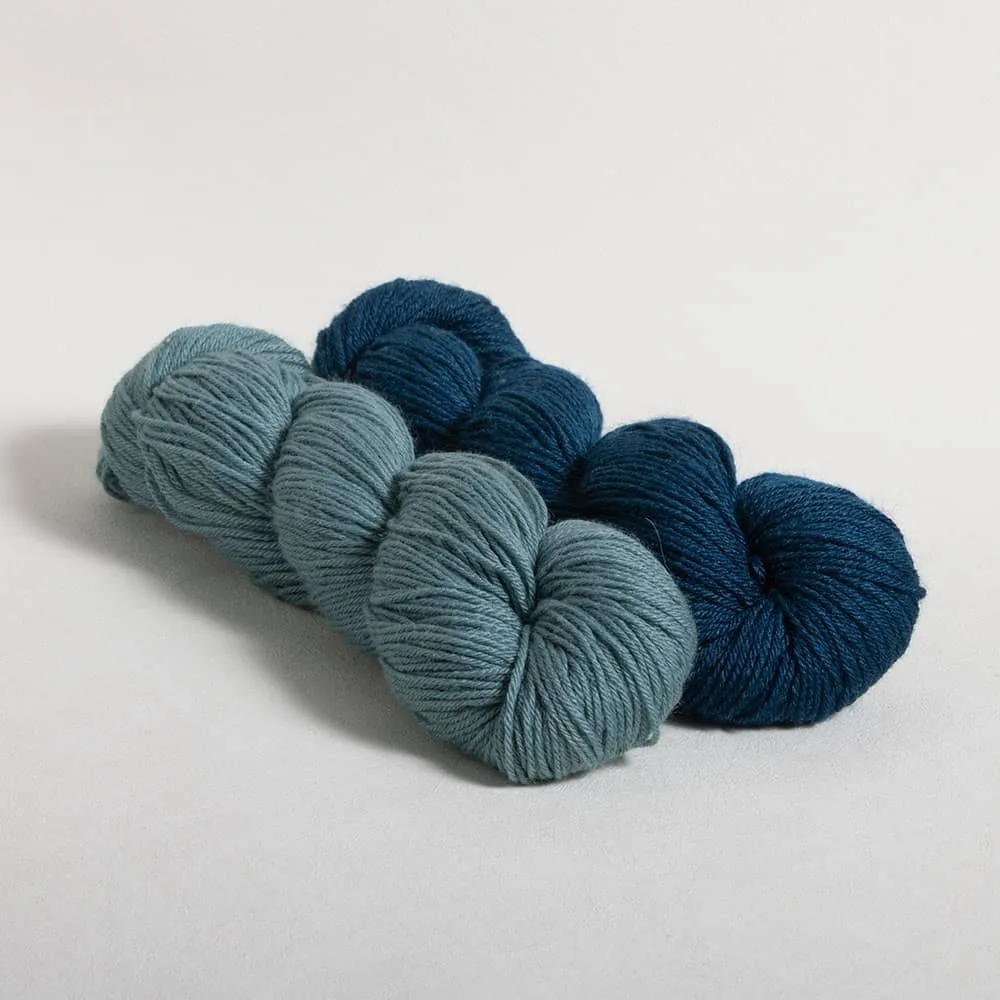
Gloss collection by Knit Picks
Lace, Fingering, & DK weight (CYC #0-3) | 70% Merino Wool / 30% Silk (123-440yds / 50g)
Gloss is a luxurious blend of soft, cushiony merino with the sheen and velvety texture of silk. Light plays brilliantly off the silk, making this yarn perfect for textured stitches ranging from lace to cables. Warm and brilliantly colored with an elegant drape - Gloss is perfect for heirloom knitting to be enjoyed for years.
Get it here -
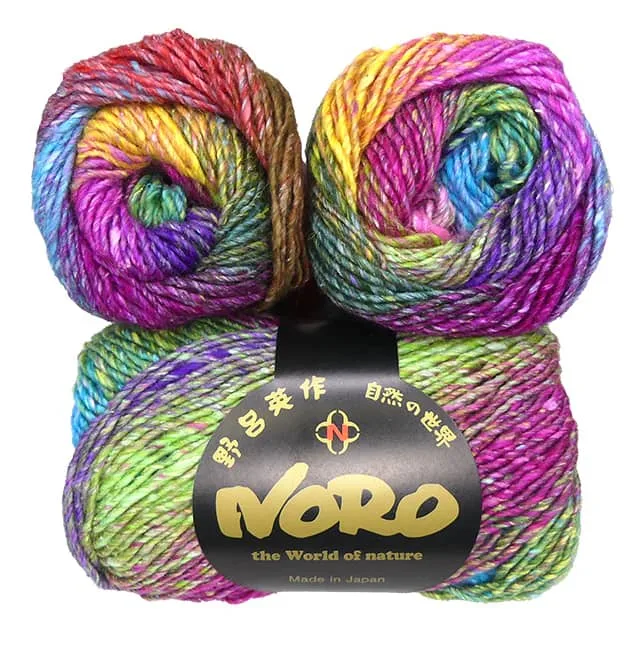
Silk Garden by Noro
Worsted weight (CYC #4) | 45% Silk, 45% Mohair, 10% Lambs wool (110yds / 50g)
Noro is known for artistic color combos, and one-of-a-kind balls of yarn where each one is different, even within the same colorway. If you want to create an heirloom quality project that stands the test of time, you can't go wrong with Noro of Japan, as they have been creating fiber art for decades.
Get it here
Some of these are affiliate links. Buying through them supports The Yarnist at no extra cost to you.
Conclusion
Silk is a unique yarn that gives a sense of luxury to ever project.
But what do you think?
Have you knit with silk yarn?
Hit reply and share your experience with us!
We’d love to hear your feedback. 😊