


In my opinion there are two types of knitters:
Texture knitters and colorwork knitters.
Texture knitters are all about knits and purls and yarn overs and cables.
Colorwork knitters are all about…
well….
colors.
But there are a lot of different types of colorwork within the knitting world.
And since our Summer Knitting Weekend is all about colorwork, I thought we’d explore five different levels of colorwork knitting, from beginner to advanced.
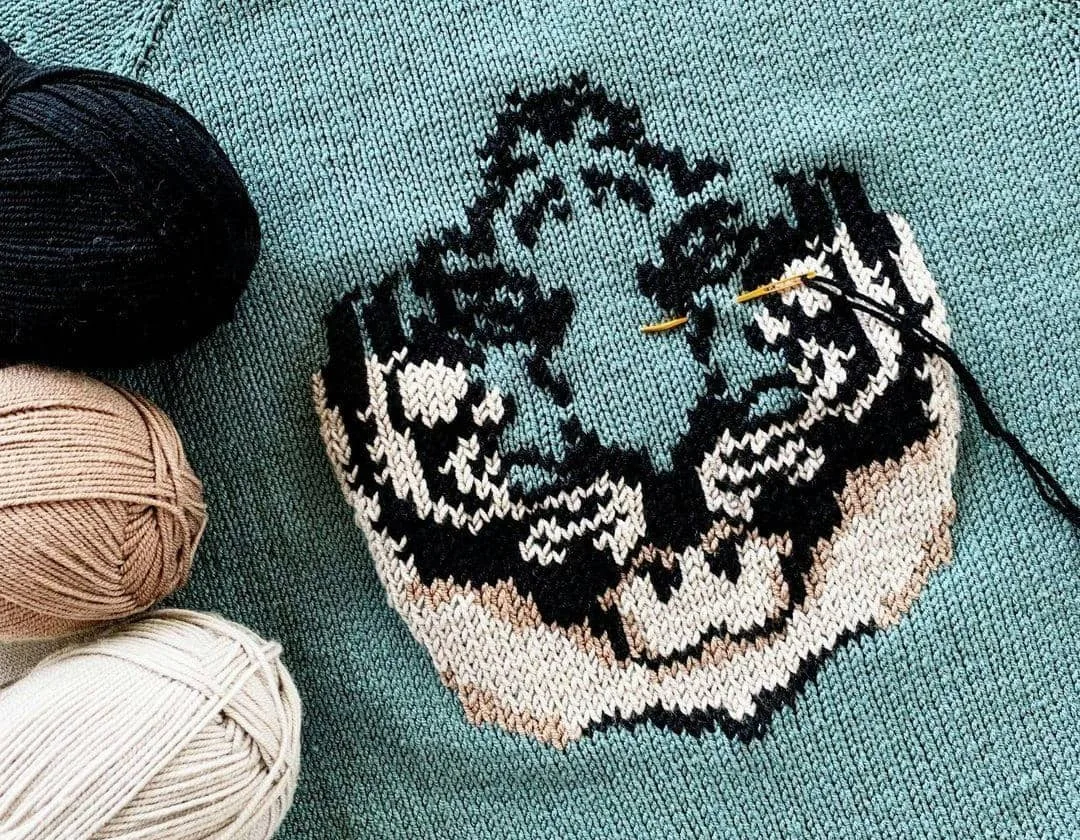
1. Duplicate Stitch
This technique uses small scraps of yarn to embroider motifs on top of your finished fabric. You use a darning needle to “duplicate” the stitches using a different color.
Pros: Very flexible. Great for adding small details.
Cons: Labor intensive and time consuming.
When to use: Perfect for monograms, fixing mistakes, or adding color accents too small for Intarsia.
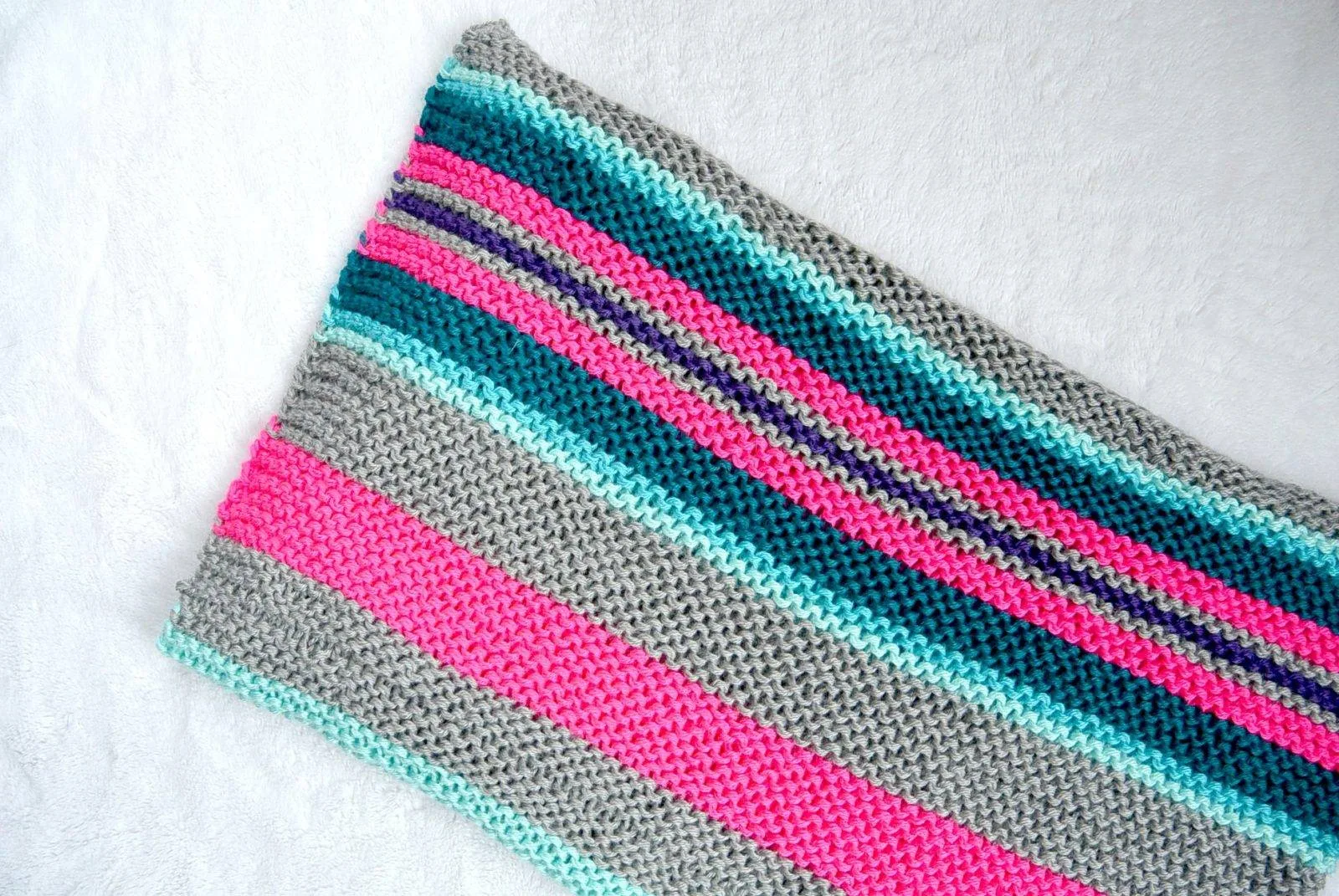
2. Stripes
This technique alternates between two or more colors of yarn. Stripe widths can be varied to change up the look of the fabric. Consistent stripe widths give your fabric a more bold graphic style.
Pros: Easy for beginners.
Cons: Not very flexible in what you can achieve.
When to use: Great for spicing up simple knits without much effort.
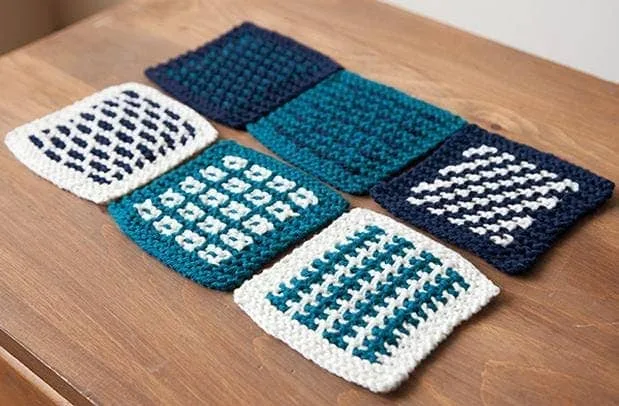
3. Mosaic
Similar to strips, this technique uses slipped stitches to create colorwork patterns. The colors from one row cover the colors in the next row, giving the illusion of connected colors throughout the fabric.
Pros: Easier for beginners. Looks complex even though only one color is knit at a time.
Cons: More flexible than stripes but still limited in its application. Fabric can be thick and dense.
When to use: Perfect for creating complex looking geometric patterns that are easy to knit.
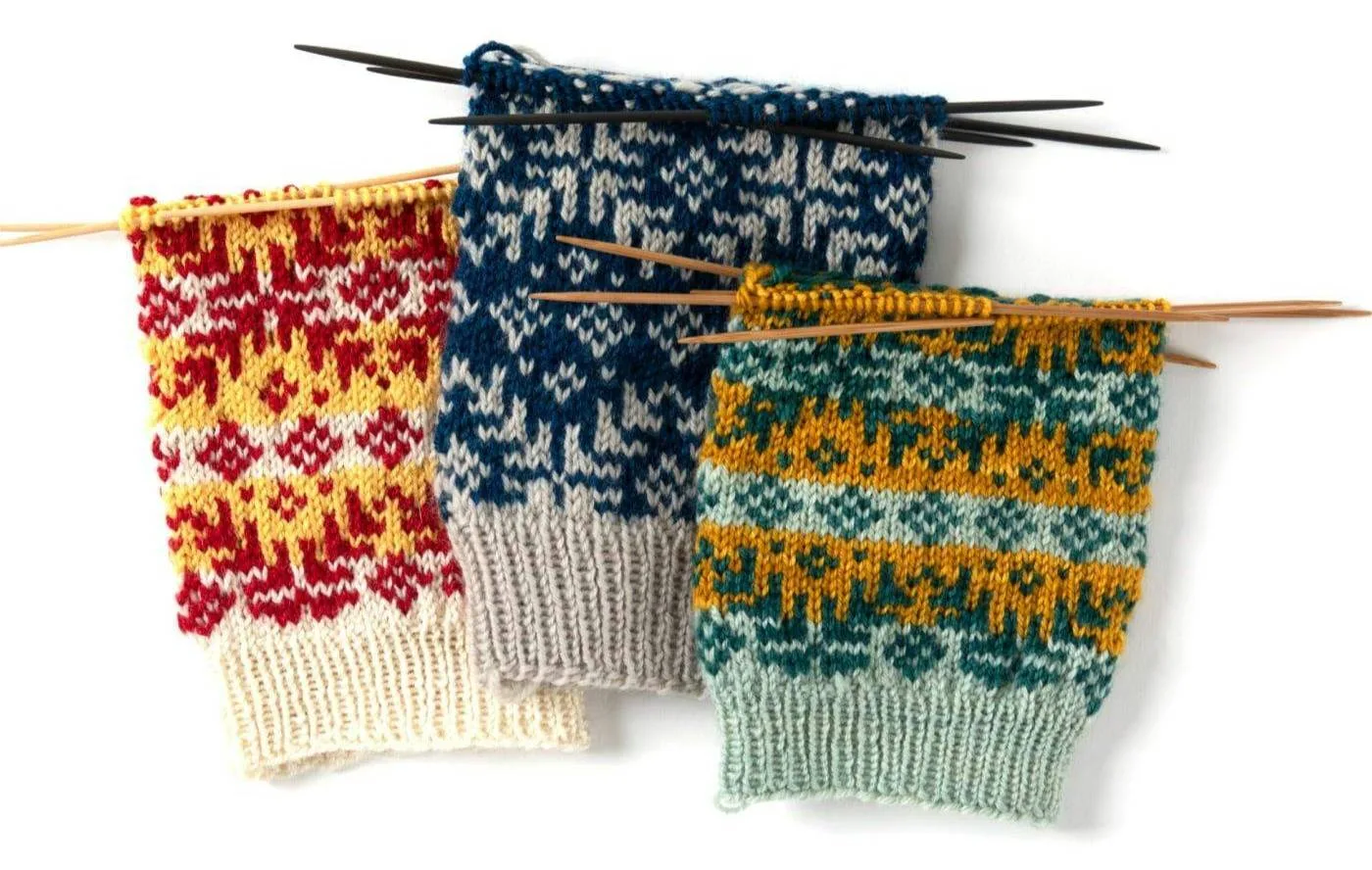
4. Fair Isle (Stranded)
This technique uses two colors of yarn within the same row. By alternating between the two at different intervals, patterns can be created over multiple rows. Generally designs consist of small motifs of nature or animals and are presented in stripes stacked upon each other.
Pros: Good option for incorporating more than two colors. Designs can be quite complex, but you only knit with two colors at a time.
Cons: Should really only be knit in the round. Design motifs should be relatively small so yarn floats behind the work are easy to manage. Managing multiple yarns in the same row takes some getting used to.
When to use: Great for creating small, fun colorwork patterns in the “traditional” colorwork knitting look.
5. Intarsia
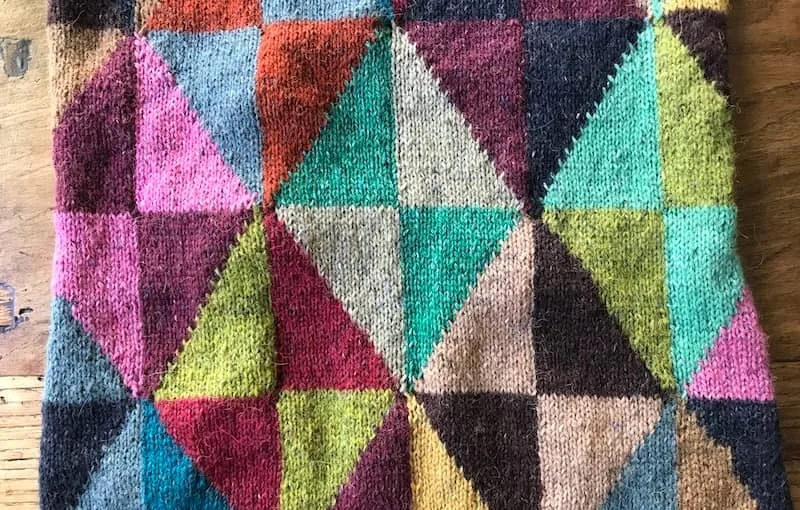
This technique switches entirely from one or more yarn colors in the same row. It’s used to create large sections of color within knitted fabric that float independent of other colors. This makes it ideal for pixel type artwork that can depicted big letters, landscapes, or even logos.
Pros: Incredibly flexible in the types of artwork that can be created. Colorwork can be knit in a single layer of fabric.
Cons: Projects MUST be knit flat. Lots of loose yarn strands are easy to get tangled up. Loose stitches between color changes can be a problem.
When to use: Best for big graphic images in the middle of your knitted fabric or using yarn to “paint” a picture.
But Wait…There’s More!
We’ll be exploring ALL of these techniques in more detail, along with a whole lot more next week at the…
Summer Knitting Weekend • August 8th - 11th
I’ll be hosting more than 20 different session all about colorwrok during this 4-day event, so if you want to join us LIVE you can register HERE for FREE!
Conclusion
Adding color into your knits is the easier way to jazz up any project.
But what do you think?
Do you have a favorite type of colorwork?
Is there a technique you love that we didn’t mention?